

Corals 7.2 Potential Pharmaceuticals from Soft Corals 181
Part A | 7.2
Ca-antagonistic and anti-inflammatory properties; the
antitumoral effect of cembranes is, however, the most
important activity. The ability of soft corals to produce a wide array of diversified cembranoid structures
is remarkable (this is reviewed in [7.30]). Furthermore,
a particular class of cembranes, namely furanocembranolides are exclusive to octocorals, which were found
only in the families Gorgoniidae and Alcyonidae (see
[7.31, 32] and earlier reviews referred to therein). The
concentrations of various secondary metabolites vary in
different genera of octocorals and hard coral species;
therefore, this review first introduces the richest, most
studied genera, for which potential pharmaceutical
properties have been reported.
7.2.1 Family Alcyoniidae
(Subclass Octocorallia)
Genus Sinularia
Extensive studies on the Sinularia revealed that about
60% of this genus contains toxins [7.35]; it is a rich
source of cembranoid diterpenes and shows a large
variation in chemical elaboration [7.11, 24, 36]. Secondary metabolites of S. flexibilis marked the presence
of terpenoids associated with the following bioactivO
O
O
O
O
OH
OH
HO
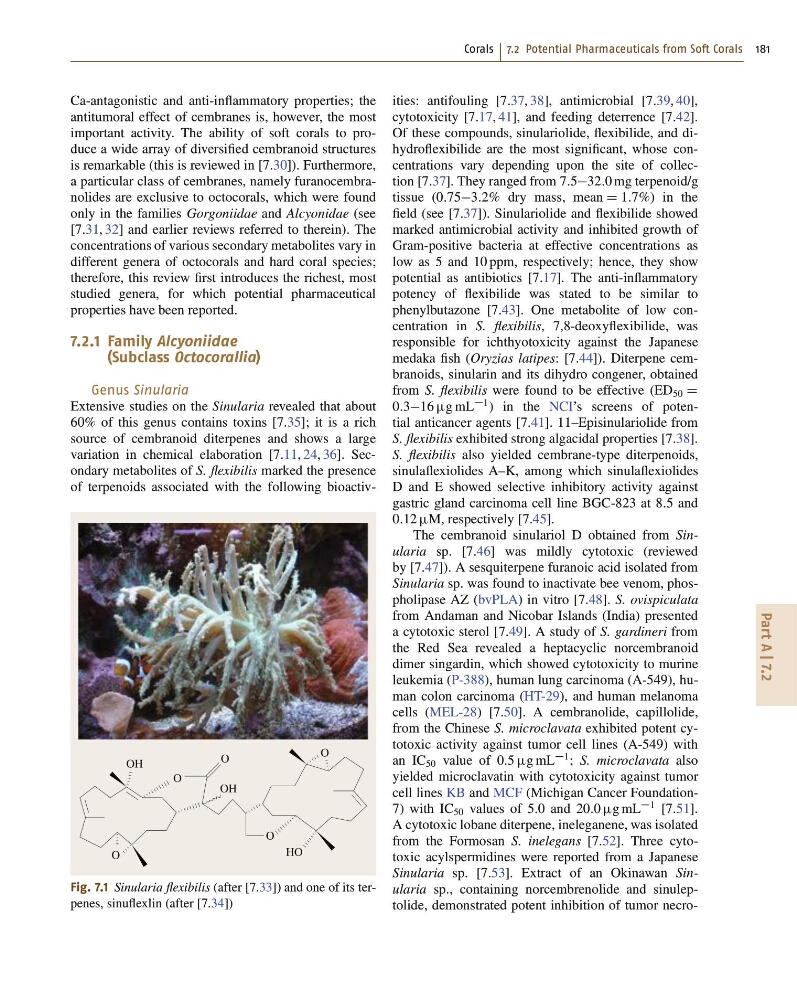
Fig. 7.1 Sinularia flexibilis (after [7.33]) and one of its terpenes, sinuflexlin (after [7.34])
ities: antifouling [7.37, 38], antimicrobial [7.39, 40],
cytotoxicity [7.17, 41], and feeding deterrence [7.42].
Of these compounds, sinulariolide, flexibilide, and dihydroflexibilide are the most significant, whose concentrations vary depending upon the site of collection [7.37]. They ranged from 7:532:0 mg terpenoid/g
tissue (0:753:2% dry mass, mean D 1:7%) in the
field (see [7.37]). Sinulariolide and flexibilide showed
marked antimicrobial activity and inhibited growth of
Gram-positive bacteria at effective concentrations as
low as 5 and 10 ppm, respectively; hence, they show
potential as antibiotics [7.17]. The anti-inflammatory
potency of flexibilide was stated to be similar to
phenylbutazone [7.43]. One metabolite of low concentration in S. flexibilis, 7,8-deoxyflexibilide, was
responsible for ichthyotoxicity against the Japanese
medaka fish (Oryzias latipes: [7.44]). Diterpene cembranoids, sinularin and its dihydro congener, obtained
from S. flexibilis were found to be effective (ED 50 D
0:316 g mL
1 ) in the NCI’s screens of potential anticancer agents [7.41]. 11–Episinulariolide from
S. flexibilis exhibited strong algacidal properties [7.38].
S. flexibilis also yielded cembrane-type diterpenoids,
sinulaflexiolides A–K, among which sinulaflexiolides
D and E showed selective inhibitory activity against
gastric gland carcinoma cell line BGC-823 at 8:5 and
0:12 M, respectively [7.45].
The cembranoid sinulariol D obtained from Sinularia sp. [7.46] was mildly cytotoxic (reviewed
by [7.47]). A sesquiterpene furanoic acid isolated from
Sinularia sp. was found to inactivate bee venom, phospholipase AZ (bvPLA) in vitro [7.48]. S. ovispiculata
from Andaman and Nicobar Islands (India) presented
a cytotoxic sterol [7.49]. A study of S. gardineri from
the Red Sea revealed a heptacyclic norcembranoid
dimer singardin, which showed cytotoxicity to murine
leukemia (P-388), human lung carcinoma (A-549), human colon carcinoma (HT-29), and human melanoma
cells (MEL-28) [7.50]. A cembranolide, capillolide,
from the Chinese S. microclavata exhibited potent cytotoxic activity against tumor cell lines (A-549) with
an IC 50 value of 0:5 g mL
1 ; S. microclavata also
yielded microclavatin with cytotoxicity against tumor
cell lines KB and MCF (Michigan Cancer Foundation7) with IC 50 values of 5:0 and 20:0 g mL
1 [7.51].
A cytotoxic lobane diterpene, ineleganene, was isolated
from the Formosan S. inelegans [7.52]. Three cytotoxic acylspermidines were reported from a Japanese
Sinularia sp. [7.53]. Extract of an Okinawan Sinularia sp., containing norcembrenolide and sinuleptolide, demonstrated potent inhibition of tumor necro-
Part A | 7.2
Ca-antagonistic and anti-inflammatory properties; the
antitumoral effect of cembranes is, however, the most
important activity. The ability of soft corals to produce a wide array of diversified cembranoid structures
is remarkable (this is reviewed in [7.30]). Furthermore,
a particular class of cembranes, namely furanocembranolides are exclusive to octocorals, which were found
only in the families Gorgoniidae and Alcyonidae (see
[7.31, 32] and earlier reviews referred to therein). The
concentrations of various secondary metabolites vary in
different genera of octocorals and hard coral species;
therefore, this review first introduces the richest, most
studied genera, for which potential pharmaceutical
properties have been reported.
7.2.1 Family Alcyoniidae
(Subclass Octocorallia)
Genus Sinularia
Extensive studies on the Sinularia revealed that about
60% of this genus contains toxins [7.35]; it is a rich
source of cembranoid diterpenes and shows a large
variation in chemical elaboration [7.11, 24, 36]. Secondary metabolites of S. flexibilis marked the presence
of terpenoids associated with the following bioactivO
O
O
O
O
OH
OH
HO
Fig. 7.1 Sinularia flexibilis (after [7.33]) and one of its terpenes, sinuflexlin (after [7.34])
ities: antifouling [7.37, 38], antimicrobial [7.39, 40],
cytotoxicity [7.17, 41], and feeding deterrence [7.42].
Of these compounds, sinulariolide, flexibilide, and dihydroflexibilide are the most significant, whose concentrations vary depending upon the site of collection [7.37]. They ranged from 7:532:0 mg terpenoid/g
tissue (0:753:2% dry mass, mean D 1:7%) in the
field (see [7.37]). Sinulariolide and flexibilide showed
marked antimicrobial activity and inhibited growth of
Gram-positive bacteria at effective concentrations as
low as 5 and 10 ppm, respectively; hence, they show
potential as antibiotics [7.17]. The anti-inflammatory
potency of flexibilide was stated to be similar to
phenylbutazone [7.43]. One metabolite of low concentration in S. flexibilis, 7,8-deoxyflexibilide, was
responsible for ichthyotoxicity against the Japanese
medaka fish (Oryzias latipes: [7.44]). Diterpene cembranoids, sinularin and its dihydro congener, obtained
from S. flexibilis were found to be effective (ED 50 D
0:316 g mL
1 ) in the NCI’s screens of potential anticancer agents [7.41]. 11–Episinulariolide from
S. flexibilis exhibited strong algacidal properties [7.38].
S. flexibilis also yielded cembrane-type diterpenoids,
sinulaflexiolides A–K, among which sinulaflexiolides
D and E showed selective inhibitory activity against
gastric gland carcinoma cell line BGC-823 at 8:5 and
0:12 M, respectively [7.45].
The cembranoid sinulariol D obtained from Sinularia sp. [7.46] was mildly cytotoxic (reviewed
by [7.47]). A sesquiterpene furanoic acid isolated from
Sinularia sp. was found to inactivate bee venom, phospholipase AZ (bvPLA) in vitro [7.48]. S. ovispiculata
from Andaman and Nicobar Islands (India) presented
a cytotoxic sterol [7.49]. A study of S. gardineri from
the Red Sea revealed a heptacyclic norcembranoid
dimer singardin, which showed cytotoxicity to murine
leukemia (P-388), human lung carcinoma (A-549), human colon carcinoma (HT-29), and human melanoma
cells (MEL-28) [7.50]. A cembranolide, capillolide,
from the Chinese S. microclavata exhibited potent cytotoxic activity against tumor cell lines (A-549) with
an IC 50 value of 0:5 g mL
1 ; S. microclavata also
yielded microclavatin with cytotoxicity against tumor
cell lines KB and MCF (Michigan Cancer Foundation7) with IC 50 values of 5:0 and 20:0 g mL
1 [7.51].
A cytotoxic lobane diterpene, ineleganene, was isolated
from the Formosan S. inelegans [7.52]. Three cytotoxic acylspermidines were reported from a Japanese
Sinularia sp. [7.53]. Extract of an Okinawan Sinularia sp., containing norcembrenolide and sinuleptolide, demonstrated potent inhibition of tumor necro-