

Part A | 6.3
136 Part A Marine Flora and Fauna
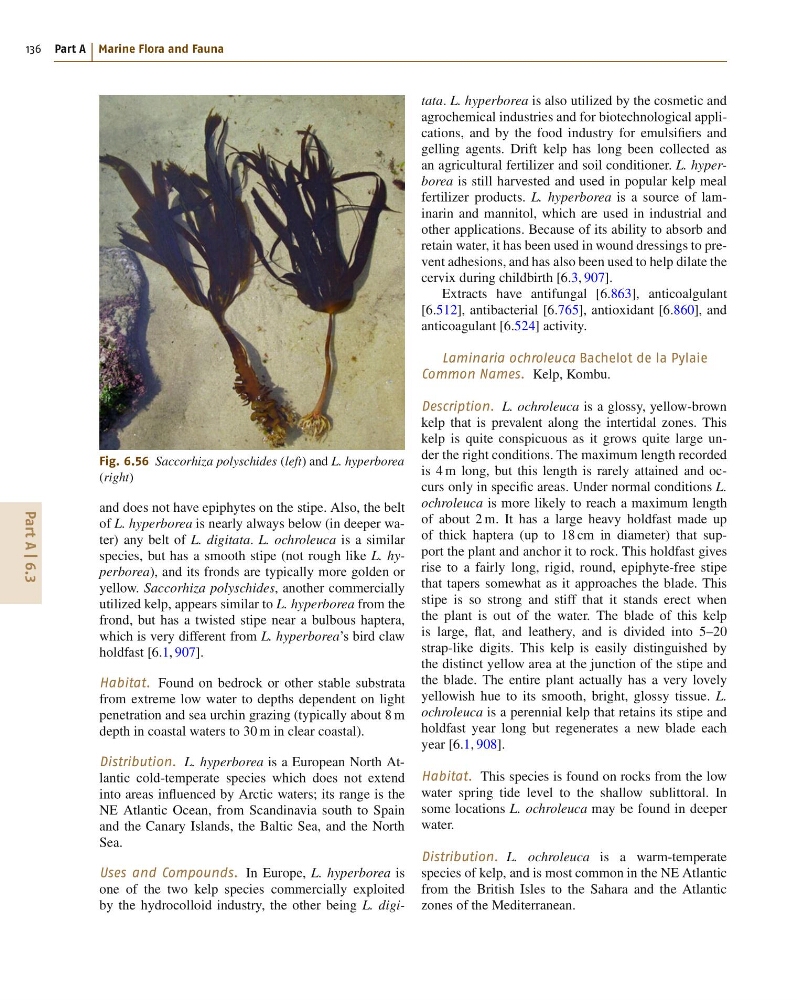
Fig. 6.56 Saccorhiza polyschides (left) and L. hyperborea
(right)
and does not have epiphytes on the stipe. Also, the belt
of L. hyperborea is nearly always below (in deeper water) any belt of L. digitata. L. ochroleuca is a similar
species, but has a smooth stipe (not rough like L. hyperborea), and its fronds are typically more golden or
yellow. Saccorhiza polyschides, another commercially
utilized kelp, appears similar to L. hyperborea from the
frond, but has a twisted stipe near a bulbous haptera,
which is very different from L. hyperborea’s bird claw
holdfast [6.1, 907].
Habitat. Found on bedrock or other stable substrata
from extreme low water to depths dependent on light
penetration and sea urchin grazing (typically about 8 m
depth in coastal waters to 30 m in clear coastal).
Distribution. L. hyperborea is a European North Atlantic cold-temperate species which does not extend
into areas influenced by Arctic waters; its range is the
NE Atlantic Ocean, from Scandinavia south to Spain
and the Canary Islands, the Baltic Sea, and the North
Sea.
Uses and Compounds. In Europe, L. hyperborea is
one of the two kelp species commercially exploited
by the hydrocolloid industry, the other being L. digitata. L. hyperborea is also utilized by the cosmetic and
agrochemical industries and for biotechnological applications, and by the food industry for emulsifiers and
gelling agents. Drift kelp has long been collected as
an agricultural fertilizer and soil conditioner. L. hyperborea is still harvested and used in popular kelp meal
fertilizer products. L. hyperborea is a source of laminarin and mannitol, which are used in industrial and
other applications. Because of its ability to absorb and
retain water, it has been used in wound dressings to prevent adhesions, and has also been used to help dilate the
cervix during childbirth [6.3, 907].
Extracts have antifungal [6.863], anticoalgulant
[6.512], antibacterial [6.765], antioxidant [6.860], and
anticoagulant [6.524] activity.
Laminaria ochroleuca Bachelot de la Pylaie
Common Names. Kelp, Kombu.
Description. L. ochroleuca is a glossy, yellow-brown
kelp that is prevalent along the intertidal zones. This
kelp is quite conspicuous as it grows quite large under the right conditions. The maximum length recorded
is 4 m long, but this length is rarely attained and occurs only in specific areas. Under normal conditions L.
ochroleuca is more likely to reach a maximum length
of about 2 m. It has a large heavy holdfast made up
of thick haptera (up to 18 cm in diameter) that support the plant and anchor it to rock. This holdfast gives
rise to a fairly long, rigid, round, epiphyte-free stipe
that tapers somewhat as it approaches the blade. This
stipe is so strong and stiff that it stands erect when
the plant is out of the water. The blade of this kelp
is large, flat, and leathery, and is divided into 5–20
strap-like digits. This kelp is easily distinguished by
the distinct yellow area at the junction of the stipe and
the blade. The entire plant actually has a very lovely
yellowish hue to its smooth, bright, glossy tissue. L.
ochroleuca is a perennial kelp that retains its stipe and
holdfast year long but regenerates a new blade each
year [6.1, 908].
Habitat. This species is found on rocks from the low
water spring tide level to the shallow sublittoral. In
some locations L. ochroleuca may be found in deeper
water.
Distribution. L. ochroleuca is a warm-temperate
species of kelp, and is most common in the NE Atlantic
from the British Isles to the Sahara and the Atlantic
zones of the Mediterranean.
136 Part A Marine Flora and Fauna
Fig. 6.56 Saccorhiza polyschides (left) and L. hyperborea
(right)
and does not have epiphytes on the stipe. Also, the belt
of L. hyperborea is nearly always below (in deeper water) any belt of L. digitata. L. ochroleuca is a similar
species, but has a smooth stipe (not rough like L. hyperborea), and its fronds are typically more golden or
yellow. Saccorhiza polyschides, another commercially
utilized kelp, appears similar to L. hyperborea from the
frond, but has a twisted stipe near a bulbous haptera,
which is very different from L. hyperborea’s bird claw
holdfast [6.1, 907].
Habitat. Found on bedrock or other stable substrata
from extreme low water to depths dependent on light
penetration and sea urchin grazing (typically about 8 m
depth in coastal waters to 30 m in clear coastal).
Distribution. L. hyperborea is a European North Atlantic cold-temperate species which does not extend
into areas influenced by Arctic waters; its range is the
NE Atlantic Ocean, from Scandinavia south to Spain
and the Canary Islands, the Baltic Sea, and the North
Sea.
Uses and Compounds. In Europe, L. hyperborea is
one of the two kelp species commercially exploited
by the hydrocolloid industry, the other being L. digitata. L. hyperborea is also utilized by the cosmetic and
agrochemical industries and for biotechnological applications, and by the food industry for emulsifiers and
gelling agents. Drift kelp has long been collected as
an agricultural fertilizer and soil conditioner. L. hyperborea is still harvested and used in popular kelp meal
fertilizer products. L. hyperborea is a source of laminarin and mannitol, which are used in industrial and
other applications. Because of its ability to absorb and
retain water, it has been used in wound dressings to prevent adhesions, and has also been used to help dilate the
cervix during childbirth [6.3, 907].
Extracts have antifungal [6.863], anticoalgulant
[6.512], antibacterial [6.765], antioxidant [6.860], and
anticoagulant [6.524] activity.
Laminaria ochroleuca Bachelot de la Pylaie
Common Names. Kelp, Kombu.
Description. L. ochroleuca is a glossy, yellow-brown
kelp that is prevalent along the intertidal zones. This
kelp is quite conspicuous as it grows quite large under the right conditions. The maximum length recorded
is 4 m long, but this length is rarely attained and occurs only in specific areas. Under normal conditions L.
ochroleuca is more likely to reach a maximum length
of about 2 m. It has a large heavy holdfast made up
of thick haptera (up to 18 cm in diameter) that support the plant and anchor it to rock. This holdfast gives
rise to a fairly long, rigid, round, epiphyte-free stipe
that tapers somewhat as it approaches the blade. This
stipe is so strong and stiff that it stands erect when
the plant is out of the water. The blade of this kelp
is large, flat, and leathery, and is divided into 5–20
strap-like digits. This kelp is easily distinguished by
the distinct yellow area at the junction of the stipe and
the blade. The entire plant actually has a very lovely
yellowish hue to its smooth, bright, glossy tissue. L.
ochroleuca is a perennial kelp that retains its stipe and
holdfast year long but regenerates a new blade each
year [6.1, 908].
Habitat. This species is found on rocks from the low
water spring tide level to the shallow sublittoral. In
some locations L. ochroleuca may be found in deeper
water.
Distribution. L. ochroleuca is a warm-temperate
species of kelp, and is most common in the NE Atlantic
from the British Isles to the Sahara and the Atlantic
zones of the Mediterranean.