

Seaweed Flora of the European North Atlantic and Mediterranean 6.3 Seaweeds Biodiversity and Potential 109
Part A | 6.3
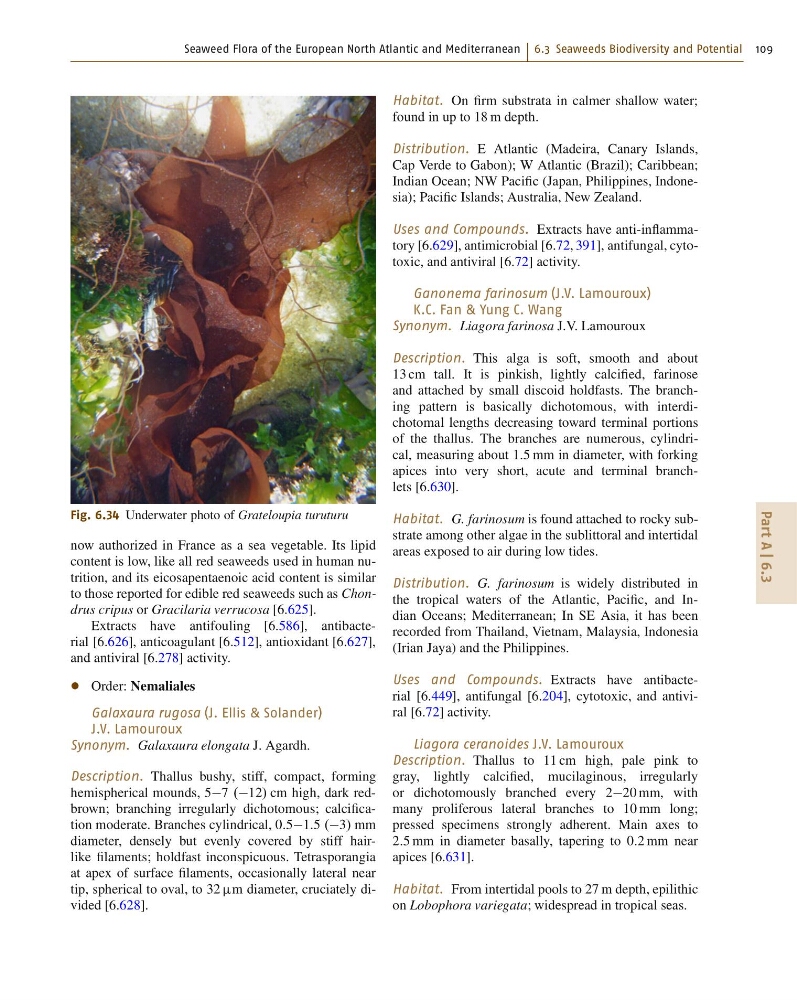
Fig. 6.34 Underwater photo of Grateloupia turuturu
now authorized in France as a sea vegetable. Its lipid
content is low, like all red seaweeds used in human nutrition, and its eicosapentaenoic acid content is similar
to those reported for edible red seaweeds such as Chondrus cripus or Gracilaria verrucosa [6.625].
Extracts have antifouling [6.586], antibacterial [6.626], anticoagulant [6.512], antioxidant [6.627],
and antiviral [6.278] activity.
Order: Nemaliales
Galaxaura rugosa (J. Ellis & Solander)
J.V. Lamouroux
Synonym. Galaxaura elongata J. Agardh.
Description. Thallus bushy, stiff, compact, forming
hemispherical mounds, 57 .12/ cm high, dark redbrown; branching irregularly dichotomous; calcification moderate. Branches cylindrical, 0:51:5 .3/ mm
diameter, densely but evenly covered by stiff hairlike filaments; holdfast inconspicuous. Tetrasporangia
at apex of surface filaments, occasionally lateral near
tip, spherical to oval, to 32 m diameter, cruciately divided [6.628].
Habitat. On firm substrata in calmer shallow water;
found in up to 18 m depth.
Distribution. E Atlantic (Madeira, Canary Islands,
Cap Verde to Gabon); W Atlantic (Brazil); Caribbean;
Indian Ocean; NW Pacific (Japan, Philippines, Indonesia); Pacific Islands; Australia, New Zealand.
Uses and Compounds. Extracts have anti-inflammatory [6.629], antimicrobial [6.72, 391], antifungal, cytotoxic, and antiviral [6.72] activity.
Ganonema farinosum (J.V. Lamouroux)
K.C. Fan & Yung C. Wang
Synonym. Liagora farinosa J.V. Lamouroux
Description. This alga is soft, smooth and about
13 cm tall. It is pinkish, lightly calcified, farinose
and attached by small discoid holdfasts. The branching pattern is basically dichotomous, with interdichotomal lengths decreasing toward terminal portions
of the thallus. The branches are numerous, cylindrical, measuring about 1:5 mm in diameter, with forking
apices into very short, acute and terminal branchlets [6.630].
Habitat. G. farinosum is found attached to rocky substrate among other algae in the sublittoral and intertidal
areas exposed to air during low tides.
Distribution. G. farinosum is widely distributed in
the tropical waters of the Atlantic, Pacific, and Indian Oceans; Mediterranean; In SE Asia, it has been
recorded from Thailand, Vietnam, Malaysia, Indonesia
(Irian Jaya) and the Philippines.
Uses and Compounds. Extracts have antibacterial [6.449], antifungal [6.204], cytotoxic, and antiviral [6.72] activity.
Liagora ceranoides J.V. Lamouroux
Description. Thallus to 11 cm high, pale pink to
gray, lightly calcified, mucilaginous, irregularly
or dichotomously branched every 220 mm, with
many proliferous lateral branches to 10 mm long;
pressed specimens strongly adherent. Main axes to
2:5 mm in diameter basally, tapering to 0:2 mm near
apices [6.631].
Habitat. From intertidal pools to 27 m depth, epilithic
on Lobophora variegata; widespread in tropical seas.
Part A | 6.3
Fig. 6.34 Underwater photo of Grateloupia turuturu
now authorized in France as a sea vegetable. Its lipid
content is low, like all red seaweeds used in human nutrition, and its eicosapentaenoic acid content is similar
to those reported for edible red seaweeds such as Chondrus cripus or Gracilaria verrucosa [6.625].
Extracts have antifouling [6.586], antibacterial [6.626], anticoagulant [6.512], antioxidant [6.627],
and antiviral [6.278] activity.
Order: Nemaliales
Galaxaura rugosa (J. Ellis & Solander)
J.V. Lamouroux
Synonym. Galaxaura elongata J. Agardh.
Description. Thallus bushy, stiff, compact, forming
hemispherical mounds, 57 .12/ cm high, dark redbrown; branching irregularly dichotomous; calcification moderate. Branches cylindrical, 0:51:5 .3/ mm
diameter, densely but evenly covered by stiff hairlike filaments; holdfast inconspicuous. Tetrasporangia
at apex of surface filaments, occasionally lateral near
tip, spherical to oval, to 32 m diameter, cruciately divided [6.628].
Habitat. On firm substrata in calmer shallow water;
found in up to 18 m depth.
Distribution. E Atlantic (Madeira, Canary Islands,
Cap Verde to Gabon); W Atlantic (Brazil); Caribbean;
Indian Ocean; NW Pacific (Japan, Philippines, Indonesia); Pacific Islands; Australia, New Zealand.
Uses and Compounds. Extracts have anti-inflammatory [6.629], antimicrobial [6.72, 391], antifungal, cytotoxic, and antiviral [6.72] activity.
Ganonema farinosum (J.V. Lamouroux)
K.C. Fan & Yung C. Wang
Synonym. Liagora farinosa J.V. Lamouroux
Description. This alga is soft, smooth and about
13 cm tall. It is pinkish, lightly calcified, farinose
and attached by small discoid holdfasts. The branching pattern is basically dichotomous, with interdichotomal lengths decreasing toward terminal portions
of the thallus. The branches are numerous, cylindrical, measuring about 1:5 mm in diameter, with forking
apices into very short, acute and terminal branchlets [6.630].
Habitat. G. farinosum is found attached to rocky substrate among other algae in the sublittoral and intertidal
areas exposed to air during low tides.
Distribution. G. farinosum is widely distributed in
the tropical waters of the Atlantic, Pacific, and Indian Oceans; Mediterranean; In SE Asia, it has been
recorded from Thailand, Vietnam, Malaysia, Indonesia
(Irian Jaya) and the Philippines.
Uses and Compounds. Extracts have antibacterial [6.449], antifungal [6.204], cytotoxic, and antiviral [6.72] activity.
Liagora ceranoides J.V. Lamouroux
Description. Thallus to 11 cm high, pale pink to
gray, lightly calcified, mucilaginous, irregularly
or dichotomously branched every 220 mm, with
many proliferous lateral branches to 10 mm long;
pressed specimens strongly adherent. Main axes to
2:5 mm in diameter basally, tapering to 0:2 mm near
apices [6.631].
Habitat. From intertidal pools to 27 m depth, epilithic
on Lobophora variegata; widespread in tropical seas.