

Part A | 6.3
86 Part A Marine Flora and Fauna
Habitat. On stones and shells and epiphytic, lower
littoral and sublittoral, spring and summer, generally
distributed, common in NE Atlantic.
Distribution. NE Atlantic (Scandinavia to Portugal,
North Sea, E Baltic Sea), Mediterranean Sea.
Uses and Compounds. Great antioxidant potential; strong cytotoxicity against human cancer cell
lines [6.316].
Ceramium virgatum Roth
Synonym. Ceramium rubrum C. Agardh.
Common Names. Hornweed, Red hornweed.
Description. Small red seaweed growing up to 30 cm
tall. It has a filamentous frond that is irregularly and
dichotomously branched, with the branches narrowing toward pincer-like tips. The holdfast is a minute
conical disk that extends into a dense mass of rhizoidal filaments. The plant is reddish brown to purple
in color and has a banded appearance when viewed
closely [6.1, 365].
Habitat. C. virgatum is both epilithic and epiphytic,
often growing on the stipes and fronds of Fucus spp.,
Mastocarpus stellatus, and Laminaria hyperborea as
well as on the leaves of Zostera marina.
Distribution. C. virgatum is common worldwide from
the Americas to Europe (Atlantic), through the Mediterranean, down to South Africa, Asia, and Antarctica.
Uses and Compounds. C. virgatum is used as an
extract for cosmetic products [6.313, 366], produces
an agar-type polysaccharide [6.367], and have antiviral [6.368], antibacterial [6.276, 369–371], antioxidant [6.372], antialgal [6.373], antiprotozoal, antimycobacterial and cytotoxic activity [6.317].
Chondria capillaris (Hudson) M.J. Wynne
Synonym. Chondria
tenuisssima
(Withering)
C. Agardh
Description. Thallus bushy, vivid purple to pale yellowish red, upright cylindrical main axes cartilaginousfirm, with numerous long, softer irregularly spirally
arranged lateral axes, branching to the fourth degree; the recent branches also stand rather loosely,
spindle-shaped tapering at both ends, the apices
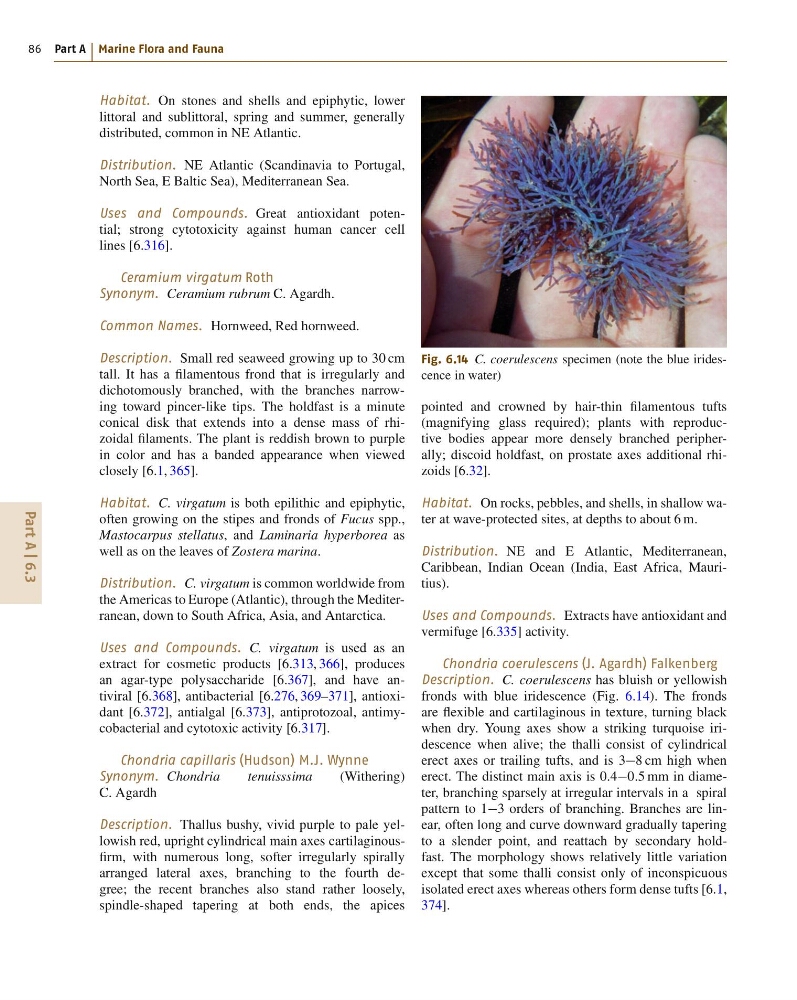
Fig. 6.14 C. coerulescens specimen (note the blue iridescence in water)
pointed and crowned by hair-thin filamentous tufts
(magnifying glass required); plants with reproductive bodies appear more densely branched peripherally; discoid holdfast, on prostate axes additional rhizoids [6.32].
Habitat. On rocks, pebbles, and shells, in shallow water at wave-protected sites, at depths to about 6 m.
Distribution. NE and E Atlantic, Mediterranean,
Caribbean, Indian Ocean (India, East Africa, Mauritius).
Uses and Compounds. Extracts have antioxidant and
vermifuge [6.335] activity.
Chondria coerulescens (J. Agardh) Falkenberg
Description. C. coerulescens has bluish or yellowish
fronds with blue iridescence (Fig. 6.14). The fronds
are flexible and cartilaginous in texture, turning black
when dry. Young axes show a striking turquoise iridescence when alive; the thalli consist of cylindrical
erect axes or trailing tufts, and is 38 cm high when
erect. The distinct main axis is 0:40:5 mm in diameter, branching sparsely at irregular intervals in a spiral
pattern to 13 orders of branching. Branches are linear, often long and curve downward gradually tapering
to a slender point, and reattach by secondary holdfast. The morphology shows relatively little variation
except that some thalli consist only of inconspicuous
isolated erect axes whereas others form dense tufts [6.1,
374].
86 Part A Marine Flora and Fauna
Habitat. On stones and shells and epiphytic, lower
littoral and sublittoral, spring and summer, generally
distributed, common in NE Atlantic.
Distribution. NE Atlantic (Scandinavia to Portugal,
North Sea, E Baltic Sea), Mediterranean Sea.
Uses and Compounds. Great antioxidant potential; strong cytotoxicity against human cancer cell
lines [6.316].
Ceramium virgatum Roth
Synonym. Ceramium rubrum C. Agardh.
Common Names. Hornweed, Red hornweed.
Description. Small red seaweed growing up to 30 cm
tall. It has a filamentous frond that is irregularly and
dichotomously branched, with the branches narrowing toward pincer-like tips. The holdfast is a minute
conical disk that extends into a dense mass of rhizoidal filaments. The plant is reddish brown to purple
in color and has a banded appearance when viewed
closely [6.1, 365].
Habitat. C. virgatum is both epilithic and epiphytic,
often growing on the stipes and fronds of Fucus spp.,
Mastocarpus stellatus, and Laminaria hyperborea as
well as on the leaves of Zostera marina.
Distribution. C. virgatum is common worldwide from
the Americas to Europe (Atlantic), through the Mediterranean, down to South Africa, Asia, and Antarctica.
Uses and Compounds. C. virgatum is used as an
extract for cosmetic products [6.313, 366], produces
an agar-type polysaccharide [6.367], and have antiviral [6.368], antibacterial [6.276, 369–371], antioxidant [6.372], antialgal [6.373], antiprotozoal, antimycobacterial and cytotoxic activity [6.317].
Chondria capillaris (Hudson) M.J. Wynne
Synonym. Chondria
tenuisssima
(Withering)
C. Agardh
Description. Thallus bushy, vivid purple to pale yellowish red, upright cylindrical main axes cartilaginousfirm, with numerous long, softer irregularly spirally
arranged lateral axes, branching to the fourth degree; the recent branches also stand rather loosely,
spindle-shaped tapering at both ends, the apices
Fig. 6.14 C. coerulescens specimen (note the blue iridescence in water)
pointed and crowned by hair-thin filamentous tufts
(magnifying glass required); plants with reproductive bodies appear more densely branched peripherally; discoid holdfast, on prostate axes additional rhizoids [6.32].
Habitat. On rocks, pebbles, and shells, in shallow water at wave-protected sites, at depths to about 6 m.
Distribution. NE and E Atlantic, Mediterranean,
Caribbean, Indian Ocean (India, East Africa, Mauritius).
Uses and Compounds. Extracts have antioxidant and
vermifuge [6.335] activity.
Chondria coerulescens (J. Agardh) Falkenberg
Description. C. coerulescens has bluish or yellowish
fronds with blue iridescence (Fig. 6.14). The fronds
are flexible and cartilaginous in texture, turning black
when dry. Young axes show a striking turquoise iridescence when alive; the thalli consist of cylindrical
erect axes or trailing tufts, and is 38 cm high when
erect. The distinct main axis is 0:40:5 mm in diameter, branching sparsely at irregular intervals in a spiral
pattern to 13 orders of branching. Branches are linear, often long and curve downward gradually tapering
to a slender point, and reattach by secondary holdfast. The morphology shows relatively little variation
except that some thalli consist only of inconspicuous
isolated erect axes whereas others form dense tufts [6.1,
374].