

64
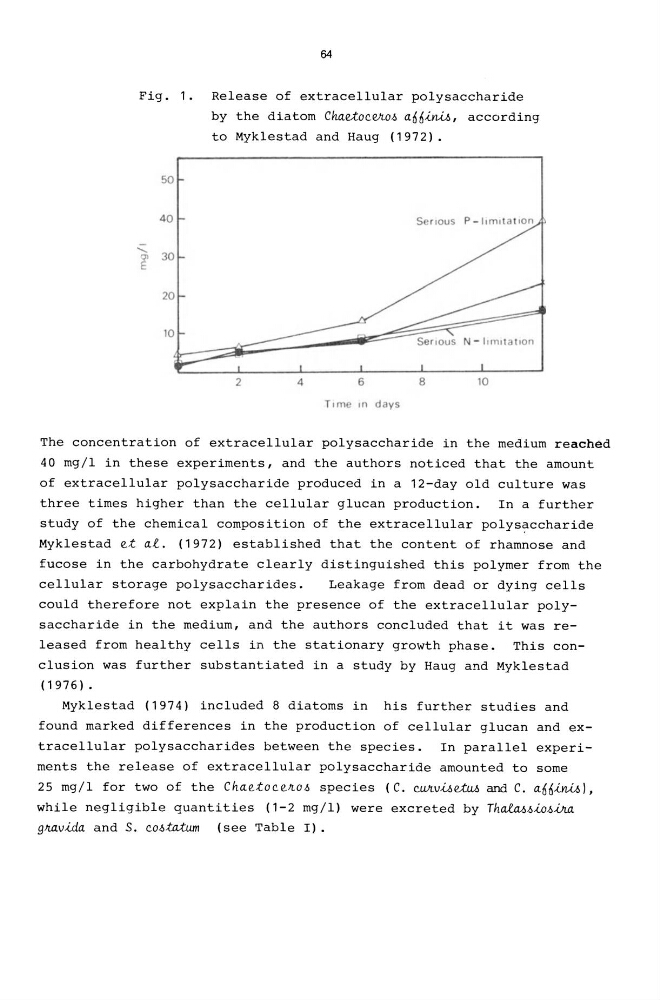
Fig. 1. Release of extracellular polysaccharide
by the diatom Chauoevw-6 a66-<-riM, according
to Myklestad and Haug (1972).
50
40
l' 30
20
SerIOus N - 1,mltaIlOn
2
4
6
8
10
TIme In days
The concentration of extracellular polysaccharide in the medium reached
40 mg/l in these experiments, and the authors noticed that the amount
of extracellular polysaccharide produced in a 12-day old culture was
three times higher than the cellular glucan production. In a further
study of the chemical composition of the extracellular polys~ccharide
Myklestad et ai. (1972) established that the content of rhamnose and
fucose in the carbohydrate clearly distinguished this polymer from the
cellular storage polysaccharides.
Leakage from dead or dying cells
could therefore not explain the presence of the extracellular polysaccharide in the medium, and the authors concluded that it was released from healthy cells in the stationary growth phase. This conclusion was further substantiated in a study by Haug and Myklestad
(1976) .
Myklestad (1974) included 8 diatoms in his further studies and
found marked differences in the production of cellular glucan and extracellular polysaccharides between the species. In parallel experiments the release of extracellular polysaccharide amounted to some
25 mg/l for two of the ChaetoeeJr.o-6 species (C. eWtv-U,utL6 and C. a66-<-riMJ,
while negligible quantities (1-2 mg/l) were excreted by Tha.ia.-6-6io-6~
glUlvida and S. eO-6ta.tum (see Table I).
Fig. 1. Release of extracellular polysaccharide
by the diatom Chauoevw-6 a66-<-riM, according
to Myklestad and Haug (1972).
50
40
l' 30
20
SerIOus N - 1,mltaIlOn
2
4
6
8
10
TIme In days
The concentration of extracellular polysaccharide in the medium reached
40 mg/l in these experiments, and the authors noticed that the amount
of extracellular polysaccharide produced in a 12-day old culture was
three times higher than the cellular glucan production. In a further
study of the chemical composition of the extracellular polys~ccharide
Myklestad et ai. (1972) established that the content of rhamnose and
fucose in the carbohydrate clearly distinguished this polymer from the
cellular storage polysaccharides.
Leakage from dead or dying cells
could therefore not explain the presence of the extracellular polysaccharide in the medium, and the authors concluded that it was released from healthy cells in the stationary growth phase. This conclusion was further substantiated in a study by Haug and Myklestad
(1976) .
Myklestad (1974) included 8 diatoms in his further studies and
found marked differences in the production of cellular glucan and extracellular polysaccharides between the species. In parallel experiments the release of extracellular polysaccharide amounted to some
25 mg/l for two of the ChaetoeeJr.o-6 species (C. eWtv-U,utL6 and C. a66-<-riMJ,
while negligible quantities (1-2 mg/l) were excreted by Tha.ia.-6-6io-6~
glUlvida and S. eO-6ta.tum (see Table I).