

58
~';:::" ~ . ~ ~ : ~ : : _ ~oo.+ateHrO~AS(CH3)2
1~""'E:~At(CH'" -----'"l>- ~ ~.
~!£
~~ Cacodylic Acid
Algal or Gill Outer Membrane
Depurated Outer Membrane
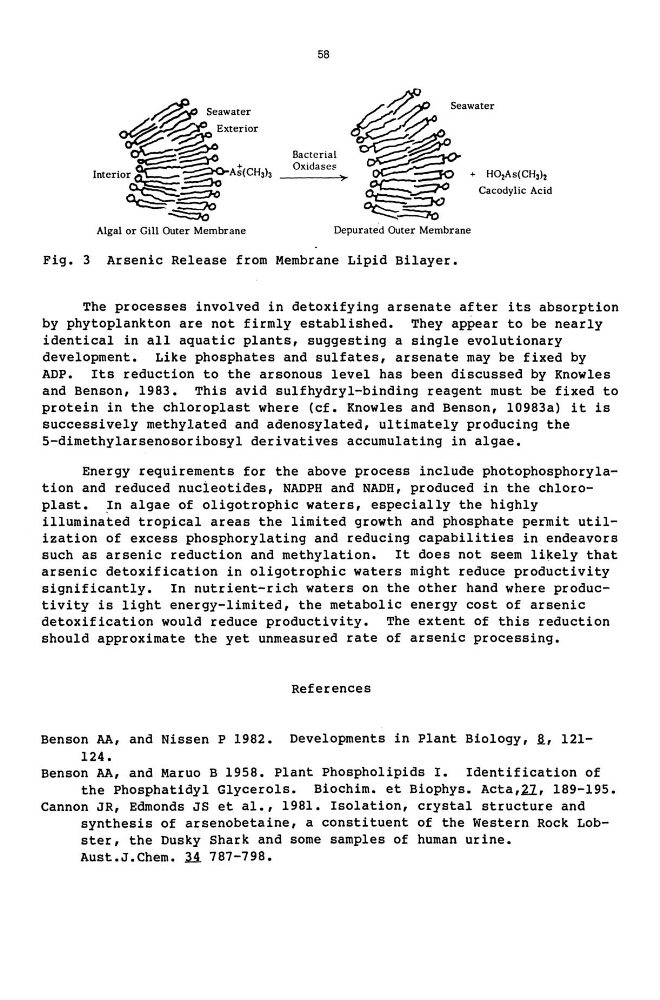
Fig. 3 Arsenic Release from Membrane Lipid Bilayer.
The processes involved in detoxifying arsenate after its absorption
by phytoplankton are not firmly established. They appear to be nearly
identical in all aquatic plants, suggesting a single evolutionary
development. Like phosphates and sulfates, arsenate may be fixed by
ADP. Its reduction to the arsonous level has been discussed by Knowles
and Benson, 1983. This avid sulfhydryl-binding reagent must be fixed to
protein in the chloroplast where (cf. Knowles and Benson, l0983a) it is
successively methylated and adenosylated, ultimately producing the
5-dimethylarsenosoribosyl derivatives accumulating in algae.
Energy requirements for the above process include photophosphorylation and reduced nucieotides, NADPH and NADH, produced in the chloroplast. ~n algae of oligotrophic waters, especially the highly
illuminated tropical areas the limited growth and phosphate permit utilization of excess phosphorylating and reducing capabilities in endeavors
such as arsenic reduction and methylation. It does not seem likely that
arsenic detoxification in oligotrophic waters might reduce productivity
significantly. In nutrient-rich waters on the other hand where productivity is light energy-limited, the metabolic energy cost of arsenic
detoxification would reduce productivity. The extent of this reduction
should approximate the yet unmeasured rate of arsenic processing.
References
Benson AA, and Nissen P 1982. Developments in Plant Biology, a, 121124.
Benson AA, and Maruo B 1958. Plant Phospholipids I. Identification of
the Phosphatidyl Glycerols. Biochim. et Biophys. Acta,ZI, 189-195.
Cannon JR, Edmonds JS et al., 1981. Isolation, crystal structure and
synthesis of arsenobetaine, a constituent of the Western Rock Lobster, the Dusky Shark and some samples of human urine.
Aust.J.Chem. 1! 787-798.
~';:::" ~ . ~ ~ : ~ : : _ ~oo.+ateHrO~AS(CH3)2
1~""'E:~At(CH'" -----'"l>- ~ ~.
~!£
~~ Cacodylic Acid
Algal or Gill Outer Membrane
Depurated Outer Membrane
Fig. 3 Arsenic Release from Membrane Lipid Bilayer.
The processes involved in detoxifying arsenate after its absorption
by phytoplankton are not firmly established. They appear to be nearly
identical in all aquatic plants, suggesting a single evolutionary
development. Like phosphates and sulfates, arsenate may be fixed by
ADP. Its reduction to the arsonous level has been discussed by Knowles
and Benson, 1983. This avid sulfhydryl-binding reagent must be fixed to
protein in the chloroplast where (cf. Knowles and Benson, l0983a) it is
successively methylated and adenosylated, ultimately producing the
5-dimethylarsenosoribosyl derivatives accumulating in algae.
Energy requirements for the above process include photophosphorylation and reduced nucieotides, NADPH and NADH, produced in the chloroplast. ~n algae of oligotrophic waters, especially the highly
illuminated tropical areas the limited growth and phosphate permit utilization of excess phosphorylating and reducing capabilities in endeavors
such as arsenic reduction and methylation. It does not seem likely that
arsenic detoxification in oligotrophic waters might reduce productivity
significantly. In nutrient-rich waters on the other hand where productivity is light energy-limited, the metabolic energy cost of arsenic
detoxification would reduce productivity. The extent of this reduction
should approximate the yet unmeasured rate of arsenic processing.
References
Benson AA, and Nissen P 1982. Developments in Plant Biology, a, 121124.
Benson AA, and Maruo B 1958. Plant Phospholipids I. Identification of
the Phosphatidyl Glycerols. Biochim. et Biophys. Acta,ZI, 189-195.
Cannon JR, Edmonds JS et al., 1981. Isolation, crystal structure and
synthesis of arsenobetaine, a constituent of the Western Rock Lobster, the Dusky Shark and some samples of human urine.
Aust.J.Chem. 1! 787-798.