

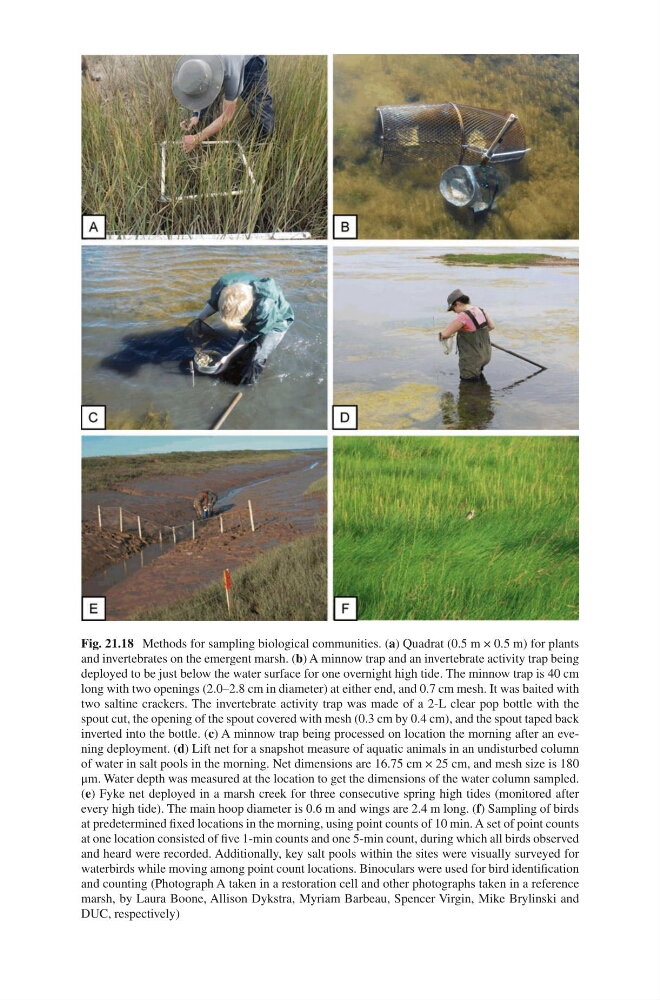
Fig. 21.18 Methods for sampling biological communities. (a) Quadrat (0.5 m × 0.5 m) for plants
and invertebrates on the emergent marsh. (b) A minnow trap and an invertebrate activity trap being
deployed to be just below the water surface for one overnight high tide. The minnow trap is 40 cm
long with two openings (2.0–2.8 cm in diameter) at either end, and 0.7 cm mesh. It was baited with
two saltine crackers. The invertebrate activity trap was made of a 2-L clear pop bottle with the
spout cut, the opening of the spout covered with mesh (0.3 cm by 0.4 cm), and the spout taped back
inverted into the bottle. (c) A minnow trap being processed on location the morning after an evening deployment. (d) Lift net for a snapshot measure of aquatic animals in an undisturbed column
of water in salt pools in the morning. Net dimensions are 16.75 cm × 25 cm, and mesh size is 180
μm. Water depth was measured at the location to get the dimensions of the water column sampled.
(e) Fyke net deployed in a marsh creek for three consecutive spring high tides (monitored after
every high tide). The main hoop diameter is 0.6 m and wings are 2.4 m long. (f) Sampling of birds
at predetermined fixed locations in the morning, using point counts of 10 min. A set of point counts
at one location consisted of five 1-min counts and one 5-min count, during which all birds observed
and heard were recorded. Additionally, key salt pools within the sites were visually surveyed for
waterbirds while moving among point count locations. Binoculars were used for bird identification
and counting (Photograph A taken in a restoration cell and other photographs taken in a reference
marsh, by Laura Boone, Allison Dykstra, Myriam Barbeau, Spencer Virgin, Mike Brylinski and
DUC, respectively)