

711
this project. The province of New Brunswick has policies that aim to protect
wetlands (Government of New Brunswick 2002), which include a compensation
process requiring proponents to pay for the replacement of lost or altered wetlands.
The NB Department of Transportation and Infrastructure and Fisheries and Oceans
Canada both have wetland compensation and fish habitat creation needs and thus
were interested in forming partnerships with this project too. Actual project discussions began in May 2009 and resulted in funding sources to support infrastructure
improvements to the new dike system (armor rocking, machinery time, etc.) and
implementation and monitoring of the restoration project. The initial research team
(including Mount Allison University, Acadia University, and DUC) began baseline
monitoring of the site and developed a design for the restoration project and longterm monitoring program. This initial work included a plant inventory, analyses of
site elevation and tidal water level measurements. In summer 2010, prior to the
mechanical breaching of the sites, research and monitoring were expanded to
include birds, nekton, invertebrates and salt pools, and the addition of the University
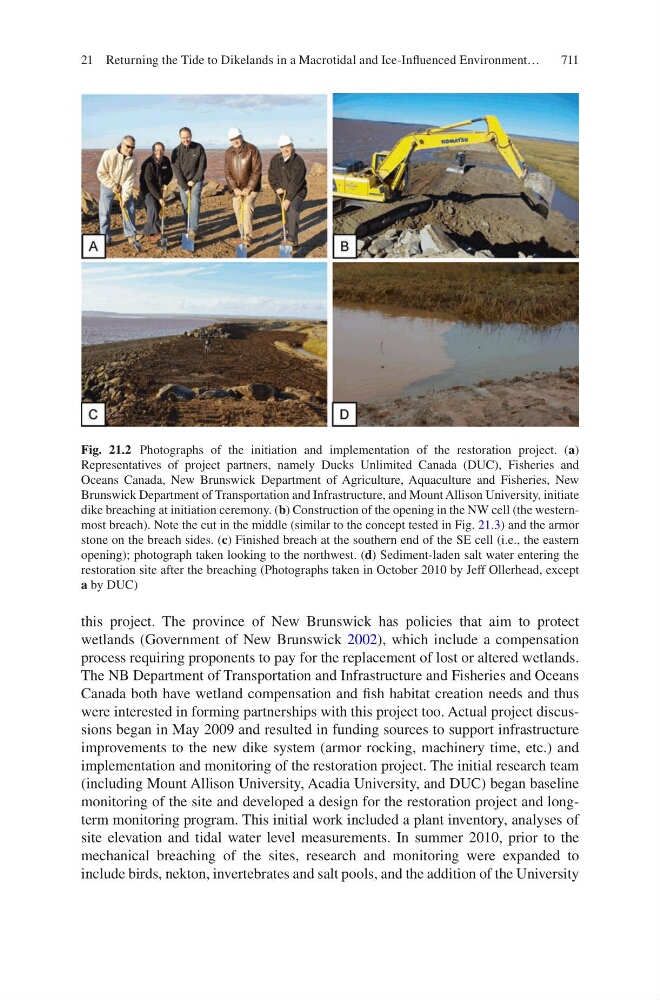
Fig. 21.2 Photographs of the initiation and implementation of the restoration project. (a)
Representatives of project partners, namely Ducks Unlimited Canada (DUC), Fisheries and
Oceans Canada, New Brunswick Department of Agriculture, Aquaculture and Fisheries, New
Brunswick Department of Transportation and Infrastructure, and Mount Allison University, initiate
dike breaching at initiation ceremony. (b) Construction of the opening in the NW cell (the westernmost breach). Note the cut in the middle (similar to the concept tested in Fig. 21.3) and the armor
stone on the breach sides. (c) Finished breach at the southern end of the SE cell (i.e., the eastern
opening); photograph taken looking to the northwest. (d) Sediment-laden salt water entering the
restoration site after the breaching (Photographs taken in October 2010 by Jeff Ollerhead, except
a by DUC)
21 Returning the Tide to Dikelands in a Macrotidal and Ice-Influenced Environment…