

650
creation of cities around it (Fig. 20.14a, b). In addition, the use of water potentials
is an important issue in future aquaculture and irrigation projects due to excellent
soils on the river margins (Pruski et al. 2005).
Although agricultural areas have been developed along the San Francisco
Estuary, the margins and sub-basins have a better conservation status, with less
environmental degradation at the middle and sub-middle reaches, especially due to
the presence of the MPAs-sustainable use in the region (Silva et al. 2010) (Fig. 20.4).
Rice was the most intense economic activity (Gois et al. 1992), which employed
most of the labour, and participated in boosting the regional economy until the
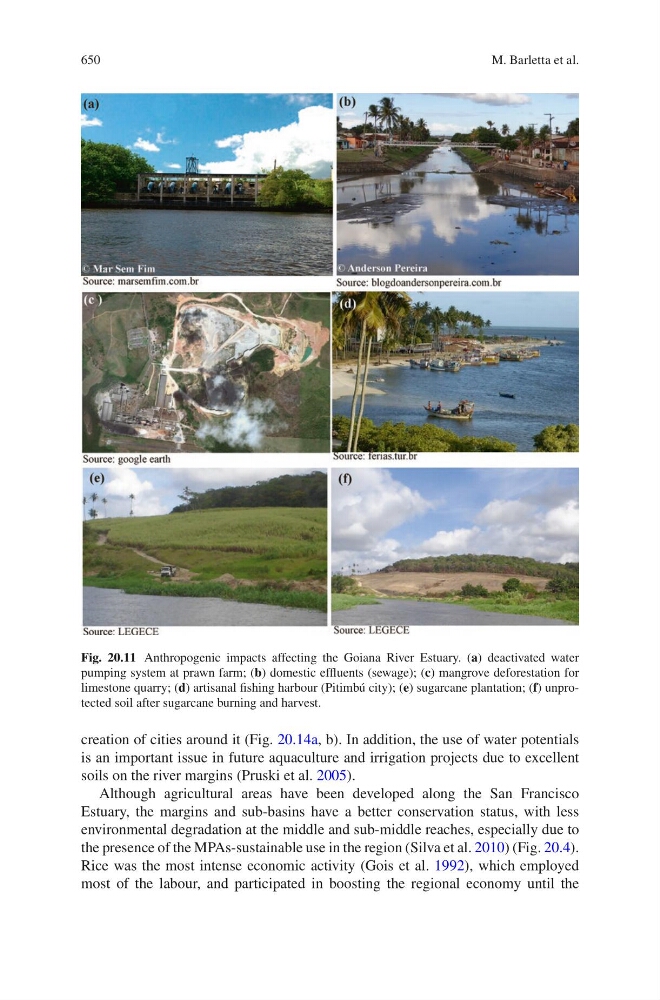
Fig. 20.11 Anthropogenic impacts affecting the Goiana River Estuary. (a) deactivated water
pumping system at prawn farm; (b) domestic effluents (sewage); (c) mangrove deforestation for
limestone quarry; (d) artisanal fishing harbour (Pitimbú city); (e) sugarcane plantation; (f) unprotected soil after sugarcane burning and harvest.
M. Barletta et al.