

445
3. Auto recruitment of fish, prawn and crab: The fish and crab landing data further
indicate the significant level of increase in auto recruitment from the sea into the
lake after intervention. The shrimp species Paenaus indicus alone showed a
record yield of 438 mt, which is higher than any other figure in last one-decade.
4. Decline in weed infestation: The trend of invasive fresh water species reaching
an area of 523.01 sq. km., in 2000 (October) leaving an weed free area of 333.82
sq. km., was greatly changed following a reduction of 172 sq. km., of weed
spread area.
5. Depth of Channel: The opening of mouth and consequent changes in tidal flux
led to significant flushing of sediment from the channel thereby increasing the
depth to 30–45 cm level.
Apart from ecology the other impacts from this restoration exercise were:
• Changes in local community income: lake restoration resulted in enhanced fish
and crab yield thereby increasing the per capita average annual income by Rs. 50,000/−
• Improved stakeholder awareness: the stakeholders have self adopted good practices like regulation of mesh size, discouraging juvenile catches.
• A better linkage has been established between CDA and fisher community following implementation of action plan.
• Improved Chemical, Physical and Biological parameters
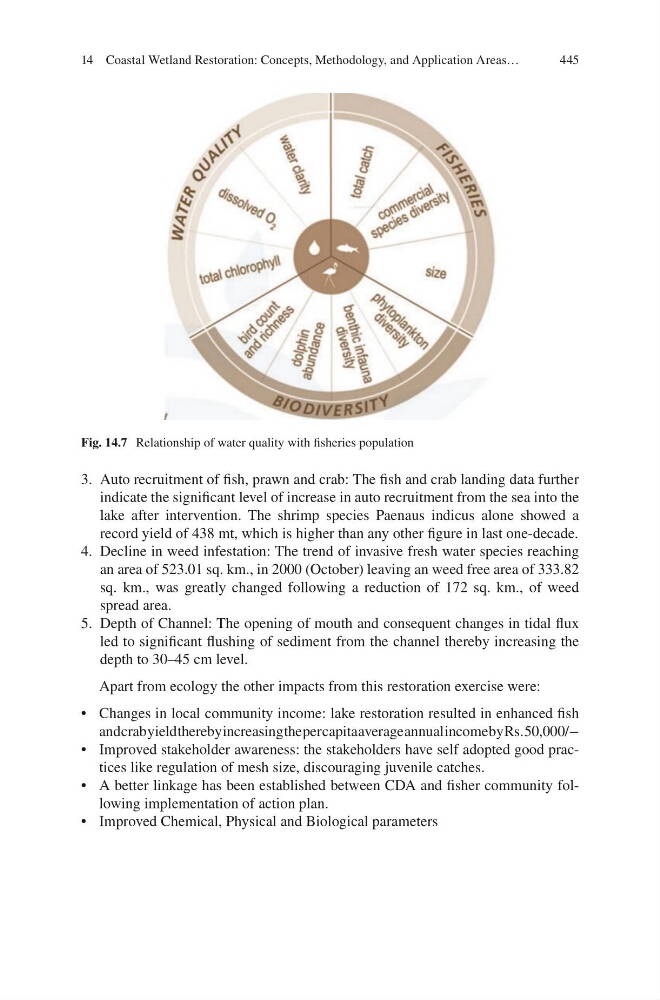
Fig. 14.7 Relationship of water quality with fisheries population
14 Coastal Wetland Restoration: Concepts, Methodology, and Application Areas…
3. Auto recruitment of fish, prawn and crab: The fish and crab landing data further
indicate the significant level of increase in auto recruitment from the sea into the
lake after intervention. The shrimp species Paenaus indicus alone showed a
record yield of 438 mt, which is higher than any other figure in last one-decade.
4. Decline in weed infestation: The trend of invasive fresh water species reaching
an area of 523.01 sq. km., in 2000 (October) leaving an weed free area of 333.82
sq. km., was greatly changed following a reduction of 172 sq. km., of weed
spread area.
5. Depth of Channel: The opening of mouth and consequent changes in tidal flux
led to significant flushing of sediment from the channel thereby increasing the
depth to 30–45 cm level.
Apart from ecology the other impacts from this restoration exercise were:
• Changes in local community income: lake restoration resulted in enhanced fish
and crab yield thereby increasing the per capita average annual income by Rs. 50,000/−
• Improved stakeholder awareness: the stakeholders have self adopted good practices like regulation of mesh size, discouraging juvenile catches.
• A better linkage has been established between CDA and fisher community following implementation of action plan.
• Improved Chemical, Physical and Biological parameters
Fig. 14.7 Relationship of water quality with fisheries population
14 Coastal Wetland Restoration: Concepts, Methodology, and Application Areas…