

427
All Northern Delta lakes are more or less facing the same challenges according
to many researchers as:
1. Pollution (Mehanna 2008; Cataudella et al. 2015), lagoons have even been considered as dumping areas for urban and industrial wastes (De Wit et al. 2011).
Nile delta lagoons are the most polluted areas in Egypt. They receive great
amounts of industrial, municipal and agricultural wastewaters without
treatment.
2. Deterioration and decrease in available healthy water supplies (Saad 2003).
3. Lack of management (Cataudella et al. 2015) have strongly modified both the
structure and the functioning of these sensitive coastal ecosystems.
4. Significant reduction in area (Mehanna 2008), most Egyptian wetlands have
been degraded drastically during the past 50 years (Baha El-Din 2002). Filling
up and drought; which lead to a decrease in size of all delta lagoons by over
70% of their original areas.
5. Spreading of aquatic plants (Mehanna 2008), several kinds of plants are found
in the coastal lake such as Myriophyllum spicatum, Potamogeton pectinatus,
Phragmites australis, Typha domingensis (Younis and Nafea 2012).
6. Habitat loss (Mehanna 2008), through land reclamation.
7. Climate change. Lagoon environmental features such as depth, connections with
the sea, sediment dynamics, size, as well as water temperatures and productivity,
shall all be affected by global climate change and the rise of sea level (Cataudella
et al. 2015; Bianchi and Morri 2004; De Wit 2011; Nicholls et al. 2007).
8. The blockage of Boughazes (Mehanna 2008), siltation of the outlets is one of
the important feature resulting from coastal processing and it will affect the
ship sailing.
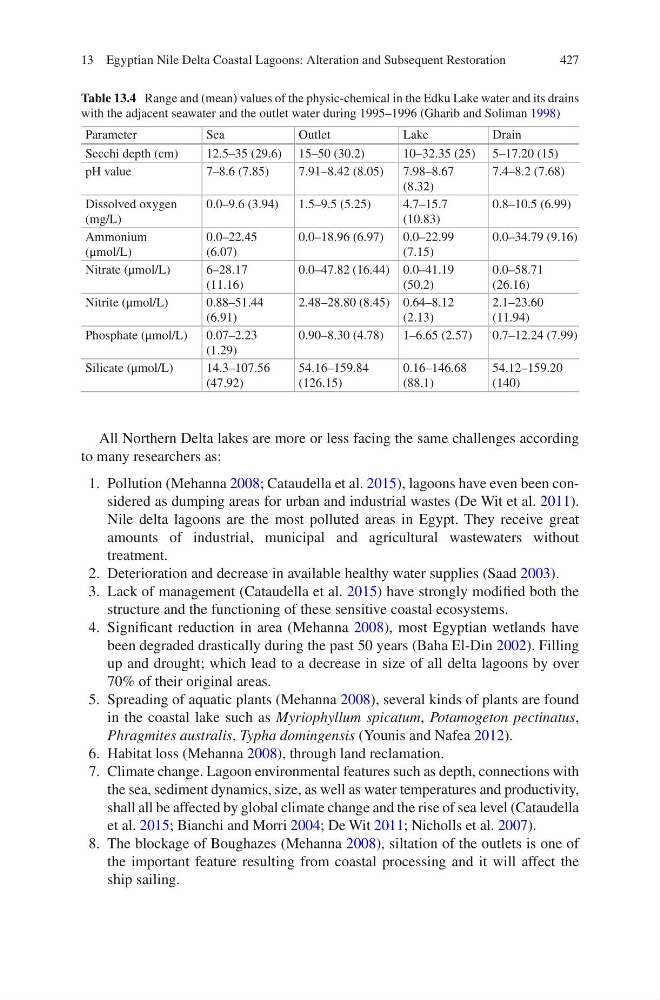
Table 13.4 Range and (mean) values of the physic-chemical in the Edku Lake water and its drains
with the adjacent seawater and the outlet water during 1995–1996 (Gharib and Soliman 1998)
Parameter
Sea
Outlet
Lake
Drain
Secchi depth (cm)
12.5–35 (29.6) 15–50 (30.2)
10–32.35 (25) 5–17.20 (15)
pH value
7–8.6 (7.85)
7.91–8.42 (8.05)
7.98–8.67
(8.32)
7.4–8.2 (7.68)
Dissolved oxygen
(mg/L)
0.0–9.6 (3.94)
1.5–9.5 (5.25)
4.7–15.7
(10.83)
0.8–10.5 (6.99)
Ammonium
(μmol/L)
0.0–22.45
(6.07)
0.0–18.96 (6.97)
0.0–22.99
(7.15)
0.0–34.79 (9.16)
Nitrate (μmol/L)
6–28.17
(11.16)
0.0–47.82 (16.44) 0.0–41.19
(50.2)
0.0–58.71
(26.16)
Nitrite (μmol/L)
0.88–51.44
(6.91)
2.48–28.80 (8.45) 0.64–8.12
(2.13)
2.1–23.60
(11.94)
Phosphate (μmol/L) 0.07–2.23
(1.29)
0.90–8.30 (4.78)
1–6.65 (2.57)
0.7–12.24 (7.99)
Silicate (μmol/L)
14.3–107.56
(47.92)
54.16–159.84
(126.15)
0.16–146.68
(88.1)
54.12–159.20
(140)
13 Egyptian Nile Delta Coastal Lagoons: Alteration and Subsequent Restoration
All Northern Delta lakes are more or less facing the same challenges according
to many researchers as:
1. Pollution (Mehanna 2008; Cataudella et al. 2015), lagoons have even been considered as dumping areas for urban and industrial wastes (De Wit et al. 2011).
Nile delta lagoons are the most polluted areas in Egypt. They receive great
amounts of industrial, municipal and agricultural wastewaters without
treatment.
2. Deterioration and decrease in available healthy water supplies (Saad 2003).
3. Lack of management (Cataudella et al. 2015) have strongly modified both the
structure and the functioning of these sensitive coastal ecosystems.
4. Significant reduction in area (Mehanna 2008), most Egyptian wetlands have
been degraded drastically during the past 50 years (Baha El-Din 2002). Filling
up and drought; which lead to a decrease in size of all delta lagoons by over
70% of their original areas.
5. Spreading of aquatic plants (Mehanna 2008), several kinds of plants are found
in the coastal lake such as Myriophyllum spicatum, Potamogeton pectinatus,
Phragmites australis, Typha domingensis (Younis and Nafea 2012).
6. Habitat loss (Mehanna 2008), through land reclamation.
7. Climate change. Lagoon environmental features such as depth, connections with
the sea, sediment dynamics, size, as well as water temperatures and productivity,
shall all be affected by global climate change and the rise of sea level (Cataudella
et al. 2015; Bianchi and Morri 2004; De Wit 2011; Nicholls et al. 2007).
8. The blockage of Boughazes (Mehanna 2008), siltation of the outlets is one of
the important feature resulting from coastal processing and it will affect the
ship sailing.
Table 13.4 Range and (mean) values of the physic-chemical in the Edku Lake water and its drains
with the adjacent seawater and the outlet water during 1995–1996 (Gharib and Soliman 1998)
Parameter
Sea
Outlet
Lake
Drain
Secchi depth (cm)
12.5–35 (29.6) 15–50 (30.2)
10–32.35 (25) 5–17.20 (15)
pH value
7–8.6 (7.85)
7.91–8.42 (8.05)
7.98–8.67
(8.32)
7.4–8.2 (7.68)
Dissolved oxygen
(mg/L)
0.0–9.6 (3.94)
1.5–9.5 (5.25)
4.7–15.7
(10.83)
0.8–10.5 (6.99)
Ammonium
(μmol/L)
0.0–22.45
(6.07)
0.0–18.96 (6.97)
0.0–22.99
(7.15)
0.0–34.79 (9.16)
Nitrate (μmol/L)
6–28.17
(11.16)
0.0–47.82 (16.44) 0.0–41.19
(50.2)
0.0–58.71
(26.16)
Nitrite (μmol/L)
0.88–51.44
(6.91)
2.48–28.80 (8.45) 0.64–8.12
(2.13)
2.1–23.60
(11.94)
Phosphate (μmol/L) 0.07–2.23
(1.29)
0.90–8.30 (4.78)
1–6.65 (2.57)
0.7–12.24 (7.99)
Silicate (μmol/L)
14.3–107.56
(47.92)
54.16–159.84
(126.15)
0.16–146.68
(88.1)
54.12–159.20
(140)
13 Egyptian Nile Delta Coastal Lagoons: Alteration and Subsequent Restoration