

405
the longest distance migrants from the cold subarctic regions of the Central Asia and
Siberia. During the migratory season, as the number of birds increase, poaching and
hunting also increases. In migratory season several amateur hunters comes to this
wetlands from the adjoining areas. Most of them are tribal people are causing
wounds and kill number of birds with their regular operation to catch them for food.
During night times, they trap the birds either with plastic wires or with thin wires.
After falling in traps, the birds strive to escape and undergo injuries. It is most common to see tribal selling birds in the local markets (Fig. 12.7a, 12.7b). There are a
number of eateries in the nearer towns and villages they have birds items in their
menus to attract customers.
Many of these species have been listed in the IUCN Red List under various categories, viz., Anguilla bengalensis as endangered species, Hoplobatrachus tigerinus and Pelecanus philippensis as vulnerable, etc. (Ramanujam and Anbarasan
2007). The riparian regions linking the water tanks, although provide potential corridors for the movement and dispersal of these species, but are themselves endangered owing to agricultural encroachments, urban development, destruction of
drainage channels and absence of regular maintenance (filling up of tanks and channels by sedimentation, collapsing of bunds), etc. (D’Souza et al. 2007).
There has been a controversial suggestion to develop Kaliveli as a tourist spot
focusing on conservation and a bird sanctuary. Although, the Government of Tamil
Nadu notified the Kaliveli wetland as reserve land to create a bird sanctuary under
Tamil Nadu Forest Act 1882 of Section 26 dated 16.4.2001, but not much progress
has been made afterwards, except the declaration.
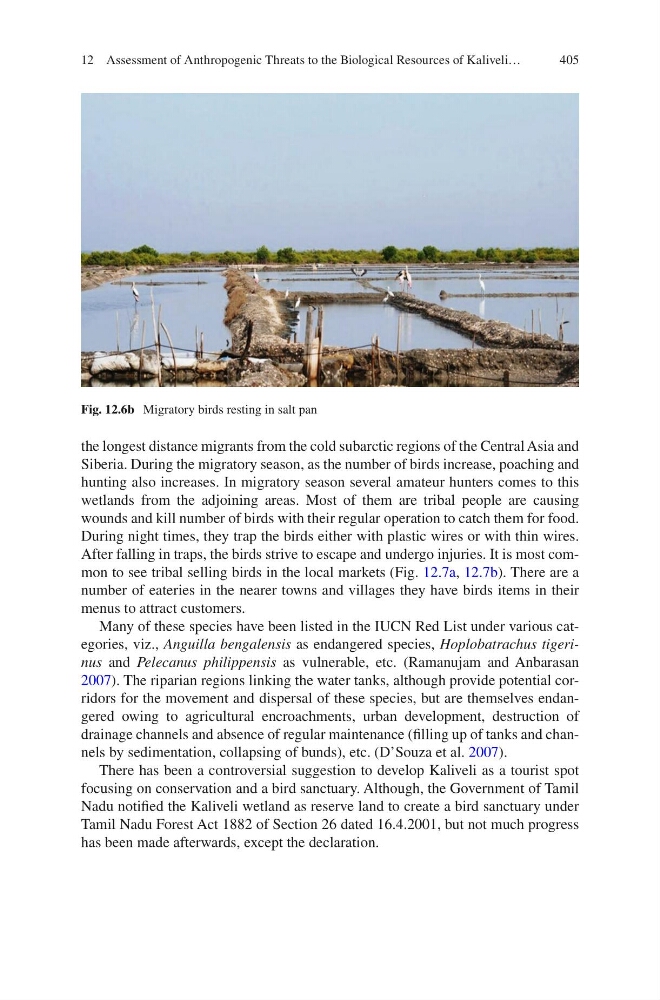
Fig. 12.6b Migratory birds resting in salt pan
12 Assessment of Anthropogenic Threats to the Biological Resources of Kaliveli…
the longest distance migrants from the cold subarctic regions of the Central Asia and
Siberia. During the migratory season, as the number of birds increase, poaching and
hunting also increases. In migratory season several amateur hunters comes to this
wetlands from the adjoining areas. Most of them are tribal people are causing
wounds and kill number of birds with their regular operation to catch them for food.
During night times, they trap the birds either with plastic wires or with thin wires.
After falling in traps, the birds strive to escape and undergo injuries. It is most common to see tribal selling birds in the local markets (Fig. 12.7a, 12.7b). There are a
number of eateries in the nearer towns and villages they have birds items in their
menus to attract customers.
Many of these species have been listed in the IUCN Red List under various categories, viz., Anguilla bengalensis as endangered species, Hoplobatrachus tigerinus and Pelecanus philippensis as vulnerable, etc. (Ramanujam and Anbarasan
2007). The riparian regions linking the water tanks, although provide potential corridors for the movement and dispersal of these species, but are themselves endangered owing to agricultural encroachments, urban development, destruction of
drainage channels and absence of regular maintenance (filling up of tanks and channels by sedimentation, collapsing of bunds), etc. (D’Souza et al. 2007).
There has been a controversial suggestion to develop Kaliveli as a tourist spot
focusing on conservation and a bird sanctuary. Although, the Government of Tamil
Nadu notified the Kaliveli wetland as reserve land to create a bird sanctuary under
Tamil Nadu Forest Act 1882 of Section 26 dated 16.4.2001, but not much progress
has been made afterwards, except the declaration.
Fig. 12.6b Migratory birds resting in salt pan
12 Assessment of Anthropogenic Threats to the Biological Resources of Kaliveli…