

404
A shrimp farm effluent poses another threat to the water quality, soil and ecology
of the wetland. Aquaculture and its effluents in wetland areas is an significant problem on regeneration and survival of mangrove seedlings. Similarly, waste water
discharged from aqua farms contains excess nutrients which rise the plankton population which serve as the potential food source for many species of coastal fish and
invertebrates. However, increase of nutrient wastes leads to toxic algal blooming
that may cause eutrophication.
Stalinization of soil attributable to shrimp farming has also been reported in
Kaliveli watershed and adjacent areas. Formation of sand bar proceed as a barrier
for immigration and emigration of fish and other fauna for completion of their life
cycle, thereby contributing to the list of threats affecting the avifaunal diversity of
the lake.
12.5.4 Birds Poaching
Kalivelli wetland is a distinctive birding hotspot; this reservoir forms a important
wintering site for most of the migratory birds. The availability marshy grounds,
mangrove vegetations, large verity of fishes and other food items attracts a diversity
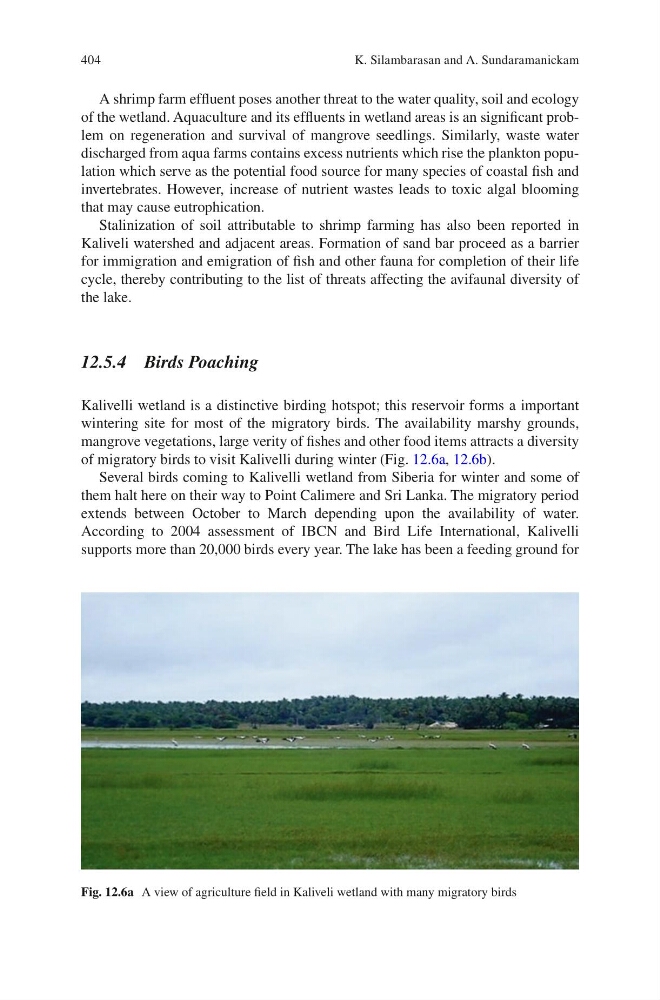
of migratory birds to visit Kalivelli during winter (Fig. 12.6a, 12.6b).
Several birds coming to Kalivelli wetland from Siberia for winter and some of
them halt here on their way to Point Calimere and Sri Lanka. The migratory period
extends between October to March depending upon the availability of water.
According to 2004 assessment of IBCN and Bird Life International, Kalivelli
supports more than 20,000 birds every year. The lake has been a feeding ground for
Fig. 12.6a A view of agriculture field in Kaliveli wetland with many migratory birds
K. Silambarasan and A. Sundaramanickam
A shrimp farm effluent poses another threat to the water quality, soil and ecology
of the wetland. Aquaculture and its effluents in wetland areas is an significant problem on regeneration and survival of mangrove seedlings. Similarly, waste water
discharged from aqua farms contains excess nutrients which rise the plankton population which serve as the potential food source for many species of coastal fish and
invertebrates. However, increase of nutrient wastes leads to toxic algal blooming
that may cause eutrophication.
Stalinization of soil attributable to shrimp farming has also been reported in
Kaliveli watershed and adjacent areas. Formation of sand bar proceed as a barrier
for immigration and emigration of fish and other fauna for completion of their life
cycle, thereby contributing to the list of threats affecting the avifaunal diversity of
the lake.
12.5.4 Birds Poaching
Kalivelli wetland is a distinctive birding hotspot; this reservoir forms a important
wintering site for most of the migratory birds. The availability marshy grounds,
mangrove vegetations, large verity of fishes and other food items attracts a diversity
of migratory birds to visit Kalivelli during winter (Fig. 12.6a, 12.6b).
Several birds coming to Kalivelli wetland from Siberia for winter and some of
them halt here on their way to Point Calimere and Sri Lanka. The migratory period
extends between October to March depending upon the availability of water.
According to 2004 assessment of IBCN and Bird Life International, Kalivelli
supports more than 20,000 birds every year. The lake has been a feeding ground for
Fig. 12.6a A view of agriculture field in Kaliveli wetland with many migratory birds
K. Silambarasan and A. Sundaramanickam