

388
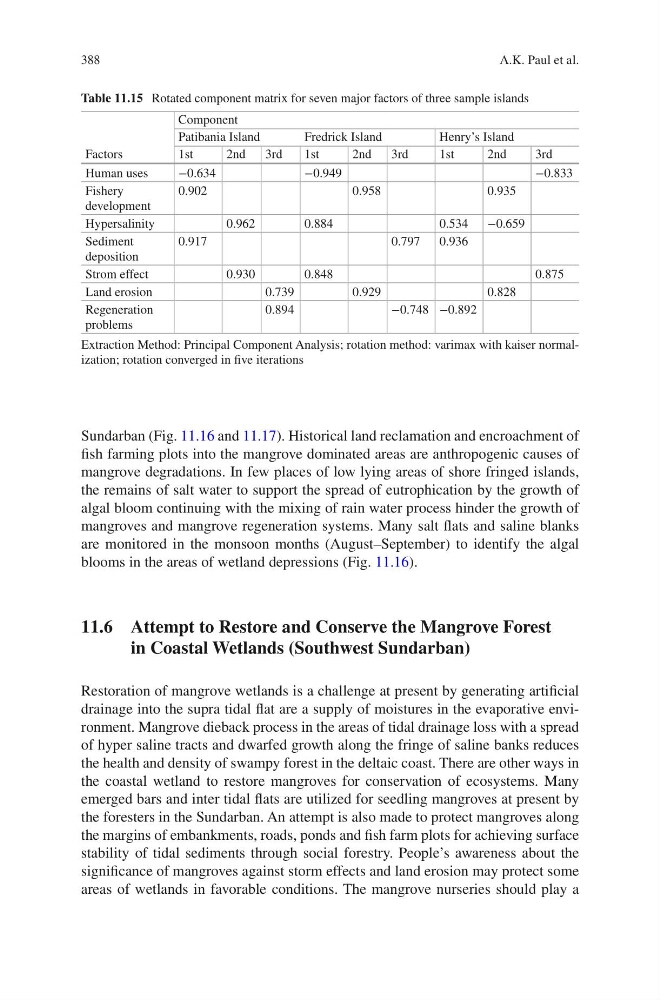
Table 11.15 Rotated component matrix for seven major factors of three sample islands
Factors
Component
Patibania Island
Fredrick Island
Henry’s Island
1st
2nd
3rd
1st
2nd
3rd
1st
2nd
3rd
Human uses
−0.634
−0.949
−0.833
Fishery
development
0.902
0.958
0.935
Hypersalinity
0.962
0.884
0.534
−0.659
Sediment
deposition
0.917
0.797
0.936
Strom effect
0.930
0.848
0.875
Land erosion
0.739
0.929
0.828
Regeneration
problems
0.894
−0.748 −0.892
Extraction Method: Principal Component Analysis; rotation method: varimax with kaiser normalization; rotation converged in five iterations
Sundarban (Fig. 11.16 and 11.17). Historical land reclamation and encroachment of
fish farming plots into the mangrove dominated areas are anthropogenic causes of
mangrove degradations. In few places of low lying areas of shore fringed islands,
the remains of salt water to support the spread of eutrophication by the growth of
algal bloom continuing with the mixing of rain water process hinder the growth of
mangroves and mangrove regeneration systems. Many salt flats and saline blanks
are monitored in the monsoon months (August–September) to identify the algal
blooms in the areas of wetland depressions (Fig. 11.16).
11.6 Attempt to Restore and Conserve the Mangrove Forest
in Coastal Wetlands (Southwest Sundarban)
Restoration of mangrove wetlands is a challenge at present by generating artificial
drainage into the supra tidal flat are a supply of moistures in the evaporative environment. Mangrove dieback process in the areas of tidal drainage loss with a spread
of hyper saline tracts and dwarfed growth along the fringe of saline banks reduces
the health and density of swampy forest in the deltaic coast. There are other ways in
the coastal wetland to restore mangroves for conservation of ecosystems. Many
emerged bars and inter tidal flats are utilized for seedling mangroves at present by
the foresters in the Sundarban. An attempt is also made to protect mangroves along
the margins of embankments, roads, ponds and fish farm plots for achieving surface
stability of tidal sediments through social forestry. People’s awareness about the
significance of mangroves against storm effects and land erosion may protect some
areas of wetlands in favorable conditions. The mangrove nurseries should play a
A.K. Paul et al.
Table 11.15 Rotated component matrix for seven major factors of three sample islands
Factors
Component
Patibania Island
Fredrick Island
Henry’s Island
1st
2nd
3rd
1st
2nd
3rd
1st
2nd
3rd
Human uses
−0.634
−0.949
−0.833
Fishery
development
0.902
0.958
0.935
Hypersalinity
0.962
0.884
0.534
−0.659
Sediment
deposition
0.917
0.797
0.936
Strom effect
0.930
0.848
0.875
Land erosion
0.739
0.929
0.828
Regeneration
problems
0.894
−0.748 −0.892
Extraction Method: Principal Component Analysis; rotation method: varimax with kaiser normalization; rotation converged in five iterations
Sundarban (Fig. 11.16 and 11.17). Historical land reclamation and encroachment of
fish farming plots into the mangrove dominated areas are anthropogenic causes of
mangrove degradations. In few places of low lying areas of shore fringed islands,
the remains of salt water to support the spread of eutrophication by the growth of
algal bloom continuing with the mixing of rain water process hinder the growth of
mangroves and mangrove regeneration systems. Many salt flats and saline blanks
are monitored in the monsoon months (August–September) to identify the algal
blooms in the areas of wetland depressions (Fig. 11.16).
11.6 Attempt to Restore and Conserve the Mangrove Forest
in Coastal Wetlands (Southwest Sundarban)
Restoration of mangrove wetlands is a challenge at present by generating artificial
drainage into the supra tidal flat are a supply of moistures in the evaporative environment. Mangrove dieback process in the areas of tidal drainage loss with a spread
of hyper saline tracts and dwarfed growth along the fringe of saline banks reduces
the health and density of swampy forest in the deltaic coast. There are other ways in
the coastal wetland to restore mangroves for conservation of ecosystems. Many
emerged bars and inter tidal flats are utilized for seedling mangroves at present by
the foresters in the Sundarban. An attempt is also made to protect mangroves along
the margins of embankments, roads, ponds and fish farm plots for achieving surface
stability of tidal sediments through social forestry. People’s awareness about the
significance of mangroves against storm effects and land erosion may protect some
areas of wetlands in favorable conditions. The mangrove nurseries should play a
A.K. Paul et al.