

353
have been induced by the construction of the jetties at the ocean entrances. Increasing
tidal ranges induce wetland communities to migrate into tributaries and upland
shorelines (Duchatel et al. 2014). However, often there will be limits to this occurring in the form of natural topographic features and anthropogenic constraints, such
as shore protection works, foreshore roads, weirs, levee banks and flood gates constructed to limit salt water incursion into farm lands. The loss of these wetland areas
has adverse impacts on fisheries and the overall health and water quality of
estuaries.
It is vital to understand how estuary tidal planes may be modified by the construction of training walls, revetments and entrance jetties; such an understanding
being the basis for designing and implementing necessary compensatory actions to
secure assets and to retain wetlands in jetty protected estuaries.
References
Brown EI (1928) Inlets on sandy coasts. ASCE Proc 54:505–553
Bruun P (1978) Design of tidal inlets on littoral drift shores. Coastal Sediments ‘77. Proceedings
5th Symposium of the Waterway, Port, Coastal and Ocean Division of ASCE, Charleston,
pp 927–945
Burrell A (2012) Mapping changes of saltmarsh and mangrove vegetation communities in Wagonga
Inlet, NSW South Coast Bachelor of Environmental Science (Honours), School of Earth &
Environmental Science, University of Wollongong, 166pp
Czerniak MT (1978) Inlet interaction and stability theory verification. Coastal Sediments ‘77.
Proceedings 5th Symposium of the Waterway, Port, Coastal and Ocean Division of ASCE,
Charleston, pp 754–773
-0.035 ha/a
-0.11 ha/a
10
11
12
13
14
15
16
17
18
19
20
1950
1960
1970
1 980
1 990
2 000
2 010
Area (ha)
Year
Pre-Breakwater Construction
Post Breakwater Construction
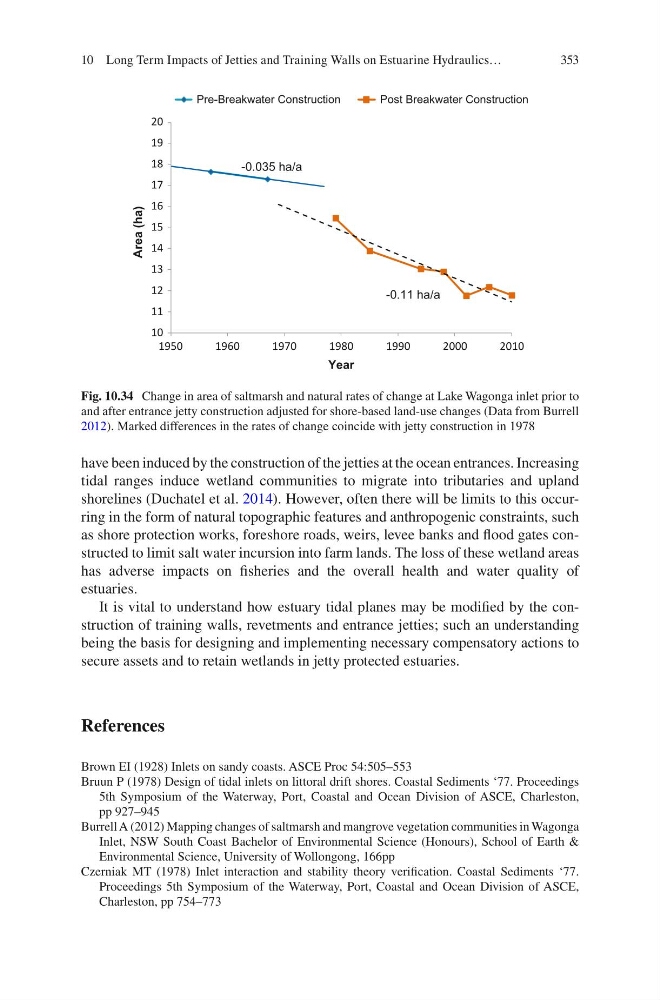
Fig. 10.34 Change in area of saltmarsh and natural rates of change at Lake Wagonga inlet prior to
and after entrance jetty construction adjusted for shore-based land-use changes (Data from Burrell
2012). Marked differences in the rates of change coincide with jetty construction in 1978
10 Long Term Impacts of Jetties and Training Walls on Estuarine Hydraulics…
have been induced by the construction of the jetties at the ocean entrances. Increasing
tidal ranges induce wetland communities to migrate into tributaries and upland
shorelines (Duchatel et al. 2014). However, often there will be limits to this occurring in the form of natural topographic features and anthropogenic constraints, such
as shore protection works, foreshore roads, weirs, levee banks and flood gates constructed to limit salt water incursion into farm lands. The loss of these wetland areas
has adverse impacts on fisheries and the overall health and water quality of
estuaries.
It is vital to understand how estuary tidal planes may be modified by the construction of training walls, revetments and entrance jetties; such an understanding
being the basis for designing and implementing necessary compensatory actions to
secure assets and to retain wetlands in jetty protected estuaries.
References
Brown EI (1928) Inlets on sandy coasts. ASCE Proc 54:505–553
Bruun P (1978) Design of tidal inlets on littoral drift shores. Coastal Sediments ‘77. Proceedings
5th Symposium of the Waterway, Port, Coastal and Ocean Division of ASCE, Charleston,
pp 927–945
Burrell A (2012) Mapping changes of saltmarsh and mangrove vegetation communities in Wagonga
Inlet, NSW South Coast Bachelor of Environmental Science (Honours), School of Earth &
Environmental Science, University of Wollongong, 166pp
Czerniak MT (1978) Inlet interaction and stability theory verification. Coastal Sediments ‘77.
Proceedings 5th Symposium of the Waterway, Port, Coastal and Ocean Division of ASCE,
Charleston, pp 754–773
-0.035 ha/a
-0.11 ha/a
10
11
12
13
14
15
16
17
18
19
20
1950
1960
1970
1 980
1 990
2 000
2 010
Area (ha)
Year
Pre-Breakwater Construction
Post Breakwater Construction
Fig. 10.34 Change in area of saltmarsh and natural rates of change at Lake Wagonga inlet prior to
and after entrance jetty construction adjusted for shore-based land-use changes (Data from Burrell
2012). Marked differences in the rates of change coincide with jetty construction in 1978
10 Long Term Impacts of Jetties and Training Walls on Estuarine Hydraulics…