

352
10.6 Implications
The construction of training walls and jetties at the ocean entrances to coastal bays
and lagoons has the potential to alter fundamentally estuarine hydraulics, inducing
changes to channel flows, morphology and tidal planes. While in the case studies
exemplified herein these works have improved flood conveyance and inlet navigability considerably, as intended, they have induced channel scour compromising
roadway bridge foundations and bank stability. The subsequent requirements to protect foreshore assets with further training walls and revetments have exacerbated the
scouring processes with additional unintended adverse impacts. Implications have
included the continual maintenance of scour protection to prevent further loss of
foreshore assets, including buildings, and scour protection for and underpinning of
bridge pylons. The prognosis is that it may take decades to centuries for these estuaries to attain ultimate inlet stability, implying long term maintenance costs.
Such major long-term changes to estuarine hydrodynamics have significant
potential to alter marine ecologies. The changes to the distribution of aquatic flora
within the bays of Wallis Lake and Lake Wagonga are likely to have resulted from a
combination of many factors. Nevertheless, they are consistent with and as would
be expected from the changes to the geomorphology, tidal planes and flows that
0.11 ha/a
0.31 ha/a
10
11
12
13
14
15
16
17
18
19
20
21
22
23
24
25
1950
1960
1970
1980
1990
2000
2010
Area (ha)
Year
Pre-Breakwater Construction
Post-Breakwater Construction
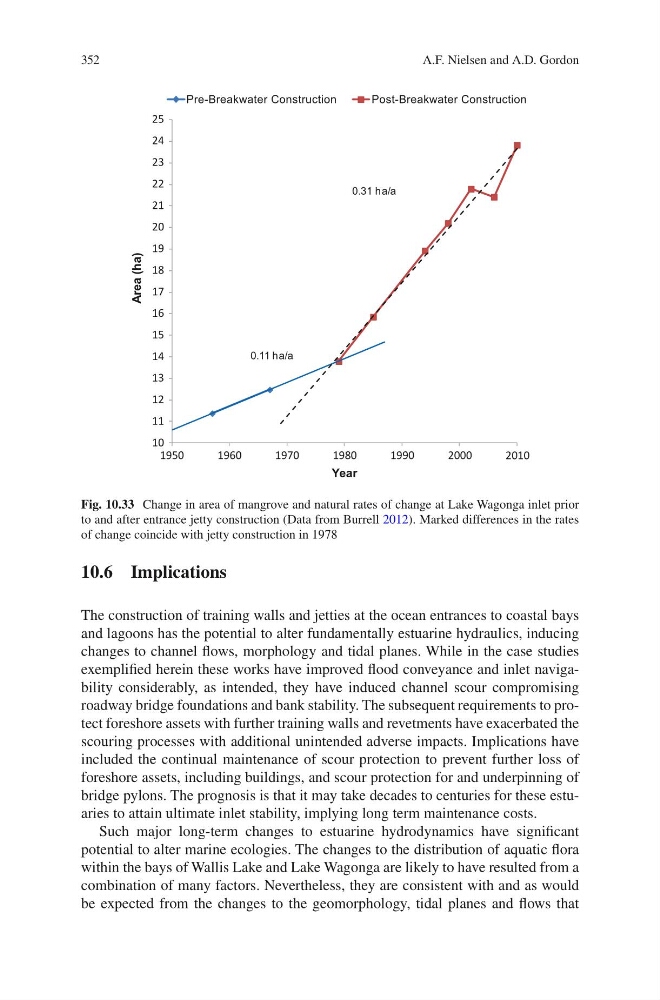
Fig. 10.33 Change in area of mangrove and natural rates of change at Lake Wagonga inlet prior
to and after entrance jetty construction (Data from Burrell 2012). Marked differences in the rates
of change coincide with jetty construction in 1978
A.F. Nielsen and A.D. Gordon
10.6 Implications
The construction of training walls and jetties at the ocean entrances to coastal bays
and lagoons has the potential to alter fundamentally estuarine hydraulics, inducing
changes to channel flows, morphology and tidal planes. While in the case studies
exemplified herein these works have improved flood conveyance and inlet navigability considerably, as intended, they have induced channel scour compromising
roadway bridge foundations and bank stability. The subsequent requirements to protect foreshore assets with further training walls and revetments have exacerbated the
scouring processes with additional unintended adverse impacts. Implications have
included the continual maintenance of scour protection to prevent further loss of
foreshore assets, including buildings, and scour protection for and underpinning of
bridge pylons. The prognosis is that it may take decades to centuries for these estuaries to attain ultimate inlet stability, implying long term maintenance costs.
Such major long-term changes to estuarine hydrodynamics have significant
potential to alter marine ecologies. The changes to the distribution of aquatic flora
within the bays of Wallis Lake and Lake Wagonga are likely to have resulted from a
combination of many factors. Nevertheless, they are consistent with and as would
be expected from the changes to the geomorphology, tidal planes and flows that
0.11 ha/a
0.31 ha/a
10
11
12
13
14
15
16
17
18
19
20
21
22
23
24
25
1950
1960
1970
1980
1990
2000
2010
Area (ha)
Year
Pre-Breakwater Construction
Post-Breakwater Construction
Fig. 10.33 Change in area of mangrove and natural rates of change at Lake Wagonga inlet prior
to and after entrance jetty construction (Data from Burrell 2012). Marked differences in the rates
of change coincide with jetty construction in 1978
A.F. Nielsen and A.D. Gordon