

15
why the Everglades were able to maintain a delicate ecological balance that includes
ecotonal successions between sawgrass, tree islands, and open water (Sklar and van
der Valk 2002; Todd et al. 2010). For example, phosphorous is naturally removed
from the system by accumulating in soils, algae, and plants, such as arrowhead, peat
moss, and pickeral weed (Craft et al. 1995). The Everglades supports a variety of
rare, threatened, and endangered species that have adapted to these low nutrient
concentrations, as well as, other physio-chemical conditions (e.g., low dissolved
oxygen [DO] levels) that are characteristic of the system (Davis and Ogden 1994;
Lodge 1994), and whose survival depends on the original cycle of water and nutrients, particularly low levels of phosphorous (Gunderson and Loftus 1993).
Historically, rainfall alone provided the primary source of nutrients into the
Everglades (Newman et al. 1996).
However, agricultural development and urbanization since the 1800s have not
only claimed almost two-thirds of the natural Everglades (only about 6000 km
2
now
exist in their natural form) but have also dramatically increased phosphorus levels
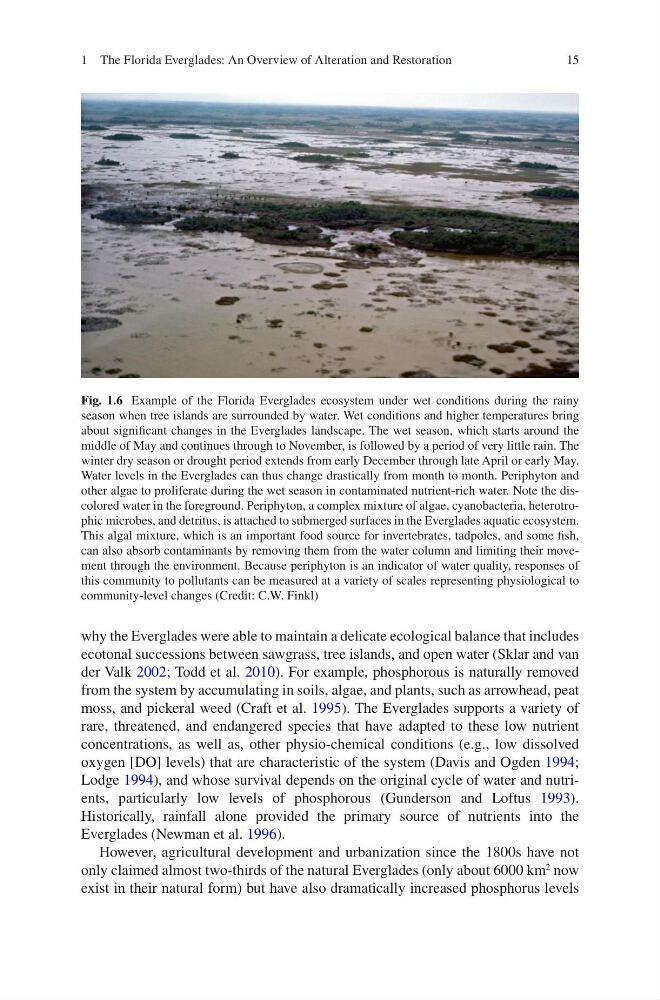
Fig. 1.6 Example of the Florida Everglades ecosystem under wet conditions during the rainy
season when tree islands are surrounded by water. Wet conditions and higher temperatures bring
about significant changes in the Everglades landscape. The wet season, which starts around the
middle of May and continues through to November, is followed by a period of very little rain. The
winter dry season or drought period extends from early December through late April or early May.
Water levels in the Everglades can thus change drastically from month to month. Periphyton and
other algae to proliferate during the wet season in contaminated nutrient-rich water. Note the discolored water in the foreground. Periphyton, a complex mixture of algae, cyanobacteria, heterotrophic microbes, and detritus, is attached to submerged surfaces in the Everglades aquatic ecosystem.
This algal mixture, which is an important food source for invertebrates, tadpoles, and some fish,
can also absorb contaminants by removing them from the water column and limiting their movement through the environment. Because periphyton is an indicator of water quality, responses of
this community to pollutants can be measured at a variety of scales representing physiological to
community-level changes (Credit: C.W. Finkl)
1 The Florida Everglades: An Overview of Alteration and Restoration
why the Everglades were able to maintain a delicate ecological balance that includes
ecotonal successions between sawgrass, tree islands, and open water (Sklar and van
der Valk 2002; Todd et al. 2010). For example, phosphorous is naturally removed
from the system by accumulating in soils, algae, and plants, such as arrowhead, peat
moss, and pickeral weed (Craft et al. 1995). The Everglades supports a variety of
rare, threatened, and endangered species that have adapted to these low nutrient
concentrations, as well as, other physio-chemical conditions (e.g., low dissolved
oxygen [DO] levels) that are characteristic of the system (Davis and Ogden 1994;
Lodge 1994), and whose survival depends on the original cycle of water and nutrients, particularly low levels of phosphorous (Gunderson and Loftus 1993).
Historically, rainfall alone provided the primary source of nutrients into the
Everglades (Newman et al. 1996).
However, agricultural development and urbanization since the 1800s have not
only claimed almost two-thirds of the natural Everglades (only about 6000 km
2
now
exist in their natural form) but have also dramatically increased phosphorus levels
Fig. 1.6 Example of the Florida Everglades ecosystem under wet conditions during the rainy
season when tree islands are surrounded by water. Wet conditions and higher temperatures bring
about significant changes in the Everglades landscape. The wet season, which starts around the
middle of May and continues through to November, is followed by a period of very little rain. The
winter dry season or drought period extends from early December through late April or early May.
Water levels in the Everglades can thus change drastically from month to month. Periphyton and
other algae to proliferate during the wet season in contaminated nutrient-rich water. Note the discolored water in the foreground. Periphyton, a complex mixture of algae, cyanobacteria, heterotrophic microbes, and detritus, is attached to submerged surfaces in the Everglades aquatic ecosystem.
This algal mixture, which is an important food source for invertebrates, tadpoles, and some fish,
can also absorb contaminants by removing them from the water column and limiting their movement through the environment. Because periphyton is an indicator of water quality, responses of
this community to pollutants can be measured at a variety of scales representing physiological to
community-level changes (Credit: C.W. Finkl)
1 The Florida Everglades: An Overview of Alteration and Restoration