

230
ment erosion favored by the absence of stabilizing vegetation would result in the
mobilization of highly polluted sediments. In view of these alternatives, the environmental administration has a difficult dilemma: decontamination or conservation
(Sainz and Loredo 2005).
7.5 Restoring Salt Marshes with Plantations of Spartina
maritima to Phytostabilize and to Phytoextract Metals
Soft engineering projects are needed to restore, rehabilitate, or recreate degraded
salt marshes, with cordgrasses (genus Spartina) being one of the most popular
biotools. Phytoremediation of wetlands polluted with metals may be included
among the aims of these restoring projects. Our studies in the Odiel Marshes,
located in one of the most polluted estuaries with heavy metals all around the world,
show that plantations of the European cordgrass Spartina maritima, and accompanying halophytes, stabilize polluted sediments and phytoextract metals. Our results
are particularly relevant since S. maritima is the only native European cordgrass.
Until now, most of the studies had work with Spartina alterniflora and Spartina
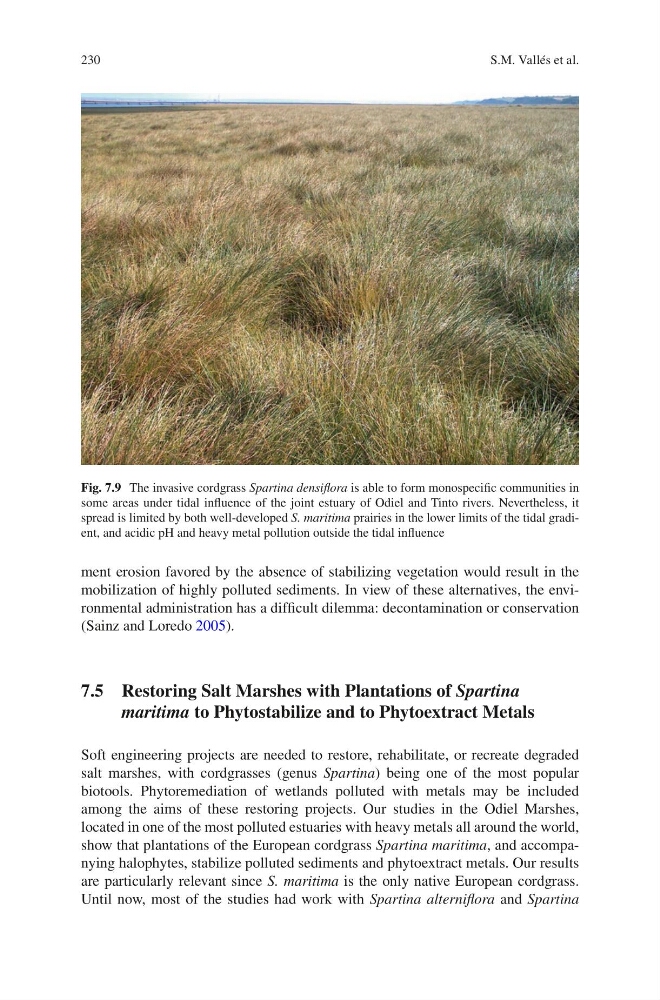
Fig. 7.9 The invasive cordgrass Spartina densiflora is able to form monospecific communities in
some areas under tidal influence of the joint estuary of Odiel and Tinto rivers. Nevertheless, it
spread is limited by both well-developed S. maritima prairies in the lower limits of the tidal gradient, and acidic pH and heavy metal pollution outside the tidal influence
S.M. Vallés et al.
ment erosion favored by the absence of stabilizing vegetation would result in the
mobilization of highly polluted sediments. In view of these alternatives, the environmental administration has a difficult dilemma: decontamination or conservation
(Sainz and Loredo 2005).
7.5 Restoring Salt Marshes with Plantations of Spartina
maritima to Phytostabilize and to Phytoextract Metals
Soft engineering projects are needed to restore, rehabilitate, or recreate degraded
salt marshes, with cordgrasses (genus Spartina) being one of the most popular
biotools. Phytoremediation of wetlands polluted with metals may be included
among the aims of these restoring projects. Our studies in the Odiel Marshes,
located in one of the most polluted estuaries with heavy metals all around the world,
show that plantations of the European cordgrass Spartina maritima, and accompanying halophytes, stabilize polluted sediments and phytoextract metals. Our results
are particularly relevant since S. maritima is the only native European cordgrass.
Until now, most of the studies had work with Spartina alterniflora and Spartina
Fig. 7.9 The invasive cordgrass Spartina densiflora is able to form monospecific communities in
some areas under tidal influence of the joint estuary of Odiel and Tinto rivers. Nevertheless, it
spread is limited by both well-developed S. maritima prairies in the lower limits of the tidal gradient, and acidic pH and heavy metal pollution outside the tidal influence
S.M. Vallés et al.