

225
sphere due to a well-developed aerenchyma in roots and rhizomes, thus generating
an oxidizing soil environment around their belowground tissues (Castillo et al. 2000).
The high concentrations of Fe in the Odiel and Tinto joint estuary (Egal et al. 2008),
coupled with the oxidation of the root zone by both Spartina species, seem to be
promoting the formation of high amounts of Fe-oxides in the rhizosphere and thus of
iron plaques on the surface of their root, leading to the immobilization of metals
through sorption processes (Cambrollé et al. 2008). Regarding S. maritima, it has
been recently investigated the benefits of the inoculation of this native cordgrass with
indigenous metal-resistant endophytes. This could accelerate both adaption and
growth of S. maritima in polluted estuaries in restoration operations but may not be
suitable for rhizoaccumulation purposes (Mesa et al. 2015). However, Paredes-Páliz
et al. (2016) showed how the gram-negative bacteria Pantoea agglomerans RSO6
and RSO7 exhibited good results for resistance to and bioaccumulation of heavy
metals. These abilities make them very interesting as inoculants for phytoremediation processes but further work is still necessary. Together with Spartina maritima,
Sarcocornia perennis has been also described as a valuable biotool for phytoremediation projects for a wide range of heavy metals, (Curado et al. 2013a, 2014a). The
soil–plant transfer coefficient for a set of metals has been explored for S. perennis in
the Odiel Marshes, showing values higher than 1.0 for most of them and indicating
hyperaccumulation, except for Pb and As (Curado et al. 2014a).
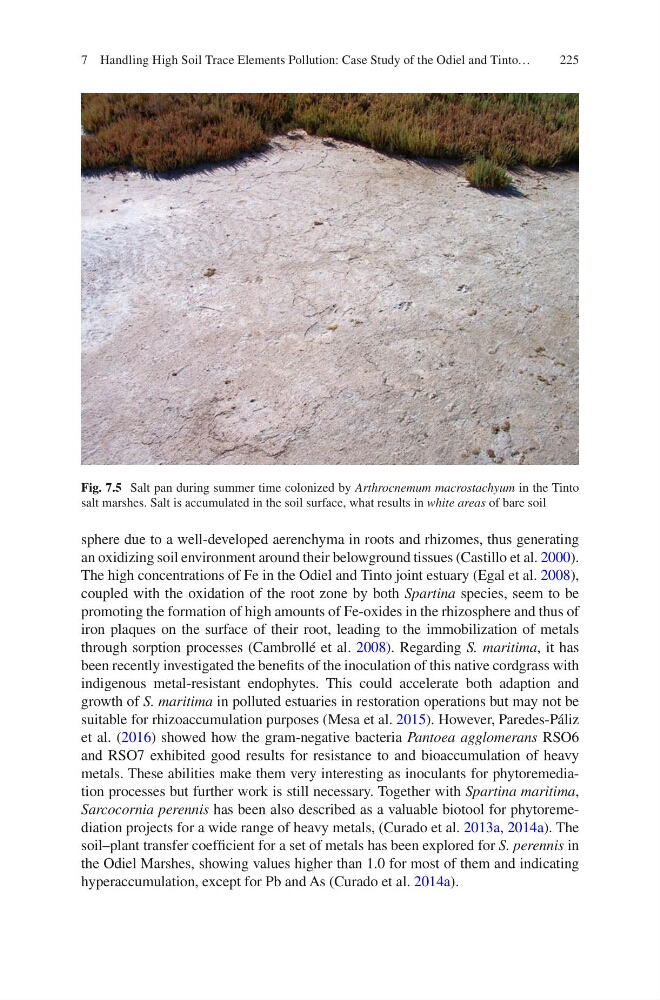
Fig. 7.5 Salt pan during summer time colonized by Arthrocnemum macrostachyum in the Tinto
salt marshes. Salt is accumulated in the soil surface, what results in white areas of bare soil
7 Handling High Soil Trace Elements Pollution: Case Study of the Odiel and Tinto…
sphere due to a well-developed aerenchyma in roots and rhizomes, thus generating
an oxidizing soil environment around their belowground tissues (Castillo et al. 2000).
The high concentrations of Fe in the Odiel and Tinto joint estuary (Egal et al. 2008),
coupled with the oxidation of the root zone by both Spartina species, seem to be
promoting the formation of high amounts of Fe-oxides in the rhizosphere and thus of
iron plaques on the surface of their root, leading to the immobilization of metals
through sorption processes (Cambrollé et al. 2008). Regarding S. maritima, it has
been recently investigated the benefits of the inoculation of this native cordgrass with
indigenous metal-resistant endophytes. This could accelerate both adaption and
growth of S. maritima in polluted estuaries in restoration operations but may not be
suitable for rhizoaccumulation purposes (Mesa et al. 2015). However, Paredes-Páliz
et al. (2016) showed how the gram-negative bacteria Pantoea agglomerans RSO6
and RSO7 exhibited good results for resistance to and bioaccumulation of heavy
metals. These abilities make them very interesting as inoculants for phytoremediation processes but further work is still necessary. Together with Spartina maritima,
Sarcocornia perennis has been also described as a valuable biotool for phytoremediation projects for a wide range of heavy metals, (Curado et al. 2013a, 2014a). The
soil–plant transfer coefficient for a set of metals has been explored for S. perennis in
the Odiel Marshes, showing values higher than 1.0 for most of them and indicating
hyperaccumulation, except for Pb and As (Curado et al. 2014a).
Fig. 7.5 Salt pan during summer time colonized by Arthrocnemum macrostachyum in the Tinto
salt marshes. Salt is accumulated in the soil surface, what results in white areas of bare soil
7 Handling High Soil Trace Elements Pollution: Case Study of the Odiel and Tinto…