

223
7.3 The Odiel Marshes Key Species
as Phytoremediation Biotools
Most of the dominant plant species in salt marshes are halophytic, that is, they are
resistant to high concentrations of salts. Their ability to survive in saline environments renders these species with the additional ability to survive in locations with
high metal contamination (Lutts and Lefèvre 2015; Mendez and Maier 2008), due
to the particular adaptations developed to avoid or withstand salts. This lend them a
critical role to the dynamics of the estuarine ecosystem, since they are able to alter
the chemistry of the sediment in contact with their roots (rhizosediment) (Almeida
et al. 2006), so influencing metal mobility in an extent that depends on the existing
physicochemical properties in the salt marsh sediment (Jacob and Otte 2003), as
well as strongly influence the processes of heavy metal accumulation (Weis et al.
2002; Windham et al. 2003). Depending on the properties of the particular plant
species, some halophytes may be of special interest for phytoextraction or phytostabilization purposes In this regard, phytoextraction is understood as the ability of
plants to remove pollutants from soil, sediment or water and assimilate them into
their biomass, while phytostabilization is referred to those mechanism that cause the
sequestration of pollutant in zones of the soil, preventing their mobilization and
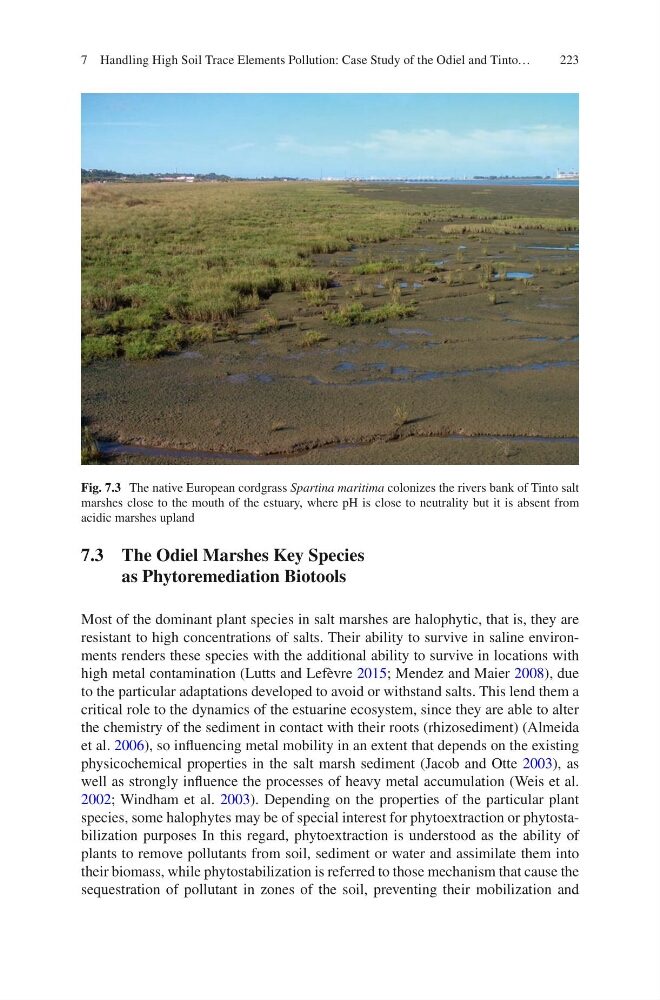
Fig. 7.3 The native European cordgrass Spartina maritima colonizes the rivers bank of Tinto salt
marshes close to the mouth of the estuary, where pH is close to neutrality but it is absent from
acidic marshes upland
7 Handling High Soil Trace Elements Pollution: Case Study of the Odiel and Tinto…
7.3 The Odiel Marshes Key Species
as Phytoremediation Biotools
Most of the dominant plant species in salt marshes are halophytic, that is, they are
resistant to high concentrations of salts. Their ability to survive in saline environments renders these species with the additional ability to survive in locations with
high metal contamination (Lutts and Lefèvre 2015; Mendez and Maier 2008), due
to the particular adaptations developed to avoid or withstand salts. This lend them a
critical role to the dynamics of the estuarine ecosystem, since they are able to alter
the chemistry of the sediment in contact with their roots (rhizosediment) (Almeida
et al. 2006), so influencing metal mobility in an extent that depends on the existing
physicochemical properties in the salt marsh sediment (Jacob and Otte 2003), as
well as strongly influence the processes of heavy metal accumulation (Weis et al.
2002; Windham et al. 2003). Depending on the properties of the particular plant
species, some halophytes may be of special interest for phytoextraction or phytostabilization purposes In this regard, phytoextraction is understood as the ability of
plants to remove pollutants from soil, sediment or water and assimilate them into
their biomass, while phytostabilization is referred to those mechanism that cause the
sequestration of pollutant in zones of the soil, preventing their mobilization and
Fig. 7.3 The native European cordgrass Spartina maritima colonizes the rivers bank of Tinto salt
marshes close to the mouth of the estuary, where pH is close to neutrality but it is absent from
acidic marshes upland
7 Handling High Soil Trace Elements Pollution: Case Study of the Odiel and Tinto…