

195
ecosystems are dependent on the water and soil salinity. Almost all of the mangrove
forest need freshwater supply from the upstream. In the Sundarbans Ganges deltaic
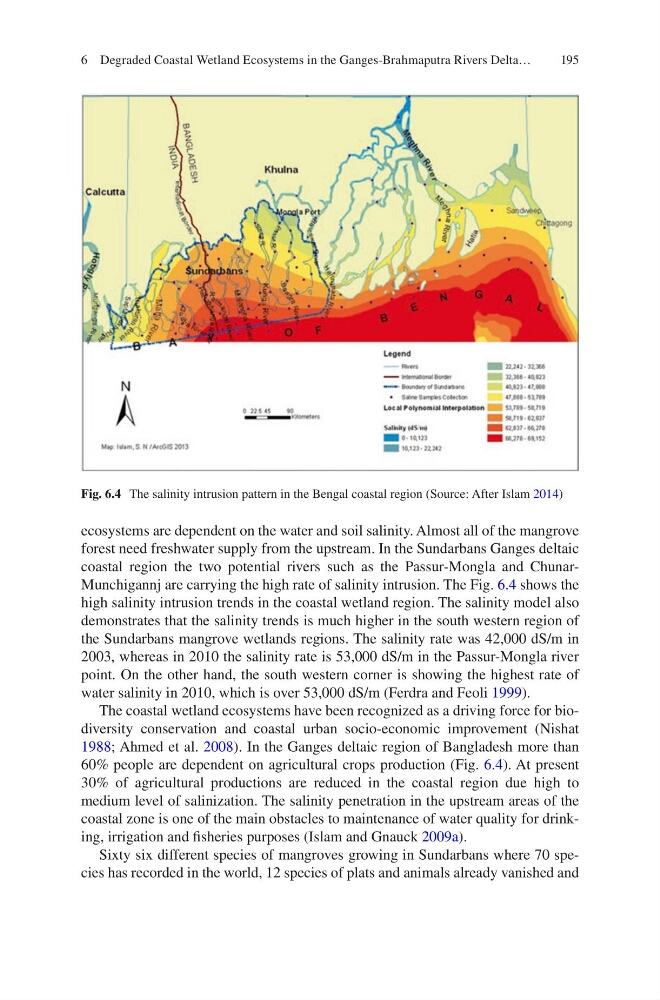
coastal region the two potential rivers such as the Passur-Mongla and ChunarMunchigannj are carrying the high rate of salinity intrusion. The Fig. 6.4 shows the
high salinity intrusion trends in the coastal wetland region. The salinity model also
demonstrates that the salinity trends is much higher in the south western region of
the Sundarbans mangrove wetlands regions. The salinity rate was 42,000 dS/m in
2003, whereas in 2010 the salinity rate is 53,000 dS/m in the Passur-Mongla river
point. On the other hand, the south western corner is showing the highest rate of
water salinity in 2010, which is over 53,000 dS/m (Ferdra and Feoli 1999).
The coastal wetland ecosystems have been recognized as a driving force for biodiversity conservation and coastal urban socio-economic improvement (Nishat
1988; Ahmed et al. 2008). In the Ganges deltaic region of Bangladesh more than
60% people are dependent on agricultural crops production (Fig. 6.4). At present
30% of agricultural productions are reduced in the coastal region due high to
medium level of salinization. The salinity penetration in the upstream areas of the
coastal zone is one of the main obstacles to maintenance of water quality for drinking, irrigation and fisheries purposes (Islam and Gnauck 2009a).
Sixty six different species of mangroves growing in Sundarbans where 70 species has recorded in the world, 12 species of plats and animals already vanished and
Fig. 6.4 The salinity intrusion pattern in the Bengal coastal region (Source: After Islam 2014)
6 Degraded Coastal Wetland Ecosystems in the Ganges-Brahmaputra Rivers Delta…
ecosystems are dependent on the water and soil salinity. Almost all of the mangrove
forest need freshwater supply from the upstream. In the Sundarbans Ganges deltaic
coastal region the two potential rivers such as the Passur-Mongla and ChunarMunchigannj are carrying the high rate of salinity intrusion. The Fig. 6.4 shows the
high salinity intrusion trends in the coastal wetland region. The salinity model also
demonstrates that the salinity trends is much higher in the south western region of
the Sundarbans mangrove wetlands regions. The salinity rate was 42,000 dS/m in
2003, whereas in 2010 the salinity rate is 53,000 dS/m in the Passur-Mongla river
point. On the other hand, the south western corner is showing the highest rate of
water salinity in 2010, which is over 53,000 dS/m (Ferdra and Feoli 1999).
The coastal wetland ecosystems have been recognized as a driving force for biodiversity conservation and coastal urban socio-economic improvement (Nishat
1988; Ahmed et al. 2008). In the Ganges deltaic region of Bangladesh more than
60% people are dependent on agricultural crops production (Fig. 6.4). At present
30% of agricultural productions are reduced in the coastal region due high to
medium level of salinization. The salinity penetration in the upstream areas of the
coastal zone is one of the main obstacles to maintenance of water quality for drinking, irrigation and fisheries purposes (Islam and Gnauck 2009a).
Sixty six different species of mangroves growing in Sundarbans where 70 species has recorded in the world, 12 species of plats and animals already vanished and
Fig. 6.4 The salinity intrusion pattern in the Bengal coastal region (Source: After Islam 2014)
6 Degraded Coastal Wetland Ecosystems in the Ganges-Brahmaputra Rivers Delta…