

336
Carlos A. Gracia, Santiago Sabate, Juan Manuel Martinez and Eva Albeza
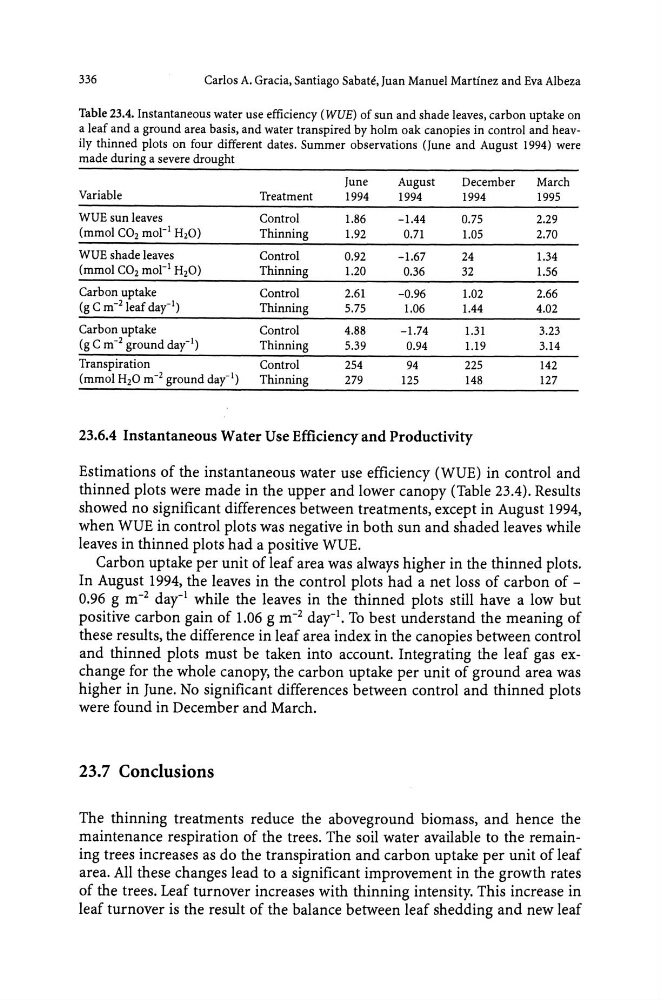
Table 23.4. Instantaneous water use efficiency (WUE) of sun and shade leaves, carbon uptake on
a leaf and a ground area basis, and water transpired by holm oak canopies in control and heavily thinned plots on four different dates. Summer observations (June and August 1994) were
made during a severe drought
June
August
December
March
Variable
Treatment
1994
1994
1994
1995
WUE sun leaves
Control
1.86
-1.44
0.75
2.29
(mmol CO2 mot l H2O)
Thinning
1.92
0.71
1.05
2.70
WUE shade leaves
Control
0.92
-1.67
24
1.34
(mmol CO2 mot l H2O)
Thinning
1.20
0.36
32
1.56
Carbon uptake
Control
2.61
-0.96
1.02
2.66
(g C m- 2 leaf day-I)
Thinning
5.75
1.06
1.44
4.02
Carbon uptake
Control
4.88
-1.74
1.31
3.23
(g C m- 2 ground day-I)
Thinning
5.39
0.94
1.19
3.14
Transpiration
Control
254
94
225
142
(mmol H 2 0 m- 2 ground day-I)
Thinning
279
125
148
127
23.6.4 Instantaneous Water Use Efficiency and Productivity
Estimations of the instantaneous water use efficiency (WUE) in control and
thinned plots were made in the upper and lower canopy (Table 23.4). Results
showed no significant differences between treatments, except in August 1994,
when WUE in control plots was negative in both sun and shaded leaves while
leaves in thinned plots had a positive WUE.
Carbon uptake per unit of leaf area was always higher in the thinned plots.
In August 1994, the leaves in the control plots had a net loss of carbon of -
0.96 g m- 2 day-I while the leaves in the thinned plots still have a low but
positive carbon gain of 1.06 g m- 2 day-I. To best understand the meaning of
these results, the difference in leaf area index in the canopies between control
and thinned plots must be taken into account. Integrating the leaf gas exchange for the whole canopy, the carbon uptake per unit of ground area was
higher in June. No significant differences between control and thinned plots
were found in December and March.
23.7 Conclusions
The thinning treatments reduce the aboveground biomass, and hence the
maintenance respiration of the trees. The soil water available to the remaining trees increases as do the transpiration and carbon uptake per unit of leaf
area. All these changes lead to a significant improvement in the growth rates
of the trees. Leaf turnover increases with thinning intensity. This increase in
leaf turnover is the result of the balance between leaf shedding and new leaf
Carlos A. Gracia, Santiago Sabate, Juan Manuel Martinez and Eva Albeza
Table 23.4. Instantaneous water use efficiency (WUE) of sun and shade leaves, carbon uptake on
a leaf and a ground area basis, and water transpired by holm oak canopies in control and heavily thinned plots on four different dates. Summer observations (June and August 1994) were
made during a severe drought
June
August
December
March
Variable
Treatment
1994
1994
1994
1995
WUE sun leaves
Control
1.86
-1.44
0.75
2.29
(mmol CO2 mot l H2O)
Thinning
1.92
0.71
1.05
2.70
WUE shade leaves
Control
0.92
-1.67
24
1.34
(mmol CO2 mot l H2O)
Thinning
1.20
0.36
32
1.56
Carbon uptake
Control
2.61
-0.96
1.02
2.66
(g C m- 2 leaf day-I)
Thinning
5.75
1.06
1.44
4.02
Carbon uptake
Control
4.88
-1.74
1.31
3.23
(g C m- 2 ground day-I)
Thinning
5.39
0.94
1.19
3.14
Transpiration
Control
254
94
225
142
(mmol H 2 0 m- 2 ground day-I)
Thinning
279
125
148
127
23.6.4 Instantaneous Water Use Efficiency and Productivity
Estimations of the instantaneous water use efficiency (WUE) in control and
thinned plots were made in the upper and lower canopy (Table 23.4). Results
showed no significant differences between treatments, except in August 1994,
when WUE in control plots was negative in both sun and shaded leaves while
leaves in thinned plots had a positive WUE.
Carbon uptake per unit of leaf area was always higher in the thinned plots.
In August 1994, the leaves in the control plots had a net loss of carbon of -
0.96 g m- 2 day-I while the leaves in the thinned plots still have a low but
positive carbon gain of 1.06 g m- 2 day-I. To best understand the meaning of
these results, the difference in leaf area index in the canopies between control
and thinned plots must be taken into account. Integrating the leaf gas exchange for the whole canopy, the carbon uptake per unit of ground area was
higher in June. No significant differences between control and thinned plots
were found in December and March.
23.7 Conclusions
The thinning treatments reduce the aboveground biomass, and hence the
maintenance respiration of the trees. The soil water available to the remaining trees increases as do the transpiration and carbon uptake per unit of leaf
area. All these changes lead to a significant improvement in the growth rates
of the trees. Leaf turnover increases with thinning intensity. This increase in
leaf turnover is the result of the balance between leaf shedding and new leaf