

45
-1.0
1.0
-1.0
1.0
hp
ba
ep
lp
ca
sp
hy
ph
ps
rh
gl
lr
lm
br
bl
cr
si
dx
pr
po
sa
co
ps
dr el
go
ag
lep
hm
pl
ly
AG
BG
Bl
Tp
Mn
Nd
Bh
Kl
Dh
Bhl
Nl
Dm
Ki
St
Ku
Lt
Ru
Su
Tn
_
_
+
Nt
Y
Rg
At
Pn
Axis 2
Axis 1
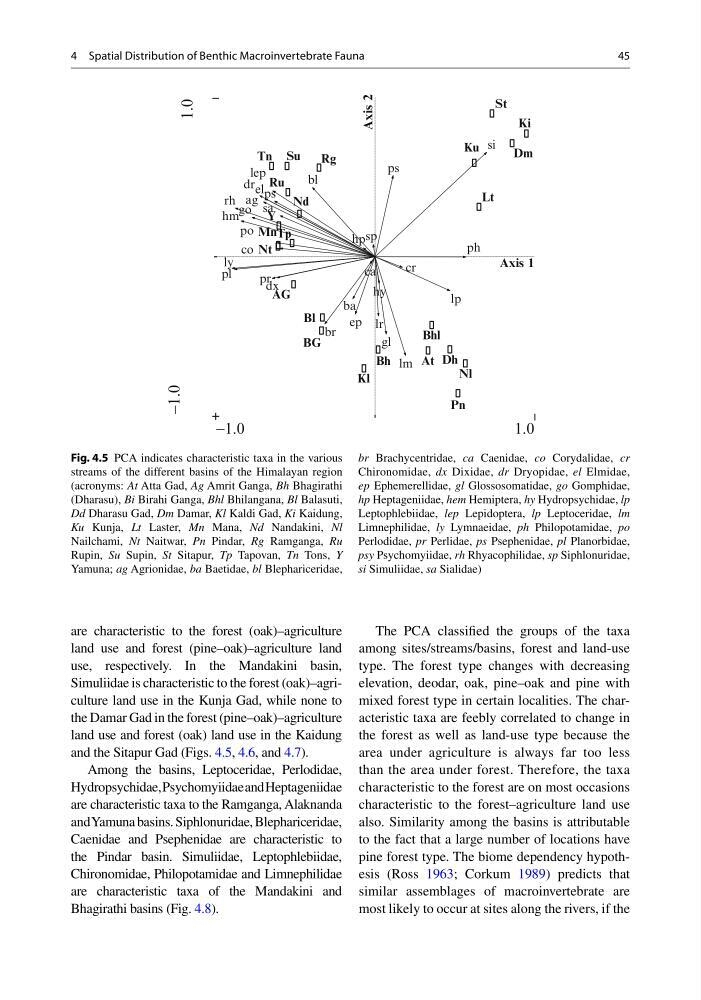
Fig. 4.5 PCA indicates characteristic taxa in the various
streams of the different basins of the Himalayan region
(acronyms: At Atta Gad, Ag Amrit Ganga, Bh Bhagirathi
(Dharasu), Bi Birahi Ganga, Bhl Bhilangana, Bl Balasuti,
Dd Dharasu Gad, Dm Damar, Kl Kaldi Gad, Ki Kaidung,
Ku Kunja, Lt Laster, Mn Mana, Nd Nandakini, Nl
Nailchami, Nt Naitwar, Pn Pindar, Rg Ramganga, Ru
Rupin, Su Supin, St Sitapur, Tp Tapovan, Tn Tons, Y
Yamuna; ag Agrionidae, ba Baetidae, bl Blephariceridae,
br Brachycentridae, ca Caenidae, co Corydalidae, cr
Chironomidae, dx Dixidae, dr Dryopidae, el Elmidae,
ep Ephemerellidae, gl Glossosomatidae, go Gomphidae,
hp Heptageniidae, hem Hemiptera, hy Hydropsychidae, lp
Leptophlebiidae, lep Lepidoptera, lp Leptoceridae, lm
Limnephilidae, ly Lymnaeidae, ph Philopotamidae, po
Perlodidae, pr Perlidae, ps Psephenidae, pl Planorbidae,
psy Psychomyiidae, rh Rhyacophilidae, sp Siphlonuridae,
si Simuliidae, sa Sialidae)
are characteristic to the forest (oak)–agriculture
land use and forest (pine–oak)–agriculture land
use, respectively. In the Mandakini basin,
Simuliidae is characteristic to the forest (oak)–agriculture land use in the Kunja Gad, while none to
the Damar Gad in the forest (pine–oak)–agriculture
land use and forest (oak) land use in the Kaidung
and the Sitapur Gad (Figs. 4.5 , 4.6 , and 4.7 ).
Among the basins, Leptoceridae, Perlodidae,
Hydropsychidae, Psychomyiidae and Heptageniidae
are characteristic taxa to the Ramganga, Alaknanda
and Yamuna basins. Siphlonuridae , Blephariceridae,
Caenidae and Psephenidae are characteristic to
the Pindar basin. Simuliidae, Leptophlebiidae,
Chironomidae, Philopotamidae and Limnephilidae
are characteristic taxa of the Mandakini and
Bhagirathi basins (Fig. 4.8 ).
The PCA classifi ed the groups of the taxa
among sites/streams/basins, forest and land-use
type. The forest type changes with decreasing
elevation, deodar, oak, pine–oak and pine with
mixed forest type in certain localities. The characteristic taxa are feebly correlated to change in
the forest as well as land-use type because the
area under agriculture is always far too less
than the area under forest. Therefore, the taxa
characteristic to the forest are on most occasions
characteristic to the forest–agriculture land use
also. Similarity among the basins is attributable
to the fact that a large number of locations have
pine forest type. The biome dependency hypothesis (Ross 1963 ; Corkum 1989 ) predicts that
similar assemblages of macroinvertebrate are
most likely to occur at sites along the rivers, if the
4 Spatial Distribution of Benthic Macroinvertebrate Fauna
-1.0
1.0
-1.0
1.0
hp
ba
ep
lp
ca
sp
hy
ph
ps
rh
gl
lr
lm
br
bl
cr
si
dx
pr
po
sa
co
ps
dr el
go
ag
lep
hm
pl
ly
AG
BG
Bl
Tp
Mn
Nd
Bh
Kl
Dh
Bhl
Nl
Dm
Ki
St
Ku
Lt
Ru
Su
Tn
_
_
+
Nt
Y
Rg
At
Pn
Axis 2
Axis 1
Fig. 4.5 PCA indicates characteristic taxa in the various
streams of the different basins of the Himalayan region
(acronyms: At Atta Gad, Ag Amrit Ganga, Bh Bhagirathi
(Dharasu), Bi Birahi Ganga, Bhl Bhilangana, Bl Balasuti,
Dd Dharasu Gad, Dm Damar, Kl Kaldi Gad, Ki Kaidung,
Ku Kunja, Lt Laster, Mn Mana, Nd Nandakini, Nl
Nailchami, Nt Naitwar, Pn Pindar, Rg Ramganga, Ru
Rupin, Su Supin, St Sitapur, Tp Tapovan, Tn Tons, Y
Yamuna; ag Agrionidae, ba Baetidae, bl Blephariceridae,
br Brachycentridae, ca Caenidae, co Corydalidae, cr
Chironomidae, dx Dixidae, dr Dryopidae, el Elmidae,
ep Ephemerellidae, gl Glossosomatidae, go Gomphidae,
hp Heptageniidae, hem Hemiptera, hy Hydropsychidae, lp
Leptophlebiidae, lep Lepidoptera, lp Leptoceridae, lm
Limnephilidae, ly Lymnaeidae, ph Philopotamidae, po
Perlodidae, pr Perlidae, ps Psephenidae, pl Planorbidae,
psy Psychomyiidae, rh Rhyacophilidae, sp Siphlonuridae,
si Simuliidae, sa Sialidae)
are characteristic to the forest (oak)–agriculture
land use and forest (pine–oak)–agriculture land
use, respectively. In the Mandakini basin,
Simuliidae is characteristic to the forest (oak)–agriculture land use in the Kunja Gad, while none to
the Damar Gad in the forest (pine–oak)–agriculture
land use and forest (oak) land use in the Kaidung
and the Sitapur Gad (Figs. 4.5 , 4.6 , and 4.7 ).
Among the basins, Leptoceridae, Perlodidae,
Hydropsychidae, Psychomyiidae and Heptageniidae
are characteristic taxa to the Ramganga, Alaknanda
and Yamuna basins. Siphlonuridae , Blephariceridae,
Caenidae and Psephenidae are characteristic to
the Pindar basin. Simuliidae, Leptophlebiidae,
Chironomidae, Philopotamidae and Limnephilidae
are characteristic taxa of the Mandakini and
Bhagirathi basins (Fig. 4.8 ).
The PCA classifi ed the groups of the taxa
among sites/streams/basins, forest and land-use
type. The forest type changes with decreasing
elevation, deodar, oak, pine–oak and pine with
mixed forest type in certain localities. The characteristic taxa are feebly correlated to change in
the forest as well as land-use type because the
area under agriculture is always far too less
than the area under forest. Therefore, the taxa
characteristic to the forest are on most occasions
characteristic to the forest–agriculture land use
also. Similarity among the basins is attributable
to the fact that a large number of locations have
pine forest type. The biome dependency hypothesis (Ross 1963 ; Corkum 1989 ) predicts that
similar assemblages of macroinvertebrate are
most likely to occur at sites along the rivers, if the
4 Spatial Distribution of Benthic Macroinvertebrate Fauna