

128
W. Schulze and E.-D. Schulze
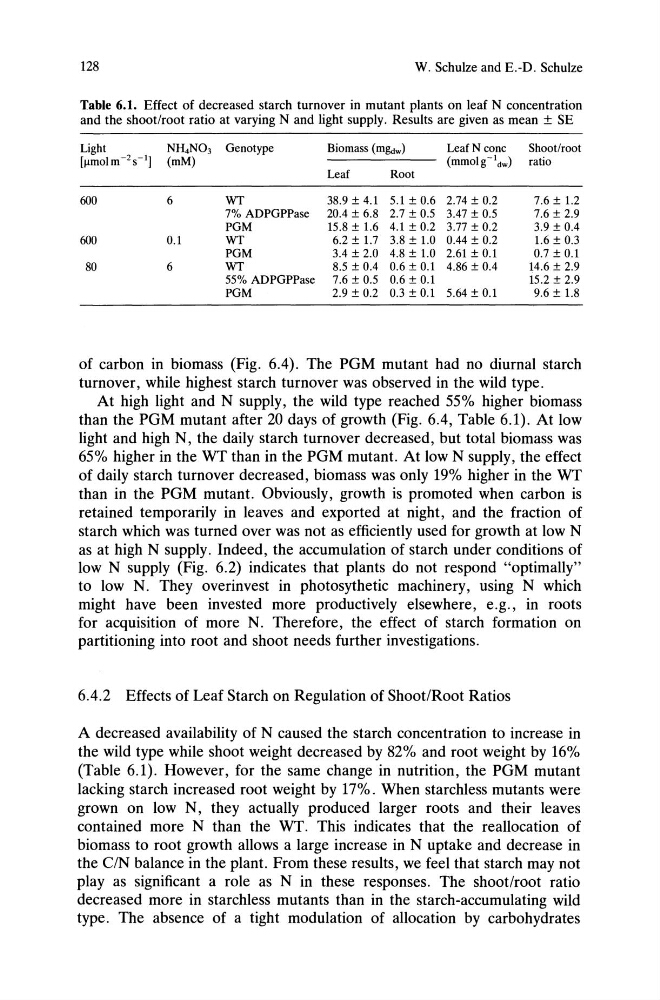
Table 6.1. Effect of decreased starch turnover in mutant plants on leaf N concentration
and the shoot/root ratio at varying N and light supply. Results are given as mean ± SE
Light
NH4N03 Genotype
Biomass (mgdw)
LeafN cone
Shoot/root
[llmolm~2s~11
(mM)
(mmolg~ldw)
ratio
Leaf
Root
600
6
WT
38.9 ± 4.1 5.1 ± 0.6 2.74 ± 0.2
7.6 ± 1.2
7% ADPGPPase
20.4 ± 6.8 2.7 ± 0.5 3.47 ± 0.5
7.6 ± 2.9
PGM
15.8 ± 1.6 4.1 ± 0.2 3.77 ± 0.2
3.9 ± 0.4
600
0.1
WT
6.2 ± 1.7 3.8 ± 1.0 0.44 ± 0.2
1.6 ± 0.3
PGM
3.4 ± 2.0 4.8 ± 1.0 2.61 ± 0.1
0.7 ± 0.1
80
6
WT
8.5 ± 0.4 0.6 ± 0.1 4.86 ± 0.4
14.6 ± 2.9
55% ADPGPPase
7.6 ± 0.5 0.6 ± 0.1
15.2 ± 2.9
PGM
2.9 ± 0.2 0.3 ± 0.1 5.64 ± 0.1
9.6 ± 1.8
of carbon in biomass (Fig. 6.4). The PGM mutant had no diurnal starch
turnover, while highest starch turnover was observed in the wild type.
At high light and N supply, the wild type reached 55% higher biomass
than the PGM mutant after 20 days of growth (Fig. 6.4, Table 6.1). At low
light and high N, the daily starch turnover decreased, but total biomass was
65% higher in the WT than in the PGM mutant. At low N supply, the effect
of daily starch turnover decreased, biomass was only 19% higher in the WT
than in the PGM mutant. Obviously, growth is promoted when carbon is
retained temporarily in leaves and exported at night, and the fraction of
starch which was turned over was not as efficiently used for growth at low N
as at high N supply. Indeed, the accumulation of starch under conditions of
low N supply (Fig. 6.2) indicates that plants do not respond "optimally"
to low N. They overinvest in photosythetic machinery, using N which
might have been invested more productively elsewhere, e.g., in roots
for acquisition of more N. Therefore, the effect of starch formation on
partitioning into root and shoot needs further investigations.
6.4.2 Effects of Leaf Starch on Regulation of Shoot/Root Ratios
A decreased availability of N caused the starch concentration to increase in
the wild type while shoot weight decreased by 82% and root weight by 16%
(Table 6.1). However, for the same change in nutrition, the PGM mutant
lacking starch increased root weight by 17%. When starchless mutants were
grown on low N, they actually produced larger roots and their leaves
contained more N than the WT. This indicates that the reallocation of
biomass to root growth allows a large increase in N uptake and decrease in
the elN balance in the plant. From these results, we feel that starch may not
playas significant a role as N in these responses. The shoot/root ratio
decreased more in starchless mutants than in the starch-accumulating wild
type. The absence of a tight modulation of allocation by carbohydrates
W. Schulze and E.-D. Schulze
Table 6.1. Effect of decreased starch turnover in mutant plants on leaf N concentration
and the shoot/root ratio at varying N and light supply. Results are given as mean ± SE
Light
NH4N03 Genotype
Biomass (mgdw)
LeafN cone
Shoot/root
[llmolm~2s~11
(mM)
(mmolg~ldw)
ratio
Leaf
Root
600
6
WT
38.9 ± 4.1 5.1 ± 0.6 2.74 ± 0.2
7.6 ± 1.2
7% ADPGPPase
20.4 ± 6.8 2.7 ± 0.5 3.47 ± 0.5
7.6 ± 2.9
PGM
15.8 ± 1.6 4.1 ± 0.2 3.77 ± 0.2
3.9 ± 0.4
600
0.1
WT
6.2 ± 1.7 3.8 ± 1.0 0.44 ± 0.2
1.6 ± 0.3
PGM
3.4 ± 2.0 4.8 ± 1.0 2.61 ± 0.1
0.7 ± 0.1
80
6
WT
8.5 ± 0.4 0.6 ± 0.1 4.86 ± 0.4
14.6 ± 2.9
55% ADPGPPase
7.6 ± 0.5 0.6 ± 0.1
15.2 ± 2.9
PGM
2.9 ± 0.2 0.3 ± 0.1 5.64 ± 0.1
9.6 ± 1.8
of carbon in biomass (Fig. 6.4). The PGM mutant had no diurnal starch
turnover, while highest starch turnover was observed in the wild type.
At high light and N supply, the wild type reached 55% higher biomass
than the PGM mutant after 20 days of growth (Fig. 6.4, Table 6.1). At low
light and high N, the daily starch turnover decreased, but total biomass was
65% higher in the WT than in the PGM mutant. At low N supply, the effect
of daily starch turnover decreased, biomass was only 19% higher in the WT
than in the PGM mutant. Obviously, growth is promoted when carbon is
retained temporarily in leaves and exported at night, and the fraction of
starch which was turned over was not as efficiently used for growth at low N
as at high N supply. Indeed, the accumulation of starch under conditions of
low N supply (Fig. 6.2) indicates that plants do not respond "optimally"
to low N. They overinvest in photosythetic machinery, using N which
might have been invested more productively elsewhere, e.g., in roots
for acquisition of more N. Therefore, the effect of starch formation on
partitioning into root and shoot needs further investigations.
6.4.2 Effects of Leaf Starch on Regulation of Shoot/Root Ratios
A decreased availability of N caused the starch concentration to increase in
the wild type while shoot weight decreased by 82% and root weight by 16%
(Table 6.1). However, for the same change in nutrition, the PGM mutant
lacking starch increased root weight by 17%. When starchless mutants were
grown on low N, they actually produced larger roots and their leaves
contained more N than the WT. This indicates that the reallocation of
biomass to root growth allows a large increase in N uptake and decrease in
the elN balance in the plant. From these results, we feel that starch may not
playas significant a role as N in these responses. The shoot/root ratio
decreased more in starchless mutants than in the starch-accumulating wild
type. The absence of a tight modulation of allocation by carbohydrates