

Chapter 1 . Applications of Fuzzy Logic
11
prediction step (difference between moments in time) represents aperiod of two
months.
abundarce
food
Fk
re
AO'
A k ____
k:=I<+1 J-Fuzzy
A k+1
Model
rroistu
M k
abundarce
ht
weig
Wk
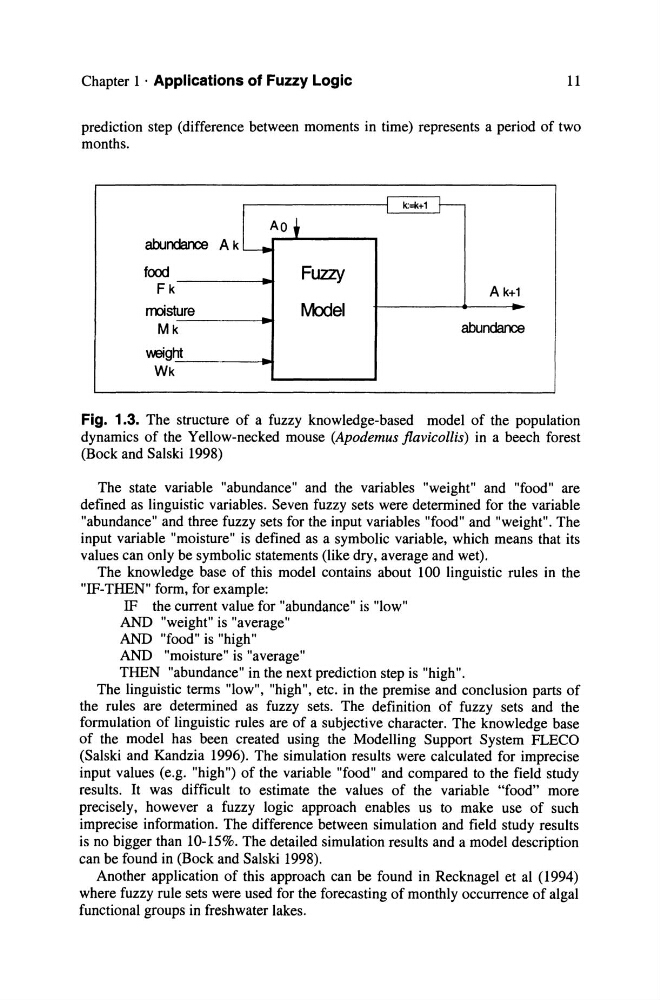
Fig. 1.3. The structure of a fuzzy knowledge-based model of the population
dynamics of the Yellow-necked mouse (Apodemus flavicollis) in a beech forest
(Bock and Salski 1998)
The state variable "abundance" and the variables "weight" and "food" are
defined as linguistic variables. Seven fuzzy sets were determined for the variable
"abundance" and three fuzzy sets for the input variables "food" and "weight". The
input variable "moisture" is defined as a symbolic variable, which means that its
values can only be symbolic statements (like dry, average and wet).
The knowledge base of this model contains about 100 linguistic rules in the
"IF-TREN" form, for example:
IF the current value for "abundance" is "low"
AND "weight" is "average"
AND "food" is "high"
AND "moisture" is "average"
TREN "abundance" in the next prediction step is "high".
The linguistic terms "low", "high", etc. in the premise and conclusion parts of
the rules are determined as fuzzy sets. The definition of fuzzy sets and the
formulation of linguistic rules are of a subjective character. The knowledge base
of the model has been created using the Modelling Support System FLECO
(Salski and Kandzia 1996). The simulation results were calculated for imprecise
input values (e.g. "high") of the variable "food" and compared to the field study
results. It was difficult to estimate the values of the variable "food" more
precisely, however a fuzzy logic approach enables us to make use of such
imprecise information. The difference between simulation and field study results
is no bigger than 10-15%. The detailed simulation results and a model description
can be found in (Bock and Salski 1998).
Another application of this approach can be found in Recknagel et al (1994)
where fuzzy rule sets were used for the forecasting of monthly occurrence of algal
functional groups in freshwater lakes.
11
prediction step (difference between moments in time) represents aperiod of two
months.
abundarce
food
Fk
re
AO'
A k ____
k:=I<+1 J-Fuzzy
A k+1
Model
rroistu
M k
abundarce
ht
weig
Wk
Fig. 1.3. The structure of a fuzzy knowledge-based model of the population
dynamics of the Yellow-necked mouse (Apodemus flavicollis) in a beech forest
(Bock and Salski 1998)
The state variable "abundance" and the variables "weight" and "food" are
defined as linguistic variables. Seven fuzzy sets were determined for the variable
"abundance" and three fuzzy sets for the input variables "food" and "weight". The
input variable "moisture" is defined as a symbolic variable, which means that its
values can only be symbolic statements (like dry, average and wet).
The knowledge base of this model contains about 100 linguistic rules in the
"IF-TREN" form, for example:
IF the current value for "abundance" is "low"
AND "weight" is "average"
AND "food" is "high"
AND "moisture" is "average"
TREN "abundance" in the next prediction step is "high".
The linguistic terms "low", "high", etc. in the premise and conclusion parts of
the rules are determined as fuzzy sets. The definition of fuzzy sets and the
formulation of linguistic rules are of a subjective character. The knowledge base
of the model has been created using the Modelling Support System FLECO
(Salski and Kandzia 1996). The simulation results were calculated for imprecise
input values (e.g. "high") of the variable "food" and compared to the field study
results. It was difficult to estimate the values of the variable "food" more
precisely, however a fuzzy logic approach enables us to make use of such
imprecise information. The difference between simulation and field study results
is no bigger than 10-15%. The detailed simulation results and a model description
can be found in (Bock and Salski 1998).
Another application of this approach can be found in Recknagel et al (1994)
where fuzzy rule sets were used for the forecasting of monthly occurrence of algal
functional groups in freshwater lakes.