

10
A. Salski
inputdata
1
coordinates
11
values
1
~
~
1 experimental variogram
1 distances
11 ~ 11
lexpert
11
theoretical variogram
11
aiSImIces
11
values
t
1
kriging variance
11
Eoordinates
11
values
~
..
krlglng result
11
values
~
coordinates
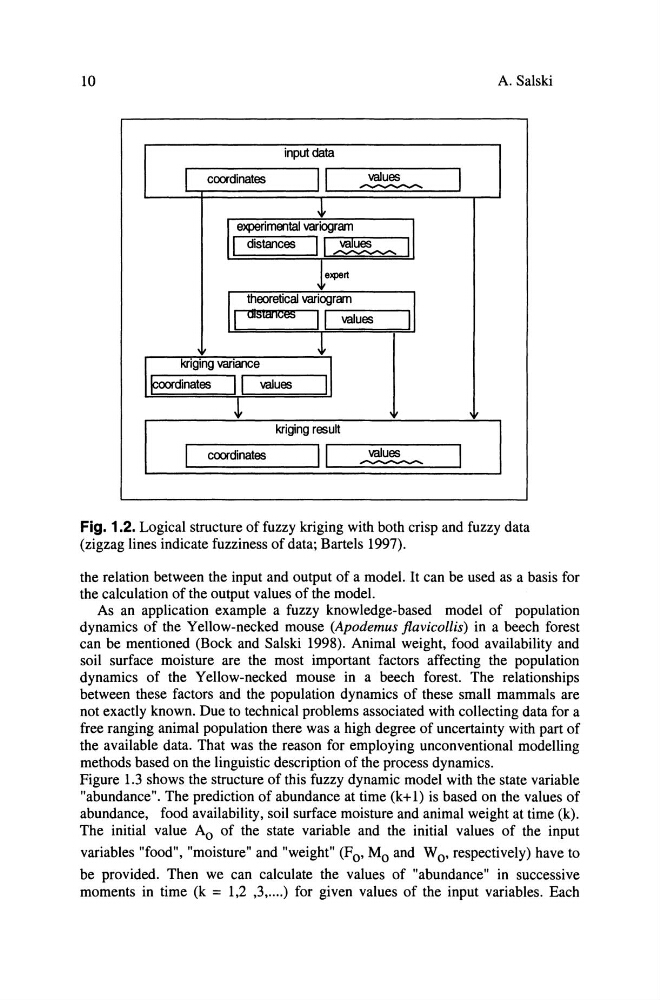
Fig. 1.2. Logical structure of fuzzy kriging with both crisp and fuzzy data
(zigzag lines indicate fuzziness of data; Barteis 1997).
the relation between the input and output of a model. It can be used as a basis for
the calculation of the output values of the model.
As an application example a fuzzy knowledge-based model of population
dynamics of the Yellow-necked mouse (Apodemus flavicollis) in a beech forest
can be mentioned (Bock and Salski 1998). Animal weight, food availability and
soil surface moisture are the most important factors affecting the population
dynamics of the Yellow-necked mouse in a beech forest. The relationships
between these factors and the population dynamics of these small mammals are
not exactly known. Due to technical problems associated with collecting data for a
free ranging animal population there was a high degree of uncertainty with part of
the available data. That was the reason for employing unconventional modelling
methods based on the linguistic description of the process dynamies.
Figure 1.3 shows the structure of this fuzzy dynamic model with the state variable
"abundance". The prediction of abundance at time (k+l) is based on the values of
abundance, food availability, soil surface moisture and animal weight at time (k).
The initial value A o of the state variable and the initial values of the input
variables "food", "moisture" and "weight" (F o ' Mo and Wo' respectively) have to
be provided. Then we can calculate the values of "abundance" in successive
moments in time (k = 1,2 ,3, .... ) for given values of the input variables. Each
A. Salski
inputdata
1
coordinates
11
values
1
~
~
1 experimental variogram
1 distances
11 ~ 11
lexpert
11
theoretical variogram
11
aiSImIces
11
values
t
1
kriging variance
11
Eoordinates
11
values
~
..
krlglng result
11
values
~
coordinates
Fig. 1.2. Logical structure of fuzzy kriging with both crisp and fuzzy data
(zigzag lines indicate fuzziness of data; Barteis 1997).
the relation between the input and output of a model. It can be used as a basis for
the calculation of the output values of the model.
As an application example a fuzzy knowledge-based model of population
dynamics of the Yellow-necked mouse (Apodemus flavicollis) in a beech forest
can be mentioned (Bock and Salski 1998). Animal weight, food availability and
soil surface moisture are the most important factors affecting the population
dynamics of the Yellow-necked mouse in a beech forest. The relationships
between these factors and the population dynamics of these small mammals are
not exactly known. Due to technical problems associated with collecting data for a
free ranging animal population there was a high degree of uncertainty with part of
the available data. That was the reason for employing unconventional modelling
methods based on the linguistic description of the process dynamies.
Figure 1.3 shows the structure of this fuzzy dynamic model with the state variable
"abundance". The prediction of abundance at time (k+l) is based on the values of
abundance, food availability, soil surface moisture and animal weight at time (k).
The initial value A o of the state variable and the initial values of the input
variables "food", "moisture" and "weight" (F o ' Mo and Wo' respectively) have to
be provided. Then we can calculate the values of "abundance" in successive
moments in time (k = 1,2 ,3, .... ) for given values of the input variables. Each