

Chapter 6 . Stream Assessment
93
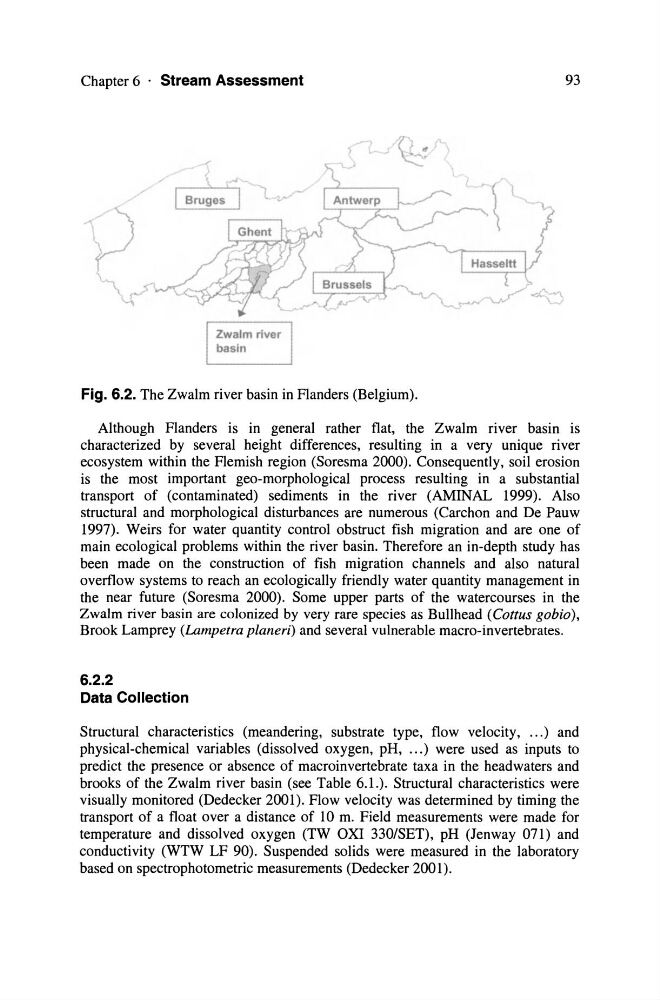
Fig. 6.2. The Zwalm river basin in Flanders (Belgium).
Although Flanders is in general rather flat, the Zwalm river basin is
characterized by several height differences, resulting in a very unique river
ecosystem within the Flemish region (Soresma 2000). Consequently, soi! erosion
is the most important geo-morphological process resulting in a substantial
transport of (contaminated) sediments in the river (AMINAL 1999). Also
structural and morphological disturbances are numerous (Carchon and De Pauw
1997). Weirs for water quantity control obstruct fish migration and are one of
main ecological problems within the river basin. Therefore an in-depth study has
been made on the construction of fish migration channels and also natural
overflow systems to reach an ecologically friendly water quantity management in
the near future (Soresma 2000). Some upper parts of the watercourses in the
Zwalm river basin are colonized by very rare species as Bullhead (Cottus gobio),
Brook Lamprey (Lampetra planeri) and several vulnerable macro-invertebrates.
6.2.2
Data Collection
Structural characteristics (meandering, substrate type, flow velocity, ... ) and
physical-chemical variables (dissolved oxygen, pR, ... ) were used as inputs to
predict the presence or absence of macroinvertebrate taxa in the headwaters and
brooks of the Zwalm river basin (see Table 6.1.). Structural characteristics were
visually monitored (Dedecker 2001). Flow velocity was determined by timing the
transport of a float over a distance of 10 m. Field measurements were made for
temperature and dissolved oxygen (TW OXI 330/SET), pR (Jenway 071) and
conductivity (WTW LF 90). Suspended solids were measured in the laboratory
based on spectrophotometric measurements (Dedecker 2001).
93
Fig. 6.2. The Zwalm river basin in Flanders (Belgium).
Although Flanders is in general rather flat, the Zwalm river basin is
characterized by several height differences, resulting in a very unique river
ecosystem within the Flemish region (Soresma 2000). Consequently, soi! erosion
is the most important geo-morphological process resulting in a substantial
transport of (contaminated) sediments in the river (AMINAL 1999). Also
structural and morphological disturbances are numerous (Carchon and De Pauw
1997). Weirs for water quantity control obstruct fish migration and are one of
main ecological problems within the river basin. Therefore an in-depth study has
been made on the construction of fish migration channels and also natural
overflow systems to reach an ecologically friendly water quantity management in
the near future (Soresma 2000). Some upper parts of the watercourses in the
Zwalm river basin are colonized by very rare species as Bullhead (Cottus gobio),
Brook Lamprey (Lampetra planeri) and several vulnerable macro-invertebrates.
6.2.2
Data Collection
Structural characteristics (meandering, substrate type, flow velocity, ... ) and
physical-chemical variables (dissolved oxygen, pR, ... ) were used as inputs to
predict the presence or absence of macroinvertebrate taxa in the headwaters and
brooks of the Zwalm river basin (see Table 6.1.). Structural characteristics were
visually monitored (Dedecker 2001). Flow velocity was determined by timing the
transport of a float over a distance of 10 m. Field measurements were made for
temperature and dissolved oxygen (TW OXI 330/SET), pR (Jenway 071) and
conductivity (WTW LF 90). Suspended solids were measured in the laboratory
based on spectrophotometric measurements (Dedecker 2001).