

34.3 Assessment Results
Fire Regime
_ Lethal
IWIMixed
I1llINonlethal
Current UiiiimlliWW
o
10
20
30
40
Percent of area
50
60
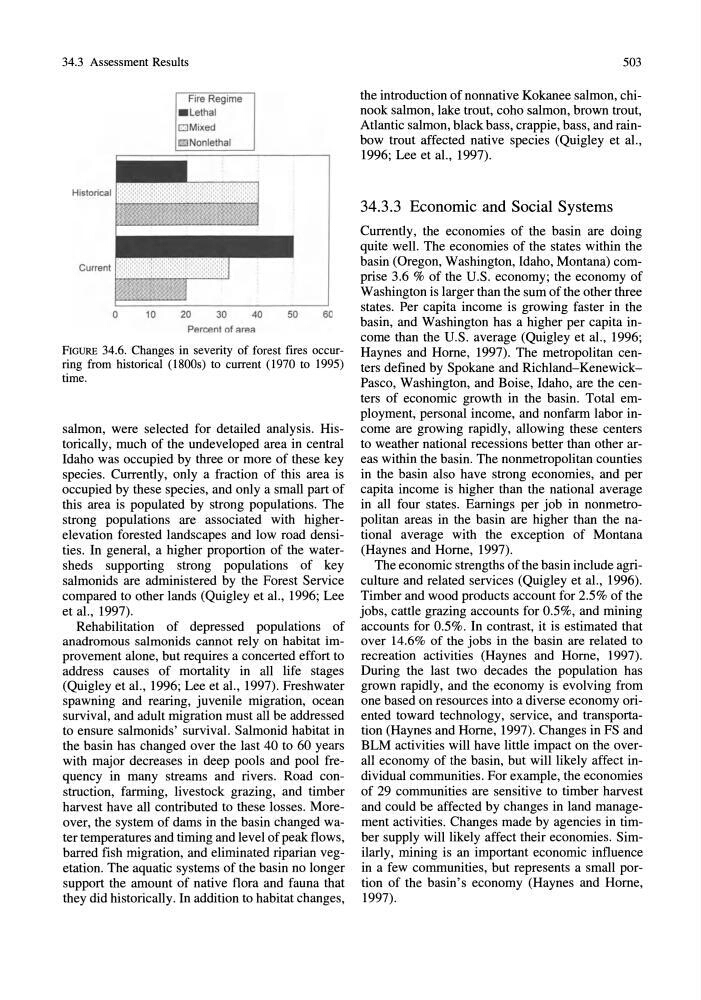
FIGURE 34.6. Changes in severity of forest fires occurring from historical (1800s) to current (1970 to 1995)
time.
salmon, were selected for detailed analysis. Historically, much of the undeveloped area in central
Idaho was occupied by three or more of these key
species. Currently, only a fraction of this area is
occupied by these species, and only a small part of
this area is populated by strong populations. The
strong populations are associated with higherelevation forested landscapes and low road densities. In general, a higher proportion of the watersheds supporting strong populations of key
salmonids are administered by the Forest Service
compared to other lands (Quigley et aI., 1996; Lee
et al., 1997).
Rehabilitation of depressed popUlations of
anadromous salmonids cannot rely on habitat improvement alone, but requires a concerted effort to
address causes of mortality in all life stages
(Quigley et aI., 1996; Lee et aI., 1997). Freshwater
spawning and rearing, juvenile migration, ocean
survival, and adult migration must all be addressed
to ensure salmonids' survival. Salmonid habitat in
the basin has changed over the last 40 to 60 years
with major decreases in deep pools and pool frequency in many streams and rivers. Road construction, farming, livestock grazing, and timber
harvest have all contributed to these losses. Moreover, the system of dams in the basin changed water temperatures and timing and level of peak flows,
barred fish migration, and eliminated riparian vegetation. The aquatic systems of the basin no longer
support the amount of native flora and fauna that
they did historically. In addition to habitat changes,
503
the introduction of nonnative Kokanee salmon, chinook salmon, lake trout, coho salmon, brown trout,
Atlantic salmon, black bass, crappie, bass, and rainbow trout affected native species (Quigley et aI.,
1996; Lee et aI., 1997).
34.3.3 Economic and Social Systems
Currently, the economies of the basin are doing
quite well. The economies of the states within the
basin (Oregon, Washington, Idaho, Montana) comprise 3.6 % of the U.S. economy; the economy of
Washington is larger than the sum of the other three
states. Per capita income is growing faster in the
basin, and Washington has a higher per capita income than the U.S. average (Quigley et aI., 1996;
Haynes and Home, 1997). The metropolitan centers defined by Spokane and Richland-KenewickPasco, Washington, and Boise, Idaho, are the centers of economic growth in the basin. Total employment, personal income, and nonfarm labor income are growing rapidly, allowing these centers
to weather national recessions better than other areas within the basin. The nonmetropolitan counties
in the basin also have strong economies, and per
capita income is higher than the national average
in all four states. Earnings per job in nonmetropolitan areas in the basin are higher than the national average with the exception of Montana
(Haynes and Home, 1997).
The economic strengths of the basin include agriculture and related services (Quigley et aI., 1996).
Timber and wood products account for 2.5% of the
jobs, cattle grazing accounts for 0.5%, and mining
accounts for 0.5%. In contrast, it is estimated that
over 14.6% of the jobs in the basin are related to
recreation activities (Haynes and Home, 1997).
During the last two decades the population has
grown rapidly, and the economy is evolving from
one based on resources into a diverse economy oriented toward technology, service, and transportation (Haynes and Home, 1997). Changes in FS and
BLM activities will have little impact on the overall economy of the basin, but will likely affect individual communities. For example, the economies
of 29 communities are sensitive to timber harvest
and could be affected by changes in land management activities. Changes made by agencies in timber supply will likely affect their economies. Similarly, mining is an important economic influence
in a few communities, but represents a small portion of the basin's economy (Haynes and Home,
1997).
Fire Regime
_ Lethal
IWIMixed
I1llINonlethal
Current UiiiimlliWW
o
10
20
30
40
Percent of area
50
60
FIGURE 34.6. Changes in severity of forest fires occurring from historical (1800s) to current (1970 to 1995)
time.
salmon, were selected for detailed analysis. Historically, much of the undeveloped area in central
Idaho was occupied by three or more of these key
species. Currently, only a fraction of this area is
occupied by these species, and only a small part of
this area is populated by strong populations. The
strong populations are associated with higherelevation forested landscapes and low road densities. In general, a higher proportion of the watersheds supporting strong populations of key
salmonids are administered by the Forest Service
compared to other lands (Quigley et aI., 1996; Lee
et al., 1997).
Rehabilitation of depressed popUlations of
anadromous salmonids cannot rely on habitat improvement alone, but requires a concerted effort to
address causes of mortality in all life stages
(Quigley et aI., 1996; Lee et aI., 1997). Freshwater
spawning and rearing, juvenile migration, ocean
survival, and adult migration must all be addressed
to ensure salmonids' survival. Salmonid habitat in
the basin has changed over the last 40 to 60 years
with major decreases in deep pools and pool frequency in many streams and rivers. Road construction, farming, livestock grazing, and timber
harvest have all contributed to these losses. Moreover, the system of dams in the basin changed water temperatures and timing and level of peak flows,
barred fish migration, and eliminated riparian vegetation. The aquatic systems of the basin no longer
support the amount of native flora and fauna that
they did historically. In addition to habitat changes,
503
the introduction of nonnative Kokanee salmon, chinook salmon, lake trout, coho salmon, brown trout,
Atlantic salmon, black bass, crappie, bass, and rainbow trout affected native species (Quigley et aI.,
1996; Lee et aI., 1997).
34.3.3 Economic and Social Systems
Currently, the economies of the basin are doing
quite well. The economies of the states within the
basin (Oregon, Washington, Idaho, Montana) comprise 3.6 % of the U.S. economy; the economy of
Washington is larger than the sum of the other three
states. Per capita income is growing faster in the
basin, and Washington has a higher per capita income than the U.S. average (Quigley et aI., 1996;
Haynes and Home, 1997). The metropolitan centers defined by Spokane and Richland-KenewickPasco, Washington, and Boise, Idaho, are the centers of economic growth in the basin. Total employment, personal income, and nonfarm labor income are growing rapidly, allowing these centers
to weather national recessions better than other areas within the basin. The nonmetropolitan counties
in the basin also have strong economies, and per
capita income is higher than the national average
in all four states. Earnings per job in nonmetropolitan areas in the basin are higher than the national average with the exception of Montana
(Haynes and Home, 1997).
The economic strengths of the basin include agriculture and related services (Quigley et aI., 1996).
Timber and wood products account for 2.5% of the
jobs, cattle grazing accounts for 0.5%, and mining
accounts for 0.5%. In contrast, it is estimated that
over 14.6% of the jobs in the basin are related to
recreation activities (Haynes and Home, 1997).
During the last two decades the population has
grown rapidly, and the economy is evolving from
one based on resources into a diverse economy oriented toward technology, service, and transportation (Haynes and Home, 1997). Changes in FS and
BLM activities will have little impact on the overall economy of the basin, but will likely affect individual communities. For example, the economies
of 29 communities are sensitive to timber harvest
and could be affected by changes in land management activities. Changes made by agencies in timber supply will likely affect their economies. Similarly, mining is an important economic influence
in a few communities, but represents a small portion of the basin's economy (Haynes and Home,
1997).