

23.2 Definition of Terrestrial Dynamic Pattern
(/)
a: w
/jj
~
~
~
.-I
t=:
z
w
~
~ II:
:> Z w
ffi
o
II:
fr
ENVIRONMENTAL SIGNAL
A. Gradual Change
B. Natural Periodicity
JAN
C. Disturbance
~
D. Human Management
:>
a: o
TIME
JUNE
VEGETATION RESPONSE
Population shifts
Resetting of
competitive hierarchy
Phenology:
Seasonal changes in
productivity,
competition,
reproduction
Death or
Destruction of living biomass
Alteration of structure
Successional recovery
Colonization
Dominance increases
Diversity falls
339
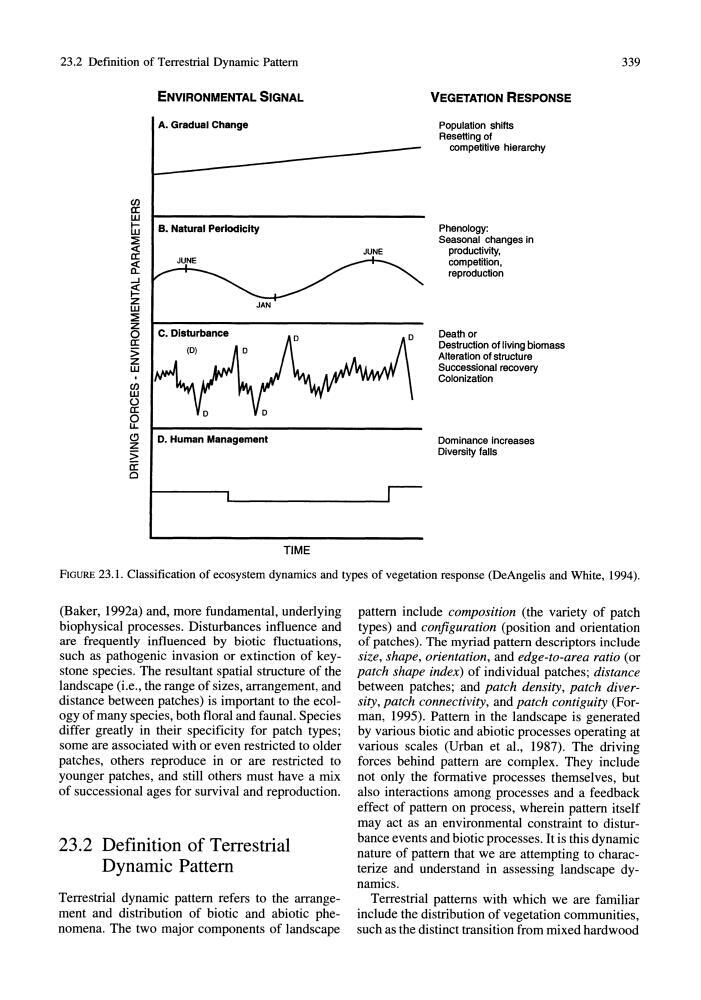
FIGURE 23.1. Classification of ecosystem dynamics and types of vegetation response (DeAngelis and White, 1994).
(Baker, 1992a) and, more fundamental, underlying
biophysical processes. Disturbances influence and
are frequently influenced by biotic fluctuations,
such as pathogenic invasion or extinction of keystone species. The resultant spatial structure of the
landscape (i.e., the range of sizes, arrangement, and
distance between patches) is important to the ecology of many species, both floral and faunal. Species
differ greatly in their specificity for patch types;
some are associated with or even restricted to older
patches, others reproduce in or are restricted to
younger patches, and still others must have a mix
of successional ages for survival and reproduction.
23.2 Definition of Terrestrial
Dynamic Pattern
Terrestrial dynamic pattern refers to the arrangement and distribution of biotic and abiotic phenomena. The two major components of landscape
pattern include composition (the variety of patch
types) and configuration (position and orientation
of patches). The myriad pattern descriptors include
size, shape, orientation, and edge-to-area ratio (or
patch shape index) of individual patches; distance
between patches; and patch density, patch diversity, patch connectivity, and patch contiguity (Forman, 1995). Pattern in the landscape is generated
by various biotic and abiotic processes operating at
various scales (Urban et al., 1987). The driving
forces behind pattern are complex. They include
not only the formative processes themselves, but
also interactions among processes and a feedback
effect of pattern on process, wherein pattern itself
may act as an environmental constraint to disturbance events and biotic processes. It is this dynamic
nature of pattern that we are attempting to characterize and understand in assessing landscape dynamics.
Terrestrial patterns with which we are familiar
include the distribution of vegetation communities,
such as the distinct transition from mixed hardwood
(/)
a: w
/jj
~
~
~
.-I
t=:
z
w
~
~ II:
:> Z w
ffi
o
II:
fr
ENVIRONMENTAL SIGNAL
A. Gradual Change
B. Natural Periodicity
JAN
C. Disturbance
~
D. Human Management
:>
a: o
TIME
JUNE
VEGETATION RESPONSE
Population shifts
Resetting of
competitive hierarchy
Phenology:
Seasonal changes in
productivity,
competition,
reproduction
Death or
Destruction of living biomass
Alteration of structure
Successional recovery
Colonization
Dominance increases
Diversity falls
339
FIGURE 23.1. Classification of ecosystem dynamics and types of vegetation response (DeAngelis and White, 1994).
(Baker, 1992a) and, more fundamental, underlying
biophysical processes. Disturbances influence and
are frequently influenced by biotic fluctuations,
such as pathogenic invasion or extinction of keystone species. The resultant spatial structure of the
landscape (i.e., the range of sizes, arrangement, and
distance between patches) is important to the ecology of many species, both floral and faunal. Species
differ greatly in their specificity for patch types;
some are associated with or even restricted to older
patches, others reproduce in or are restricted to
younger patches, and still others must have a mix
of successional ages for survival and reproduction.
23.2 Definition of Terrestrial
Dynamic Pattern
Terrestrial dynamic pattern refers to the arrangement and distribution of biotic and abiotic phenomena. The two major components of landscape
pattern include composition (the variety of patch
types) and configuration (position and orientation
of patches). The myriad pattern descriptors include
size, shape, orientation, and edge-to-area ratio (or
patch shape index) of individual patches; distance
between patches; and patch density, patch diversity, patch connectivity, and patch contiguity (Forman, 1995). Pattern in the landscape is generated
by various biotic and abiotic processes operating at
various scales (Urban et al., 1987). The driving
forces behind pattern are complex. They include
not only the formative processes themselves, but
also interactions among processes and a feedback
effect of pattern on process, wherein pattern itself
may act as an environmental constraint to disturbance events and biotic processes. It is this dynamic
nature of pattern that we are attempting to characterize and understand in assessing landscape dynamics.
Terrestrial patterns with which we are familiar
include the distribution of vegetation communities,
such as the distinct transition from mixed hardwood