

22.4 Overview of Major Ecological Land Classifications
329
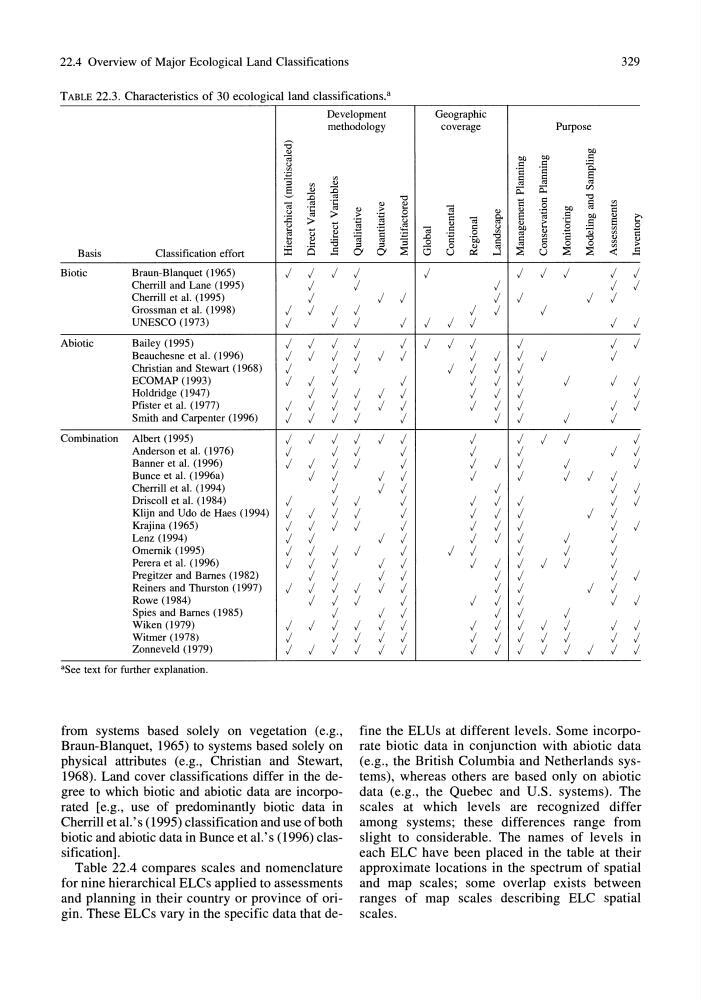
TABLE 22.3. Characteristics of 30 ecological land classifications.a
Development
Geographic
methodology
coverage
Purpose
::0
'"
OJ
ill
~
en
'" ..!:l
g ..!:l ..0
~
' "
OJ
·c
.~
' "
.~
>
..0
> 1:)
~
~
'"
u
1l
... .~ '6
'"
Basis
Classification effort
tE Ci .s
Biotic
Braun-Blanquet (1965)
/
/
Cherrill and Lane (1995)
Cherrill et al. (1995)
Grossman et al. (1998)
/
j
UNESCO (1973)
/
j
Abiotic
Bailey (1995)
Beauchesne et al. (1996)
Christian and Stewart (1968)
ECOMAP (1993)
Holdridge (1947)
Pfister et al. (1977)
/
Smith and Carpenter (1996)
/
Combination Albert (1995)
/
Anderson et al. (1976)
/
Banner et al. (1996)
j
Bunce et al. (l996a)
Cherrill et al. (1994)
Driscoll et al. (1984)
Klijn and Udo de Haes (1994)
Krajina (1965)
Lenz (1994)
Omemik (1995)
Perera et al. (1996)
Pregitzer and Barnes (1982)
Reiners and Thurston (1997)
/
Rowe (1984)
Spies and Barnes (1985)
Wiken (1979)
/
Witmer (1978)
/
Zonneveld (1979)
/
·See text for further explanation.
from systems based solely on vegetation (e.g.,
Braun-Blanquet, 1965) to systems based solely on
physical attributes (e.g., Christian and Stewart,
1968). Land cover classifications differ in the degree to which biotic and abiotic data are incorporated [e.g., use of predominantly biotic data in
Cherrill et al.' s (1995) classification and use of both
biotic and abiotic data in Bunce et al.' s (1996) classification] .
Table 22.4 compares scales and nomenclature
for nine hierarchical ELCs applied to assessments
and planning in their country or province of origin. These ELCs vary in the specific data that deOil
Oil
Oil
;.5
.§
0:
·0
~
0:
0:
' " '"
0: 0:
CIl
"0
0:
"0
:j
1l
c:
§
~
' "
~
' " ' " .~
Oil
,.
B
0S
0:
Oil
' "
>.
~
u
' "
OJ
'" ' "
,. ·c . s ~
...
~
OJ
0:
0:
u
~
... B :g
~
0:
~
..0
. .0
.S ~
ill ·0
ill
'"
0
0:
Oil
0:
§
0:
' "
" "
0
' " '"
0
0
0
~
,.
CI CI :::s 6 u ~ ...J :::s U :::s :::s
.s
/
/
j
/ /
/ j
/
/
/ j
j
/
/ /
/ /
/
/ /
/
/
j
/ j /
/ /
/ /
/
/ j
/
/ /
/
/
/ j
j
j
/
j
j
j
/
j
/
/ /
/ /
/ / /
fine the ELUs at different levels. Some incorporate biotic data in conjunction with abiotic data
(e.g., the British Columbia and Netherlands systems), whereas others are based only on abiotic
data (e.g., the Quebec and U.S. systems). The
scales at which levels are recognized differ
among systems; these differences range from
slight to considerable. The names of levels in
each ELC have been placed in the table at their
approximate locations in the spectrum of spatial
and map scales; some overlap exists between
ranges of map scales describing ELC spatial
scales.
329
TABLE 22.3. Characteristics of 30 ecological land classifications.a
Development
Geographic
methodology
coverage
Purpose
::0
'"
OJ
ill
~
en
'" ..!:l
g ..!:l ..0
~
' "
OJ
·c
.~
' "
.~
>
..0
> 1:)
~
~
'"
u
1l
... .~ '6
'"
Basis
Classification effort
tE Ci .s
Biotic
Braun-Blanquet (1965)
/
/
Cherrill and Lane (1995)
Cherrill et al. (1995)
Grossman et al. (1998)
/
j
UNESCO (1973)
/
j
Abiotic
Bailey (1995)
Beauchesne et al. (1996)
Christian and Stewart (1968)
ECOMAP (1993)
Holdridge (1947)
Pfister et al. (1977)
/
Smith and Carpenter (1996)
/
Combination Albert (1995)
/
Anderson et al. (1976)
/
Banner et al. (1996)
j
Bunce et al. (l996a)
Cherrill et al. (1994)
Driscoll et al. (1984)
Klijn and Udo de Haes (1994)
Krajina (1965)
Lenz (1994)
Omemik (1995)
Perera et al. (1996)
Pregitzer and Barnes (1982)
Reiners and Thurston (1997)
/
Rowe (1984)
Spies and Barnes (1985)
Wiken (1979)
/
Witmer (1978)
/
Zonneveld (1979)
/
·See text for further explanation.
from systems based solely on vegetation (e.g.,
Braun-Blanquet, 1965) to systems based solely on
physical attributes (e.g., Christian and Stewart,
1968). Land cover classifications differ in the degree to which biotic and abiotic data are incorporated [e.g., use of predominantly biotic data in
Cherrill et al.' s (1995) classification and use of both
biotic and abiotic data in Bunce et al.' s (1996) classification] .
Table 22.4 compares scales and nomenclature
for nine hierarchical ELCs applied to assessments
and planning in their country or province of origin. These ELCs vary in the specific data that deOil
Oil
Oil
;.5
.§
0:
·0
~
0:
0:
' " '"
0: 0:
CIl
"0
0:
"0
:j
1l
c:
§
~
' "
~
' " ' " .~
Oil
,.
B
0S
0:
Oil
' "
>.
~
u
' "
OJ
'" ' "
,. ·c . s ~
...
~
OJ
0:
0:
u
~
... B :g
~
0:
~
..0
. .0
.S ~
ill ·0
ill
'"
0
0:
Oil
0:
§
0:
' "
" "
0
' " '"
0
0
0
~
,.
CI CI :::s 6 u ~ ...J :::s U :::s :::s
.s
/
/
j
/ /
/ j
/
/
/ j
j
/
/ /
/ /
/
/ /
/
/
j
/ j /
/ /
/ /
/
/ j
/
/ /
/
/
/ j
j
j
/
j
j
j
/
j
/
/ /
/ /
/ / /
fine the ELUs at different levels. Some incorporate biotic data in conjunction with abiotic data
(e.g., the British Columbia and Netherlands systems), whereas others are based only on abiotic
data (e.g., the Quebec and U.S. systems). The
scales at which levels are recognized differ
among systems; these differences range from
slight to considerable. The names of levels in
each ELC have been placed in the table at their
approximate locations in the spectrum of spatial
and map scales; some overlap exists between
ranges of map scales describing ELC spatial
scales.