

15.2 Uncertainty and Paradigm Shift Regarding Uncertainty
213
ness, nonspecificity, dissonance, and confusion in
general. The novel theories of uncertainty, subsumed under the categories of fuzzy sets (Klir and
Folger, 1988), rough sets (Slowinski, 1992), and
fuzzy measures (Wang and Klir, 1992), as well as
their various combinations (Dubois and Prade,
1988), have emerged over the relatively short period of the last three decades. On the basis of these
studies, three principles, (1) the principle of minimum uncertainty, (2) the principle of maximum uncertainty, and (3) the principle of uncertainty invariance, have been formulated (Klir, 1991). The first
principle can help us to simplify complex systems
without information loss and conflict-resolution
problems; the second can help us to deal with optimization and ampliative reasoning (this is reasoning in which conclusions are not entailed in the
given premises); and the third enables us to convert results obtained in one theory into equivalent
representations in the other theories.
These new theories of uncertainty provide useful tools for assessing ecological health. In general,
sources of uncertainty in ecological assessment include the following:
1. Complexity: for example, linkages between
species in ecosystems are complicated, indirect
effects are difficult to predict, and nonlinear
interactions are normally dominated in socialeconomic-natural complex ecosystems (we do
not know where the threshold is and when we
may go beyond the threshold).
2. Variability and heterogeneity: spatial scales,
temporal scales, and "organism scales" of heterogeneous ecological systems are not well defined; spatiotemporal cross-scale dynamics are
essential.
3. Random variations: Einstein doubted that God
was tossing dice, but, in reality, the laws of nature have a stochastic character. This is not because we are not exactly sure about something
or because we cannot calculate some things exactly. Rather, it is because the idea of probability is inherent in the very nature of things. Random variation is a very important uncertainty in
our ecological assessment.
4. Errors of measurement and estimation: no measurement or observation is perfect, and estimation based on such measurement or observation
has error unavoidably.
5. Lack of knowledge about the system that we are
going to assess or predict.
We believe that the theory of fuzzy sets holds
great promise for elucidating and resolving significant ecological problems, including those related
RISK
CHARACTERIZATION
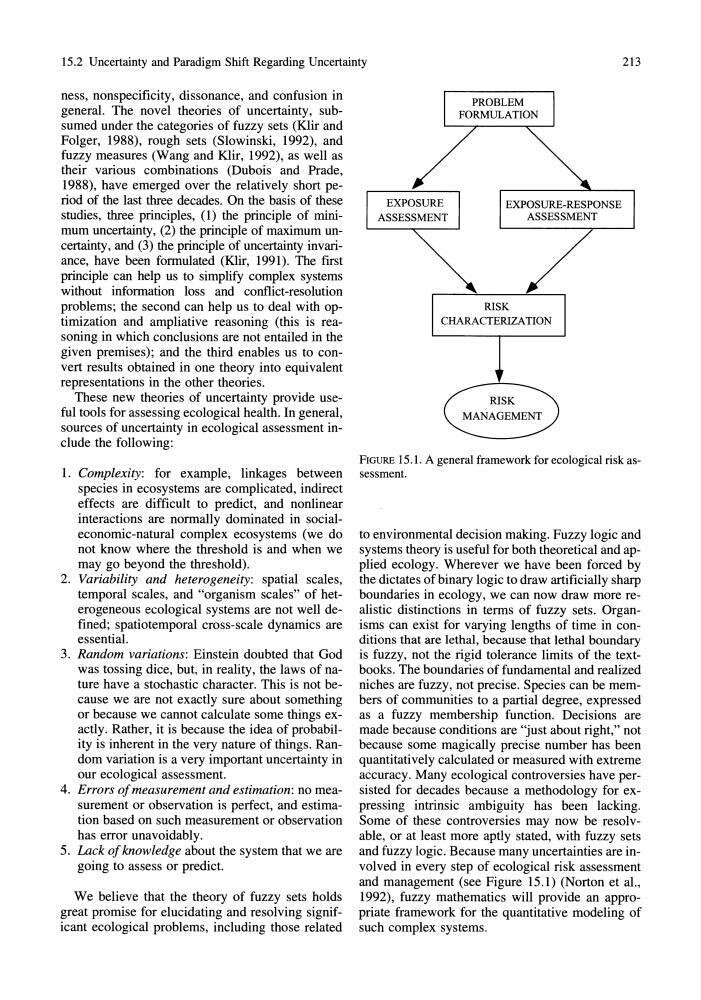
FIGURE 15.1. A general framework for ecological risk assessment.
to environmental decision making. Fuzzy logic and
systems theory is useful for both theoretical and applied ecology. Wherever we have been forced by
the dictates of binary logic to draw artificially sharp
boundaries in ecology, we can now draw more realistic distinctions in terms of fuzzy sets. Organisms can exist for varying lengths of time in conditions that are lethal, because that lethal boundary
is fuzzy, not the rigid tolerance limits of the textbooks. The boundaries of fundamental and realized
niches are fuzzy, not precise. Species can be members of communities to a partial degree, expressed
as a fuzzy membership function. Decisions are
made because conditions are "just about right," not
because some magically precise number has been
quantitatively calculated or measured with extreme
accuracy. Many ecological controversies have persisted for decades because a methodology for expressing intrinsic ambiguity has been lacking.
Some of these controversies may now be resolvable, or at least more aptly stated, with fuzzy sets
and fuzzy logic. Because many uncertainties are involved in every step of ecological risk assessment
and management (see Figure 15.1) (Norton et al.,
1992), fuzzy mathematics will provide an appropriate framework for the quantitative modeling of
such complex systems.
213
ness, nonspecificity, dissonance, and confusion in
general. The novel theories of uncertainty, subsumed under the categories of fuzzy sets (Klir and
Folger, 1988), rough sets (Slowinski, 1992), and
fuzzy measures (Wang and Klir, 1992), as well as
their various combinations (Dubois and Prade,
1988), have emerged over the relatively short period of the last three decades. On the basis of these
studies, three principles, (1) the principle of minimum uncertainty, (2) the principle of maximum uncertainty, and (3) the principle of uncertainty invariance, have been formulated (Klir, 1991). The first
principle can help us to simplify complex systems
without information loss and conflict-resolution
problems; the second can help us to deal with optimization and ampliative reasoning (this is reasoning in which conclusions are not entailed in the
given premises); and the third enables us to convert results obtained in one theory into equivalent
representations in the other theories.
These new theories of uncertainty provide useful tools for assessing ecological health. In general,
sources of uncertainty in ecological assessment include the following:
1. Complexity: for example, linkages between
species in ecosystems are complicated, indirect
effects are difficult to predict, and nonlinear
interactions are normally dominated in socialeconomic-natural complex ecosystems (we do
not know where the threshold is and when we
may go beyond the threshold).
2. Variability and heterogeneity: spatial scales,
temporal scales, and "organism scales" of heterogeneous ecological systems are not well defined; spatiotemporal cross-scale dynamics are
essential.
3. Random variations: Einstein doubted that God
was tossing dice, but, in reality, the laws of nature have a stochastic character. This is not because we are not exactly sure about something
or because we cannot calculate some things exactly. Rather, it is because the idea of probability is inherent in the very nature of things. Random variation is a very important uncertainty in
our ecological assessment.
4. Errors of measurement and estimation: no measurement or observation is perfect, and estimation based on such measurement or observation
has error unavoidably.
5. Lack of knowledge about the system that we are
going to assess or predict.
We believe that the theory of fuzzy sets holds
great promise for elucidating and resolving significant ecological problems, including those related
RISK
CHARACTERIZATION
FIGURE 15.1. A general framework for ecological risk assessment.
to environmental decision making. Fuzzy logic and
systems theory is useful for both theoretical and applied ecology. Wherever we have been forced by
the dictates of binary logic to draw artificially sharp
boundaries in ecology, we can now draw more realistic distinctions in terms of fuzzy sets. Organisms can exist for varying lengths of time in conditions that are lethal, because that lethal boundary
is fuzzy, not the rigid tolerance limits of the textbooks. The boundaries of fundamental and realized
niches are fuzzy, not precise. Species can be members of communities to a partial degree, expressed
as a fuzzy membership function. Decisions are
made because conditions are "just about right," not
because some magically precise number has been
quantitatively calculated or measured with extreme
accuracy. Many ecological controversies have persisted for decades because a methodology for expressing intrinsic ambiguity has been lacking.
Some of these controversies may now be resolvable, or at least more aptly stated, with fuzzy sets
and fuzzy logic. Because many uncertainties are involved in every step of ecological risk assessment
and management (see Figure 15.1) (Norton et al.,
1992), fuzzy mathematics will provide an appropriate framework for the quantitative modeling of
such complex systems.