

13.3 Overview of Approaches in Spatial Analysis
191
TABLE 13.3. General framework for statistical analysis of spatial data.
Exploratory data analysis methods: Detecting data structure, hypothesis generation, data model specification
Descriptive statistics
Model evaluation methods
Confirmatory data analysis methods: Statistical inference and model development and testing
Parametric methods: strict distributional assumptions
Robust methods: data arise from set of possible distributions
Nonparametric methods: no distributional assumptions
Source: Haining, 1990.
terms of the choice of the analysis method, such as
trend surface or nearest-neighbor analyses (Ripley,
1984). Problems that may need to be addressed include grid orientation and origin, irregular areal
units, arbitrary aggregation of areal units, number
of units, and the effects of boundaries and geometric structure of the study area. Finally, the relationships between differently sized areas and
variance among areas should be investigated. An
example of a question to be answered concerns
whether a small number of observations should be
considered as reliable and given as much weight as
a large number of observations (Haining, 1990).
13.2.3 Statistical Framework for Spatial
Data Analysis
The spatial analysis of EA data involves an interplay between two distinct phases of statistical
analysis: exploratory data analysis (EDA) and confirmatory data analysis (CDA) (sensu Haining,
1990; also see Hoaglin et al., 1983, and Table 13.3).
EDA is the initial analytical phase during which the
®
®
Examine data to
detect structure
1
Propose a model
for the data
1
Select and implement
1
numerical method for I
developing model
@ Apply diagnostic procedures
to model (e.g., residual and
sensitivity analyses)
!
® Refine or adapt model,
Is model fit acceptable?
select ne1w method
yes!
No 1 .... _ _ _ _ ---"
®
Interpret fit
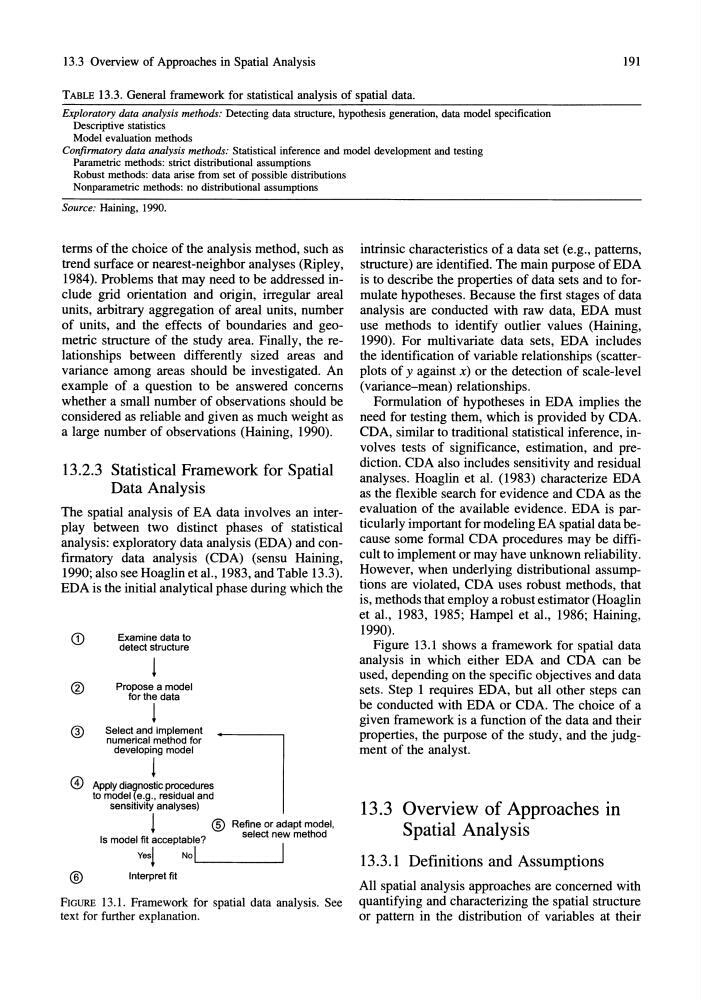
FIGURE 13.1. Framework for spatial data analysis. See
text for further explanation.
intrinsic characteristics of a data set (e.g., patterns,
structure) are identified. The main purpose of ED A
is to describe the properties of data sets and to formulate hypotheses. Because the first stages of data
analysis are conducted with raw data, EDA must
use methods to identify outlier values (Haining,
1990). For multivariate data sets, EDA includes
the identification of variable relationships (scatterplots of y against x) or the detection of scale-level
(variance-mean) relationships.
Formulation of hypotheses in EDA implies the
need for testing them, which is provided by CDA.
CDA, similar to traditional statistical inference, involves tests of significance, estimation, and prediction. CDA also includes sensitivity and residual
analyses. Hoaglin et al. (1983) characterize EDA
as the flexible search for evidence and CDA as the
evaluation of the available evidence. EDA is particularly important for modeling EA spatial data because some formal CDA procedures may be difficult to implement or may have unknown reliability.
However, when underlying distributional assumptions are violated, CDA uses robust methods, that
is, methods that employ a robust estimator (Hoaglin
et al., 1983, 1985; Hampel et al., 1986; Haining,
1990).
Figure 13.1 shows a framework for spatial data
analysis in which either EDA and CDA can be
used, depending on the specific objectives and data
sets. Step 1 requires EDA, but all other steps can
be conducted with EDA or CDA. The choice of a
given framework is a function of the data and their
properties, the purpose of the study, and the judgment of the analyst.
13.3 Overview of Approaches in
Spatial Analysis
13.3.1 Definitions and Assumptions
All spatial analysis approaches are concerned with
quantifying and characterizing the spatial structure
or pattern in the distribution of variables at their
191
TABLE 13.3. General framework for statistical analysis of spatial data.
Exploratory data analysis methods: Detecting data structure, hypothesis generation, data model specification
Descriptive statistics
Model evaluation methods
Confirmatory data analysis methods: Statistical inference and model development and testing
Parametric methods: strict distributional assumptions
Robust methods: data arise from set of possible distributions
Nonparametric methods: no distributional assumptions
Source: Haining, 1990.
terms of the choice of the analysis method, such as
trend surface or nearest-neighbor analyses (Ripley,
1984). Problems that may need to be addressed include grid orientation and origin, irregular areal
units, arbitrary aggregation of areal units, number
of units, and the effects of boundaries and geometric structure of the study area. Finally, the relationships between differently sized areas and
variance among areas should be investigated. An
example of a question to be answered concerns
whether a small number of observations should be
considered as reliable and given as much weight as
a large number of observations (Haining, 1990).
13.2.3 Statistical Framework for Spatial
Data Analysis
The spatial analysis of EA data involves an interplay between two distinct phases of statistical
analysis: exploratory data analysis (EDA) and confirmatory data analysis (CDA) (sensu Haining,
1990; also see Hoaglin et al., 1983, and Table 13.3).
EDA is the initial analytical phase during which the
®
®
Examine data to
detect structure
1
Propose a model
for the data
1
Select and implement
1
numerical method for I
developing model
@ Apply diagnostic procedures
to model (e.g., residual and
sensitivity analyses)
!
® Refine or adapt model,
Is model fit acceptable?
select ne1w method
yes!
No 1 .... _ _ _ _ ---"
®
Interpret fit
FIGURE 13.1. Framework for spatial data analysis. See
text for further explanation.
intrinsic characteristics of a data set (e.g., patterns,
structure) are identified. The main purpose of ED A
is to describe the properties of data sets and to formulate hypotheses. Because the first stages of data
analysis are conducted with raw data, EDA must
use methods to identify outlier values (Haining,
1990). For multivariate data sets, EDA includes
the identification of variable relationships (scatterplots of y against x) or the detection of scale-level
(variance-mean) relationships.
Formulation of hypotheses in EDA implies the
need for testing them, which is provided by CDA.
CDA, similar to traditional statistical inference, involves tests of significance, estimation, and prediction. CDA also includes sensitivity and residual
analyses. Hoaglin et al. (1983) characterize EDA
as the flexible search for evidence and CDA as the
evaluation of the available evidence. EDA is particularly important for modeling EA spatial data because some formal CDA procedures may be difficult to implement or may have unknown reliability.
However, when underlying distributional assumptions are violated, CDA uses robust methods, that
is, methods that employ a robust estimator (Hoaglin
et al., 1983, 1985; Hampel et al., 1986; Haining,
1990).
Figure 13.1 shows a framework for spatial data
analysis in which either EDA and CDA can be
used, depending on the specific objectives and data
sets. Step 1 requires EDA, but all other steps can
be conducted with EDA or CDA. The choice of a
given framework is a function of the data and their
properties, the purpose of the study, and the judgment of the analyst.
13.3 Overview of Approaches in
Spatial Analysis
13.3.1 Definitions and Assumptions
All spatial analysis approaches are concerned with
quantifying and characterizing the spatial structure
or pattern in the distribution of variables at their