

120
SilO PAULO STATE
0
5
10
km
J.G. Tundisi and T. Matsumura-Tundisi
ATLANTIC OCEAN
2i'
D RIBEIRA DE IGUAPE
WATERSHED
DSA~~~~~ED 2
BARRA DE
ICAPARRA
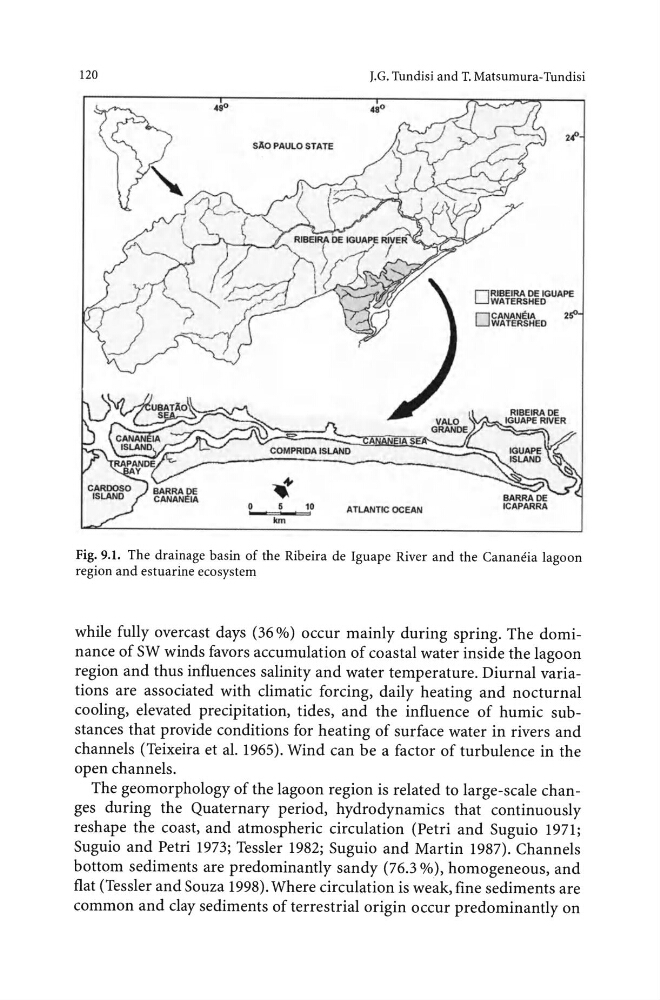
Fig. 9.1. The drainage basin of the Ribeira de Iguape River and the Cananeia lagoon
region and estuarine ecosystem
while fully overcast days (36%) occur mainly during spring. The dominance of SW winds favors accumulation of coastal water inside the lagoon
region and thus influences salinity and water temperature. Diurnal variations are associated with climatic forcing, daily heating and nocturnal
cooling, elevated precipitation, tides, and the influence of humic substances that provide conditions for heating of surface water in rivers and
channels (Teixeira et al. 1965). Wind can be a factor of turbulence in the
open channels.
The geomorphology of the lagoon region is related to large-scale changes during the Quaternary period, hydrodynamics that continuously
reshape the coast, and atmospheric circulation (Petri and Suguio 1971;
Suguio and Petri 1973; Tessler 1982; Suguio and Martin 1987). Channels
bottom sediments are predominantly sandy (76.3 %), homogeneous, and
flat (Tessler and Souza 1998). Where circulation is weak, fine sediments are
common and clay sediments of terrestrial origin occur predominantly on
SilO PAULO STATE
0
5
10
km
J.G. Tundisi and T. Matsumura-Tundisi
ATLANTIC OCEAN
2i'
D RIBEIRA DE IGUAPE
WATERSHED
DSA~~~~~ED 2
BARRA DE
ICAPARRA
Fig. 9.1. The drainage basin of the Ribeira de Iguape River and the Cananeia lagoon
region and estuarine ecosystem
while fully overcast days (36%) occur mainly during spring. The dominance of SW winds favors accumulation of coastal water inside the lagoon
region and thus influences salinity and water temperature. Diurnal variations are associated with climatic forcing, daily heating and nocturnal
cooling, elevated precipitation, tides, and the influence of humic substances that provide conditions for heating of surface water in rivers and
channels (Teixeira et al. 1965). Wind can be a factor of turbulence in the
open channels.
The geomorphology of the lagoon region is related to large-scale changes during the Quaternary period, hydrodynamics that continuously
reshape the coast, and atmospheric circulation (Petri and Suguio 1971;
Suguio and Petri 1973; Tessler 1982; Suguio and Martin 1987). Channels
bottom sediments are predominantly sandy (76.3 %), homogeneous, and
flat (Tessler and Souza 1998). Where circulation is weak, fine sediments are
common and clay sediments of terrestrial origin occur predominantly on