

Pathological Effects
45
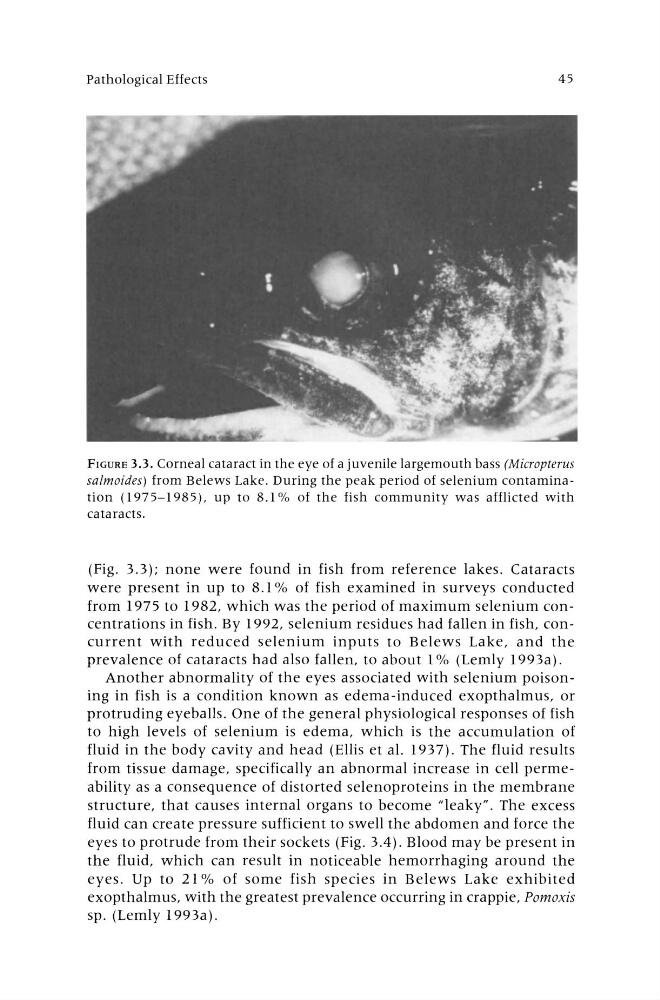
FIGURE 3.3. Corneal cataract in the eye of a juvenile largemouth bass (Micropterus
salmoides) from Belews Lake. During the peak period of selenium contamination (1975-1985), up to 8.1% of the fish community was afflicted with
cataracts.
(Fig. 3.3); none were found in fish from reference lakes. Cataracts
were present in up to 8.1 % of fish examined in surveys conducted
from 1975 to 1982, which was the period of maximum selenium concentrations in fish. By 1992, selenium residues had fallen in fish, concurrent with reduced selenium inputs to Belews Lake, and the
prevalence of cataracts had also fallen , to about 1% (Lemly 1993a) .
Another abnormality of the eyes associated with selenium poisoning in fish is a condition known as edema-induced exopthalmus, or
protruding eyeballs. One of the general physiological responses of fish
to high levels of selenium is edema, which is the accumulation of
fluid in the body cavity and head (Ellis et a1. 1937). The fluid results
from tissue damage, specifically an abnormal increase in cell permeability as a consequence of distorted selenoproteins in the membrane
structure, that causes internal organs to become "leaky". The excess
fluid can create pressure sufficient to swell the abdomen and force the
eyes to protrude from their sockets (Fig. 3.4). Blood may be present in
the fluid, which can result in noticeable hemorrhaging around the
eyes. Up to 21 % of some fish species in Belews Lake exhibited
exopthalmus, with the greatest prevalence occurring in crappie, Pomoxis
sp. (Lemly 1993a).
45
FIGURE 3.3. Corneal cataract in the eye of a juvenile largemouth bass (Micropterus
salmoides) from Belews Lake. During the peak period of selenium contamination (1975-1985), up to 8.1% of the fish community was afflicted with
cataracts.
(Fig. 3.3); none were found in fish from reference lakes. Cataracts
were present in up to 8.1 % of fish examined in surveys conducted
from 1975 to 1982, which was the period of maximum selenium concentrations in fish. By 1992, selenium residues had fallen in fish, concurrent with reduced selenium inputs to Belews Lake, and the
prevalence of cataracts had also fallen , to about 1% (Lemly 1993a) .
Another abnormality of the eyes associated with selenium poisoning in fish is a condition known as edema-induced exopthalmus, or
protruding eyeballs. One of the general physiological responses of fish
to high levels of selenium is edema, which is the accumulation of
fluid in the body cavity and head (Ellis et a1. 1937). The fluid results
from tissue damage, specifically an abnormal increase in cell permeability as a consequence of distorted selenoproteins in the membrane
structure, that causes internal organs to become "leaky". The excess
fluid can create pressure sufficient to swell the abdomen and force the
eyes to protrude from their sockets (Fig. 3.4). Blood may be present in
the fluid, which can result in noticeable hemorrhaging around the
eyes. Up to 21 % of some fish species in Belews Lake exhibited
exopthalmus, with the greatest prevalence occurring in crappie, Pomoxis
sp. (Lemly 1993a).