

94
5. Teratogenic Deformity Index for Fish
Deformed
fish
(%)
0
70
60
so
40
30
20
10
o
o
Larvae
.,..=- and fry
10
20
30
40
50
60
70
80
90
Whole-body selenium concentration (Jlglg dry weight)
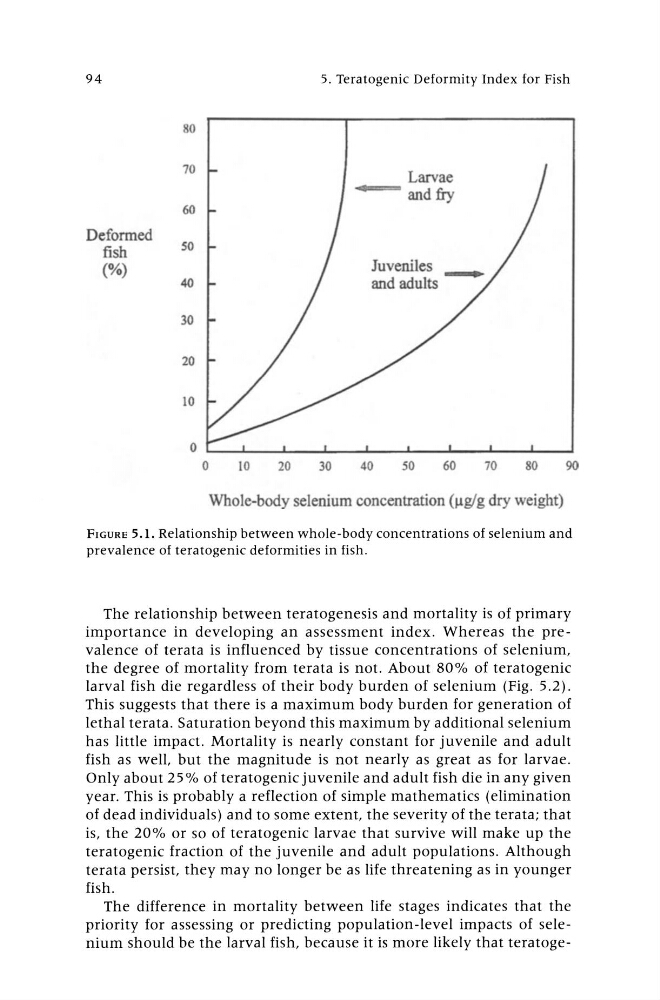
FIGURE 5.1. Relationship between whole-body concentrations of selenium and
prevalence of teratogenic deformities in fish.
The relationship between teratogenesis and mortality is of primary
importance in developing an assessment index. Whereas the prevalence of terata is influenced by tissue concentrations of selenium,
the degree of mortality from terata is not. About 80% of teratogenic
larval fish die regardless of their body burden of selenium (Fig. 5.2).
This suggests that there is a maximum body burden for generation of
lethal terata. Saturation beyond this maximum by additional selenium
has little impact. Mortality is nearly constant for juvenile and adult
fish as well, but the magnitude is not nearly as great as for larvae.
Only about 25% of teratogenic juvenile and adult fish die in any given
year. This is probably a reflection of simple mathematics (elimination
of dead individuals) and to some extent, the severity of the terata; that
is, the 20% or so of teratogenic larvae that survive will make up the
teratogenic fraction of the juvenile and adult populations. Although
terata persist, they may no longer be as life threatening as in younger
fish.
The difference in mortality between life stages indicates that the
priority for assessing or predicting population-level impacts of selenium should be the larval fish, because it is more likely that teratoge-
5. Teratogenic Deformity Index for Fish
Deformed
fish
(%)
0
70
60
so
40
30
20
10
o
o
Larvae
.,..=- and fry
10
20
30
40
50
60
70
80
90
Whole-body selenium concentration (Jlglg dry weight)
FIGURE 5.1. Relationship between whole-body concentrations of selenium and
prevalence of teratogenic deformities in fish.
The relationship between teratogenesis and mortality is of primary
importance in developing an assessment index. Whereas the prevalence of terata is influenced by tissue concentrations of selenium,
the degree of mortality from terata is not. About 80% of teratogenic
larval fish die regardless of their body burden of selenium (Fig. 5.2).
This suggests that there is a maximum body burden for generation of
lethal terata. Saturation beyond this maximum by additional selenium
has little impact. Mortality is nearly constant for juvenile and adult
fish as well, but the magnitude is not nearly as great as for larvae.
Only about 25% of teratogenic juvenile and adult fish die in any given
year. This is probably a reflection of simple mathematics (elimination
of dead individuals) and to some extent, the severity of the terata; that
is, the 20% or so of teratogenic larvae that survive will make up the
teratogenic fraction of the juvenile and adult populations. Although
terata persist, they may no longer be as life threatening as in younger
fish.
The difference in mortality between life stages indicates that the
priority for assessing or predicting population-level impacts of selenium should be the larval fish, because it is more likely that teratoge-