

14. Patch Dynamics for Forested Ecosystems in the Pacific Northwest
297
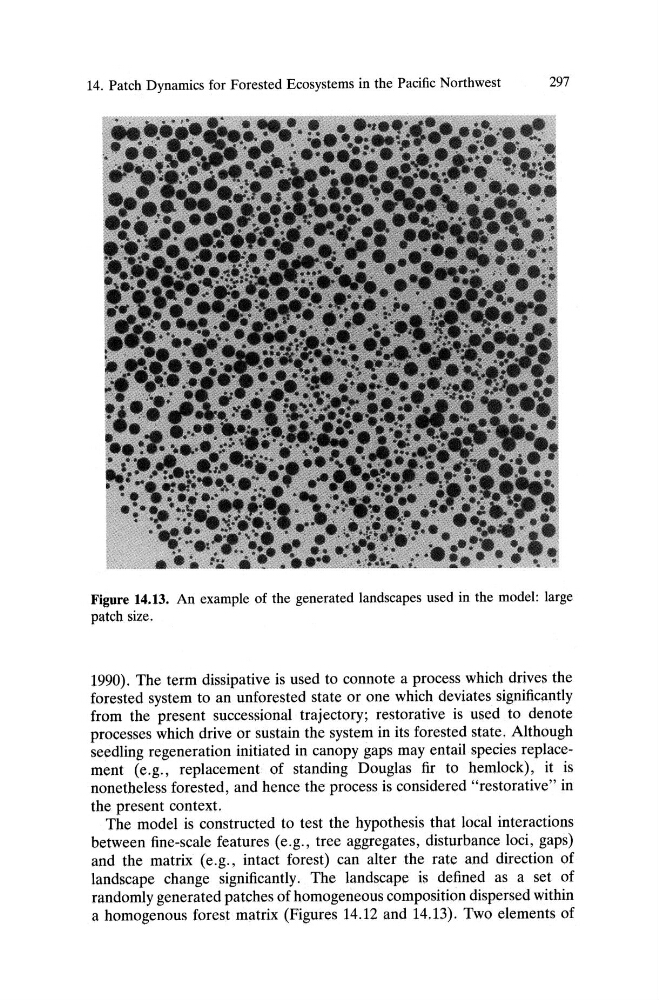
Figure 14.13. An example of the generated landscapes used in the model: large
patch size.
1990). The term dissipative is used to connote a process which drives the
forested system to an unforested state or one which deviates significantly
from the present successional trajectory; restorative is used to denote
processes which drive or sustain the system in its forested state. Although
seedling regeneration initiated in canopy gaps may entail species replacement (e.g., replacement of standing Douglas fir to hemlock) , it is
nonetheless forested, and hence the process is considered "restorative" in
the present context.
The model is constructed to test the hypothesis that local interactions
between fine-scale features (e.g., tree aggregates, disturbance loci, gaps)
and the matrix (e.g., intact forest) can alter the rate and direction of
landscape change significantly. The landscape is defined as a set of
randomly generated patches of homogeneous composition dispersed within
a homogenous forest matrix (Figures 14.12 and 14.13). Two elements of
297
Figure 14.13. An example of the generated landscapes used in the model: large
patch size.
1990). The term dissipative is used to connote a process which drives the
forested system to an unforested state or one which deviates significantly
from the present successional trajectory; restorative is used to denote
processes which drive or sustain the system in its forested state. Although
seedling regeneration initiated in canopy gaps may entail species replacement (e.g., replacement of standing Douglas fir to hemlock) , it is
nonetheless forested, and hence the process is considered "restorative" in
the present context.
The model is constructed to test the hypothesis that local interactions
between fine-scale features (e.g., tree aggregates, disturbance loci, gaps)
and the matrix (e.g., intact forest) can alter the rate and direction of
landscape change significantly. The landscape is defined as a set of
randomly generated patches of homogeneous composition dispersed within
a homogenous forest matrix (Figures 14.12 and 14.13). Two elements of