

296
G.A. Bradshaw et al.
timber harvesting and road construction are geometric in shape and
occupy large areas of the landscape for sustained periods of time simoultaneously (Ripple, Bradshaw, & Spies, 1991). To examine the effects of
such increased het erogenity and loss of connectivity in the landscape, we
employ a simple heuristic model. A binary state (i.e. , patch-matrix)
model was constructed to observe how landscape rate s and composition
changes as fine-scale spatial pattern varies under different landscape
conditions. Applications of the model and appro ach are discussed for
two cases-disturbance propagation (e.g., bark beetle infestation) and
seedling regeneration to which we refer for purposes of the present
discussion as " dissipative" and " restorative" processes, respectively. Both
seedling regeneration and bark beetle infestation are important agents
sculpting landscape dynamics in the PNW (Franklin, Cromack , Denison
et aI., 1988; Furniss & Carolin, 1980; Harmon, Ferrell, & Franklin,
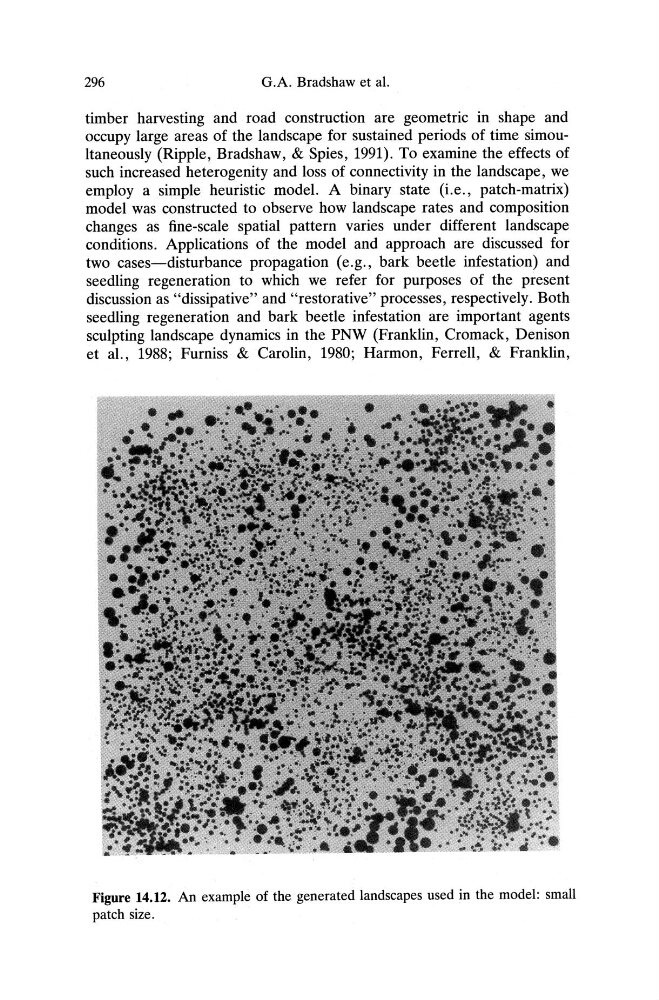
Figure 14.12. An example of the generated landscapes used in the model: small
patch size.
G.A. Bradshaw et al.
timber harvesting and road construction are geometric in shape and
occupy large areas of the landscape for sustained periods of time simoultaneously (Ripple, Bradshaw, & Spies, 1991). To examine the effects of
such increased het erogenity and loss of connectivity in the landscape, we
employ a simple heuristic model. A binary state (i.e. , patch-matrix)
model was constructed to observe how landscape rate s and composition
changes as fine-scale spatial pattern varies under different landscape
conditions. Applications of the model and appro ach are discussed for
two cases-disturbance propagation (e.g., bark beetle infestation) and
seedling regeneration to which we refer for purposes of the present
discussion as " dissipative" and " restorative" processes, respectively. Both
seedling regeneration and bark beetle infestation are important agents
sculpting landscape dynamics in the PNW (Franklin, Cromack , Denison
et aI., 1988; Furniss & Carolin, 1980; Harmon, Ferrell, & Franklin,
Figure 14.12. An example of the generated landscapes used in the model: small
patch size.