

14. Patch Dynamics for Forested Ecosystems in the Pacific Northwest
289
Siuslaw
... ..: :.- .. -
..
• •
•
•
, . - .
. 1 · • •
' • •
• : . .
•
e • • , . .
•
• • •
.. ••
«>,
• ••••••• eJ .~"': I • • •••• I •• • •:.
. I.
.1.' - . .. ',' ;. ",' " I.II ..... -. I
. '~." I.. .. .. ,.
.1 ... ' " . ..
S'
. 1 '
..' ..,...1. 1 • #. • . . .
..
. ~ .
.. . ..
.. .
I. I' . . .
. ,
.'
e..
,"
-...
..
-,
o
ex>
~,....------------------------------,
o
o
° L
------_------I
o
100
200
aspect(degrees)
300
Siskiyou
8
l;; 0
1) '"
o o
...
. . - .
.....
. . .. ..
. . .. .
01--'
o
100
200
aspecl (degr~)
300
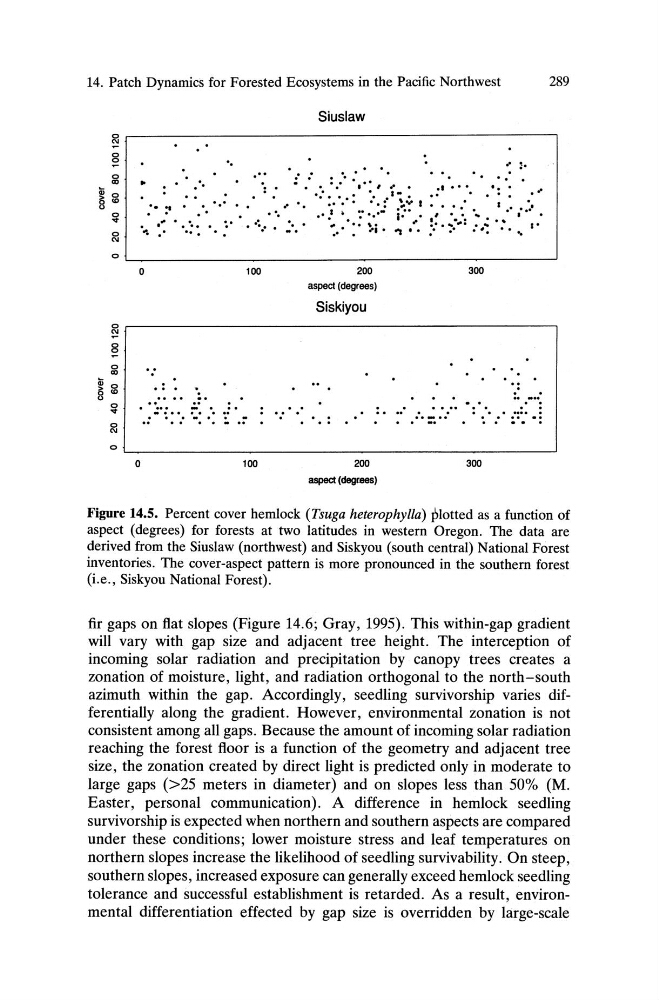
Figure 14.5. Percent cover hemlock (Tsuga heterophylla) plotted as a function of
aspect (degrees) for forests at two latitudes in western Oregon. The data are
derived from the Siuslaw (northwest) and Siskyou (south central) National Forest
inventories. The cover-aspect pattern is more pronounced in the southern forest
(i.e., Siskyou National Forest).
fir gaps on flat slopes (Figure 14.6; Gray , 1995). This within-gap gradient
will vary with gap size and adjacent tree height. The interception of
incoming solar radiation and precipitation by canopy trees creates a
zonation of moisture, light, and radiation orthogonal to the north-south
azimuth within the gap . Accordingly, seedling survivorship varies differentially along the gradient. However, environmental zonation is not
consistent among all gaps. Because the amount of incoming solar radiation
reaching the forest floor is a function of the geometry and adjacent tree
size, the zonation created by direct light is predicted only in moderate to
large gaps (>25 meters in diameter) and on slopes less than 50% (M.
Easter, personal communication). A difference in hemlock seedling
survivorship is expected when northern and southern aspects are compared
under these conditions; lower moisture stress and leaf temperatures on
northern slopes increase the likelihood of seedling survivability. On steep,
southern slopes, increased exposure can generally exceed hemlock seedling
tolerance and successful establishment is retarded. As a result, environmental differentiation effected by gap size is overridden by large-scale
289
Siuslaw
... ..: :.- .. -
..
• •
•
•
, . - .
. 1 · • •
' • •
• : . .
•
e • • , . .
•
• • •
.. ••
«>,
• ••••••• eJ .~"': I • • •••• I •• • •:.
. I.
.1.' - . .. ',' ;. ",' " I.II ..... -. I
. '~." I.. .. .. ,.
.1 ... ' " . ..
S'
. 1 '
..' ..,...1. 1 • #. • . . .
..
. ~ .
.. . ..
.. .
I. I' . . .
. ,
.'
e..
,"
-...
..
-,
o
ex>
~,....------------------------------,
o
o
° L
------_------I
o
100
200
aspect(degrees)
300
Siskiyou
8
l;; 0
1) '"
o o
...
. . - .
.....
. . .. ..
. . .. .
01--'
o
100
200
aspecl (degr~)
300
Figure 14.5. Percent cover hemlock (Tsuga heterophylla) plotted as a function of
aspect (degrees) for forests at two latitudes in western Oregon. The data are
derived from the Siuslaw (northwest) and Siskyou (south central) National Forest
inventories. The cover-aspect pattern is more pronounced in the southern forest
(i.e., Siskyou National Forest).
fir gaps on flat slopes (Figure 14.6; Gray , 1995). This within-gap gradient
will vary with gap size and adjacent tree height. The interception of
incoming solar radiation and precipitation by canopy trees creates a
zonation of moisture, light, and radiation orthogonal to the north-south
azimuth within the gap . Accordingly, seedling survivorship varies differentially along the gradient. However, environmental zonation is not
consistent among all gaps. Because the amount of incoming solar radiation
reaching the forest floor is a function of the geometry and adjacent tree
size, the zonation created by direct light is predicted only in moderate to
large gaps (>25 meters in diameter) and on slopes less than 50% (M.
Easter, personal communication). A difference in hemlock seedling
survivorship is expected when northern and southern aspects are compared
under these conditions; lower moisture stress and leaf temperatures on
northern slopes increase the likelihood of seedling survivability. On steep,
southern slopes, increased exposure can generally exceed hemlock seedling
tolerance and successful establishment is retarded. As a result, environmental differentiation effected by gap size is overridden by large-scale