

343
carbon storage rate, this trial considered only aboveground biomass, but quantification including the underground biomass would be more desirable.
More importantly, the blue carbon storage rate reported here is the baseline rate
before implementation of the global warming mitigation project. Therefore, in order
for this project to become a carbon offset credit scheme, it is also necessary to
increase the amount of blue carbon storage by increasing storage rates by means of
human intervention (Kuwae and Hori 2018).
12.5 Future Prospects
Although blue carbon initiatives require further development before it can be used
as an offset, Yokohama City is committed to the concept of being a Living Lab,
using the urban landscape and its citizens to test countermeasures against global
warming and other sustainability options. By fostering cooperation with businesses
and universities and building industry–academia partnerships in the urban area,
Yokohama City officials are trying to encourage the spread of new technologies and
creation of new businesses and to increase the visibility of Yokohama among the
cities of the world. In that sense, the initial blue carbon trial helped to cement an
attitude that Yokohama will become a leader in that field, while developing a new
sustainability sector in Japan.
Because city officials needed to make the Yokohama Blue Carbon Project to
publicize for citizens, they implemented the carbon offset project at the Yokohama
Seaside Triathlon in 2014 and the World Triathlon Series Yokohama in 2015.
Working with Yokohama City, the events’ organizers asked participants to pay a
carbon offset in addition to the participation fee, and as a result they gained the
involvement of 100% of foreign participants in the World Triathlon Series Yokohama
in 2015 and up to 70% of Japanese participants in the Yokohama Seaside Triathlon
in 2014. Citizens’ understanding of the Yokohama Blue Carbon Project advanced
because of this public collaboration. In addition, officials were pleasantly surprised
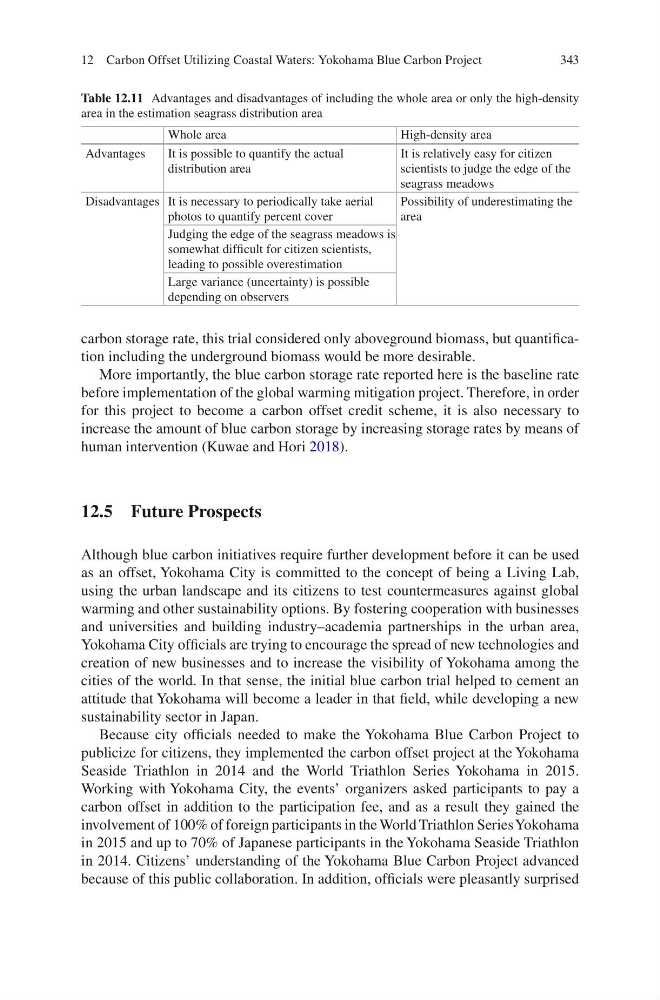
Table 12.11 Advantages and disadvantages of including the whole area or only the high-density
area in the estimation seagrass distribution area
Whole area
High-density area
Advantages
It is possible to quantify the actual
distribution area
It is relatively easy for citizen
scientists to judge the edge of the
seagrass meadows
Disadvantages It is necessary to periodically take aerial
photos to quantify percent cover
Possibility of underestimating the
area
Judging the edge of the seagrass meadows is
somewhat difficult for citizen scientists,
leading to possible overestimation
Large variance (uncertainty) is possible
depending on observers
12 Carbon Offset Utilizing Coastal Waters: Yokohama Blue Carbon Project
carbon storage rate, this trial considered only aboveground biomass, but quantification including the underground biomass would be more desirable.
More importantly, the blue carbon storage rate reported here is the baseline rate
before implementation of the global warming mitigation project. Therefore, in order
for this project to become a carbon offset credit scheme, it is also necessary to
increase the amount of blue carbon storage by increasing storage rates by means of
human intervention (Kuwae and Hori 2018).
12.5 Future Prospects
Although blue carbon initiatives require further development before it can be used
as an offset, Yokohama City is committed to the concept of being a Living Lab,
using the urban landscape and its citizens to test countermeasures against global
warming and other sustainability options. By fostering cooperation with businesses
and universities and building industry–academia partnerships in the urban area,
Yokohama City officials are trying to encourage the spread of new technologies and
creation of new businesses and to increase the visibility of Yokohama among the
cities of the world. In that sense, the initial blue carbon trial helped to cement an
attitude that Yokohama will become a leader in that field, while developing a new
sustainability sector in Japan.
Because city officials needed to make the Yokohama Blue Carbon Project to
publicize for citizens, they implemented the carbon offset project at the Yokohama
Seaside Triathlon in 2014 and the World Triathlon Series Yokohama in 2015.
Working with Yokohama City, the events’ organizers asked participants to pay a
carbon offset in addition to the participation fee, and as a result they gained the
involvement of 100% of foreign participants in the World Triathlon Series Yokohama
in 2015 and up to 70% of Japanese participants in the Yokohama Seaside Triathlon
in 2014. Citizens’ understanding of the Yokohama Blue Carbon Project advanced
because of this public collaboration. In addition, officials were pleasantly surprised
Table 12.11 Advantages and disadvantages of including the whole area or only the high-density
area in the estimation seagrass distribution area
Whole area
High-density area
Advantages
It is possible to quantify the actual
distribution area
It is relatively easy for citizen
scientists to judge the edge of the
seagrass meadows
Disadvantages It is necessary to periodically take aerial
photos to quantify percent cover
Possibility of underestimating the
area
Judging the edge of the seagrass meadows is
somewhat difficult for citizen scientists,
leading to possible overestimation
Large variance (uncertainty) is possible
depending on observers
12 Carbon Offset Utilizing Coastal Waters: Yokohama Blue Carbon Project