

340
resources, namely CO 2 emission reduction by reducing energy use for edible seaweed production and introduction of a seawater-source heat pump. In the second
year of the project, Yokohama City officials developed a methodology for blue carbon, namely devising a means of blue carbon storage by shallow coastal systems,
which is the core of the Yokohama Blue Carbon Project.
City officials attempted to formulate the blue carbon storage rate in seagrass
meadows and developed field survey methods for seagrass biomass, which can be
implemented sustainably by citizen groups. A seagrass distribution area survey and
measurement of seagrass biomass per unit area were conducted at the Sea Park
Yokohama (Table 12.8). This survey was conducted within the managed area of the
Sea Park in consultation with relevant stakeholders.
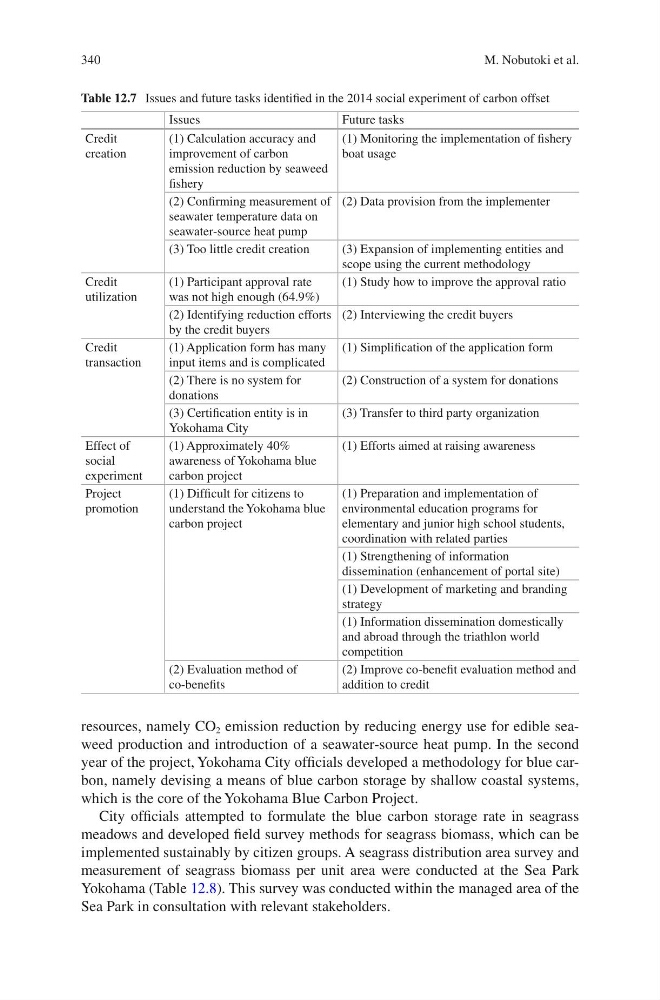
Table 12.7 Issues and future tasks identified in the 2014 social experiment of carbon offset
Issues
Future tasks
Credit
creation
(1) Calculation accuracy and
improvement of carbon
emission reduction by seaweed
fishery
(1) Monitoring the implementation of fishery
boat usage
(2) Confirming measurement of
seawater temperature data on
seawater-source heat pump
(2) Data provision from the implementer
(3) Too little credit creation
(3) Expansion of implementing entities and
scope using the current methodology
Credit
utilization
(1) Participant approval rate
was not high enough (64.9%)
(1) Study how to improve the approval ratio
(2) Identifying reduction efforts
by the credit buyers
(2) Interviewing the credit buyers
Credit
transaction
(1) Application form has many
input items and is complicated
(1) Simplification of the application form
(2) There is no system for
donations
(2) Construction of a system for donations
(3) Certification entity is in
Yokohama City
(3) Transfer to third party organization
Effect of
social
experiment
(1) Approximately 40%
awareness of Yokohama blue
carbon project
(1) Efforts aimed at raising awareness
Project
promotion
(1) Difficult for citizens to
understand the Yokohama blue
carbon project
(1) Preparation and implementation of
environmental education programs for
elementary and junior high school students,
coordination with related parties
(1) Strengthening of information
dissemination (enhancement of portal site)
(1) Development of marketing and branding
strategy
(1) Information dissemination domestically
and abroad through the triathlon world
competition
(2) Evaluation method of
co-benefits
(2) Improve co-benefit evaluation method and
addition to credit
M. Nobutoki et al.
resources, namely CO 2 emission reduction by reducing energy use for edible seaweed production and introduction of a seawater-source heat pump. In the second
year of the project, Yokohama City officials developed a methodology for blue carbon, namely devising a means of blue carbon storage by shallow coastal systems,
which is the core of the Yokohama Blue Carbon Project.
City officials attempted to formulate the blue carbon storage rate in seagrass
meadows and developed field survey methods for seagrass biomass, which can be
implemented sustainably by citizen groups. A seagrass distribution area survey and
measurement of seagrass biomass per unit area were conducted at the Sea Park
Yokohama (Table 12.8). This survey was conducted within the managed area of the
Sea Park in consultation with relevant stakeholders.
Table 12.7 Issues and future tasks identified in the 2014 social experiment of carbon offset
Issues
Future tasks
Credit
creation
(1) Calculation accuracy and
improvement of carbon
emission reduction by seaweed
fishery
(1) Monitoring the implementation of fishery
boat usage
(2) Confirming measurement of
seawater temperature data on
seawater-source heat pump
(2) Data provision from the implementer
(3) Too little credit creation
(3) Expansion of implementing entities and
scope using the current methodology
Credit
utilization
(1) Participant approval rate
was not high enough (64.9%)
(1) Study how to improve the approval ratio
(2) Identifying reduction efforts
by the credit buyers
(2) Interviewing the credit buyers
Credit
transaction
(1) Application form has many
input items and is complicated
(1) Simplification of the application form
(2) There is no system for
donations
(2) Construction of a system for donations
(3) Certification entity is in
Yokohama City
(3) Transfer to third party organization
Effect of
social
experiment
(1) Approximately 40%
awareness of Yokohama blue
carbon project
(1) Efforts aimed at raising awareness
Project
promotion
(1) Difficult for citizens to
understand the Yokohama blue
carbon project
(1) Preparation and implementation of
environmental education programs for
elementary and junior high school students,
coordination with related parties
(1) Strengthening of information
dissemination (enhancement of portal site)
(1) Development of marketing and branding
strategy
(1) Information dissemination domestically
and abroad through the triathlon world
competition
(2) Evaluation method of
co-benefits
(2) Improve co-benefit evaluation method and
addition to credit
M. Nobutoki et al.