

329
reducing energy use of seaweed production and food mileage and incorporating the
use of a seawater-source heat pump.
12.4.2 Estimating CO 2 Emission Reduction
In the social experiment, Yokohama City calculated the amount of CO 2 emission
reduction by the consumption of marine products (locally produced seaweed) and
utilization of marine energy (seawater-source heat pump introduction). Both of
these were credits based on blue resources (i.e., reduction of CO 2 emissions utilizing marine resources) and not blue carbon (i.e., carbon storage by marine organisms) because the method of calculating blue carbon credits was simply under
investigation.
12.4.2.1 Local Seaweed Production
Two CO 2 reduction effects were expected by implementing a new wakame seaweed
(brown kelp, Undaria pinnatifida) production area at the site, so the reduction
amount was calculated using the life cycle assessment method (Japan Environmental
Management Association for Industry 2010).
The first effect was reducing CO 2 emissions by shortening the transportation
distance. Approximately 70% of the wakame seaweed consumed in Japan is
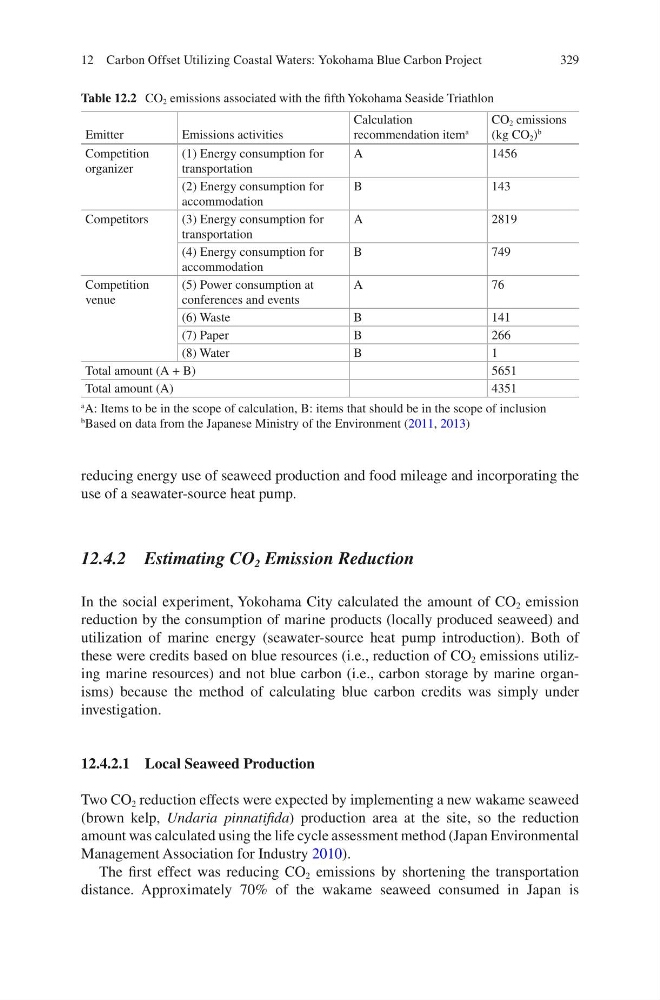
Table 12.2 CO 2 emissions associated with the fifth Yokohama Seaside Triathlon
Emitter
Emissions activities
Calculation
recommendation item
a
CO 2 emissions
(kg CO 2 )
b
Competition
organizer
(1) Energy consumption for
transportation
A
1456
(2) Energy consumption for
accommodation
B
143
Competitors
(3) Energy consumption for
transportation
A
2819
(4) Energy consumption for
accommodation
B
749
Competition
venue
(5) Power consumption at
conferences and events
A
76
(6) Waste
B
141
(7) Paper
B
266
(8) Water
B
1
Total amount (A + B)
5651
Total amount (A)
4351
a A: Items to be in the scope of calculation, B: items that should be in the scope of inclusion
b
Based on data from the Japanese Ministry of the Environment (2011, 2013)
12 Carbon Offset Utilizing Coastal Waters: Yokohama Blue Carbon Project
reducing energy use of seaweed production and food mileage and incorporating the
use of a seawater-source heat pump.
12.4.2 Estimating CO 2 Emission Reduction
In the social experiment, Yokohama City calculated the amount of CO 2 emission
reduction by the consumption of marine products (locally produced seaweed) and
utilization of marine energy (seawater-source heat pump introduction). Both of
these were credits based on blue resources (i.e., reduction of CO 2 emissions utilizing marine resources) and not blue carbon (i.e., carbon storage by marine organisms) because the method of calculating blue carbon credits was simply under
investigation.
12.4.2.1 Local Seaweed Production
Two CO 2 reduction effects were expected by implementing a new wakame seaweed
(brown kelp, Undaria pinnatifida) production area at the site, so the reduction
amount was calculated using the life cycle assessment method (Japan Environmental
Management Association for Industry 2010).
The first effect was reducing CO 2 emissions by shortening the transportation
distance. Approximately 70% of the wakame seaweed consumed in Japan is
Table 12.2 CO 2 emissions associated with the fifth Yokohama Seaside Triathlon
Emitter
Emissions activities
Calculation
recommendation item
a
CO 2 emissions
(kg CO 2 )
b
Competition
organizer
(1) Energy consumption for
transportation
A
1456
(2) Energy consumption for
accommodation
B
143
Competitors
(3) Energy consumption for
transportation
A
2819
(4) Energy consumption for
accommodation
B
749
Competition
venue
(5) Power consumption at
conferences and events
A
76
(6) Waste
B
141
(7) Paper
B
266
(8) Water
B
1
Total amount (A + B)
5651
Total amount (A)
4351
a A: Items to be in the scope of calculation, B: items that should be in the scope of inclusion
b
Based on data from the Japanese Ministry of the Environment (2011, 2013)
12 Carbon Offset Utilizing Coastal Waters: Yokohama Blue Carbon Project