

314
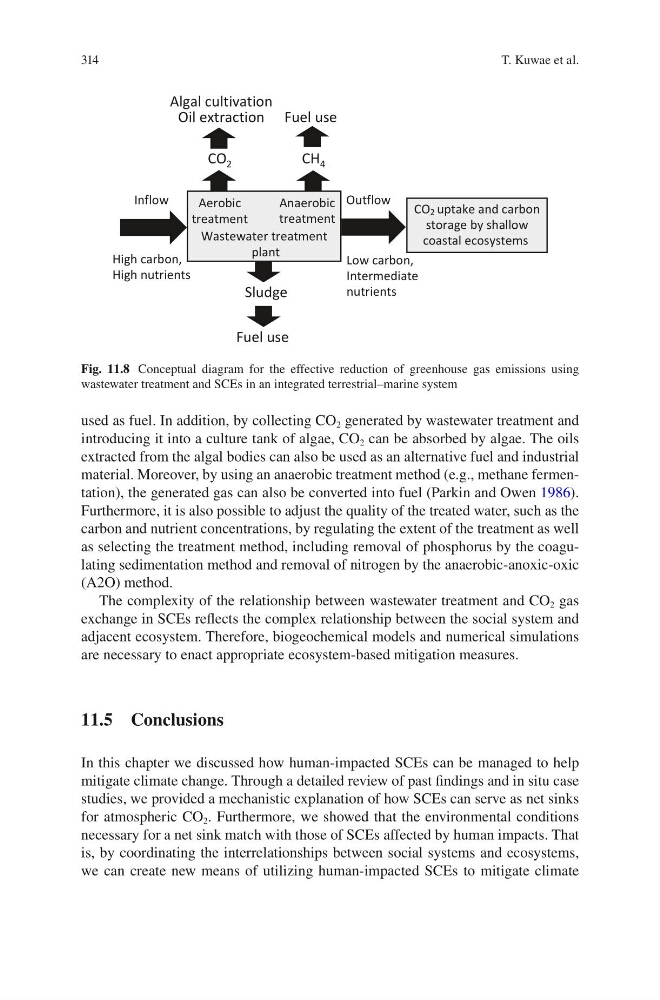
used as fuel. In addition, by collecting CO 2 generated by wastewater treatment and
introducing it into a culture tank of algae, CO 2 can be absorbed by algae. The oils
extracted from the algal bodies can also be used as an alternative fuel and industrial
material. Moreover, by using an anaerobic treatment method (e.g., methane fermentation), the generated gas can also be converted into fuel (Parkin and Owen 1986).
Furthermore, it is also possible to adjust the quality of the treated water, such as the
carbon and nutrient concentrations, by regulating the extent of the treatment as well
as selecting the treatment method, including removal of phosphorus by the coagulating sedimentation method and removal of nitrogen by the anaerobic-anoxic-oxic
(A2O) method.
The complexity of the relationship between wastewater treatment and CO 2 gas
exchange in SCEs reflects the complex relationship between the social system and
adjacent ecosystem. Therefore, biogeochemical models and numerical simulations
are necessary to enact appropriate ecosystem-based mitigation measures.
11.5 Conclusions
In this chapter we discussed how human-impacted SCEs can be managed to help
mitigate climate change. Through a detailed review of past findings and in situ case
studies, we provided a mechanistic explanation of how SCEs can serve as net sinks
for atmospheric CO 2 . Furthermore, we showed that the environmental conditions
necessary for a net sink match with those of SCEs affected by human impacts. That
is, by coordinating the interrelationships between social systems and ecosystems,
we can create new means of utilizing human-impacted SCEs to mitigate climate
Inflow
Outflow
Low carbon,
Intermediate
nutrients
Wastewater treatment
plant
Algal cultivation
Oil extraction
CO 2
CO 2 uptake and carbon
storage by shallow
coastal ecosystems
High carbon,
High nutrients
CH 4
Fuel use
Sludge
Fuel use
Aerobic
treatment
Anaerobic
treatment
Fig. 11.8 Conceptual diagram for the effective reduction of greenhouse gas emissions using
wastewater treatment and SCEs in an integrated terrestrial–marine system
T. Kuwae et al.
used as fuel. In addition, by collecting CO 2 generated by wastewater treatment and
introducing it into a culture tank of algae, CO 2 can be absorbed by algae. The oils
extracted from the algal bodies can also be used as an alternative fuel and industrial
material. Moreover, by using an anaerobic treatment method (e.g., methane fermentation), the generated gas can also be converted into fuel (Parkin and Owen 1986).
Furthermore, it is also possible to adjust the quality of the treated water, such as the
carbon and nutrient concentrations, by regulating the extent of the treatment as well
as selecting the treatment method, including removal of phosphorus by the coagulating sedimentation method and removal of nitrogen by the anaerobic-anoxic-oxic
(A2O) method.
The complexity of the relationship between wastewater treatment and CO 2 gas
exchange in SCEs reflects the complex relationship between the social system and
adjacent ecosystem. Therefore, biogeochemical models and numerical simulations
are necessary to enact appropriate ecosystem-based mitigation measures.
11.5 Conclusions
In this chapter we discussed how human-impacted SCEs can be managed to help
mitigate climate change. Through a detailed review of past findings and in situ case
studies, we provided a mechanistic explanation of how SCEs can serve as net sinks
for atmospheric CO 2 . Furthermore, we showed that the environmental conditions
necessary for a net sink match with those of SCEs affected by human impacts. That
is, by coordinating the interrelationships between social systems and ecosystems,
we can create new means of utilizing human-impacted SCEs to mitigate climate
Inflow
Outflow
Low carbon,
Intermediate
nutrients
Wastewater treatment
plant
Algal cultivation
Oil extraction
CO 2
CO 2 uptake and carbon
storage by shallow
coastal ecosystems
High carbon,
High nutrients
CH 4
Fuel use
Sludge
Fuel use
Aerobic
treatment
Anaerobic
treatment
Fig. 11.8 Conceptual diagram for the effective reduction of greenhouse gas emissions using
wastewater treatment and SCEs in an integrated terrestrial–marine system
T. Kuwae et al.