

304
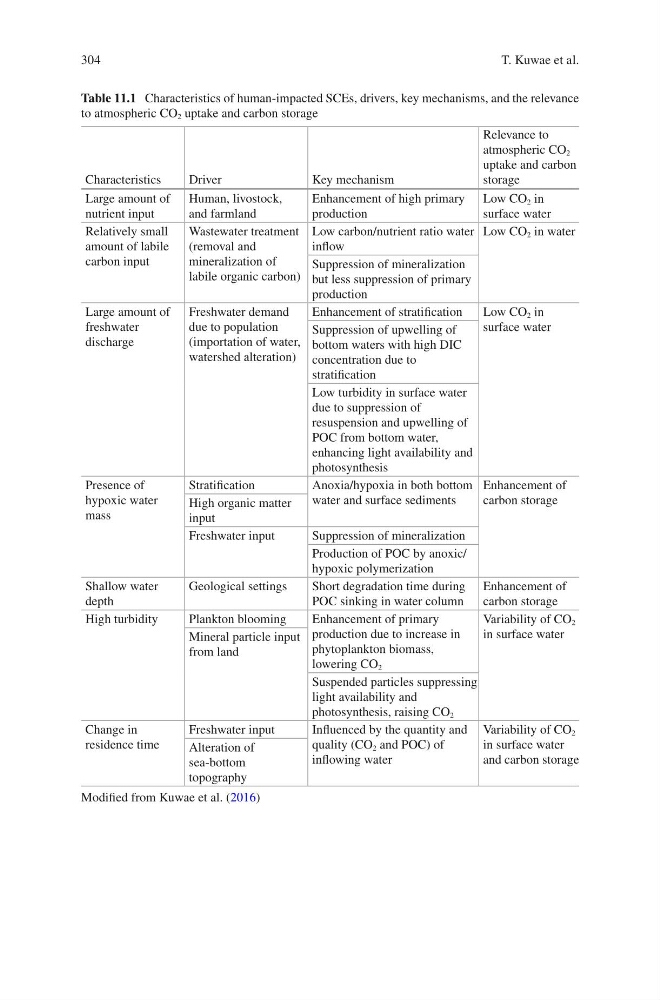
Table 11.1 Characteristics of human-impacted SCEs, drivers, key mechanisms, and the relevance
to atmospheric CO 2 uptake and carbon storage
Characteristics
Driver
Key mechanism
Relevance to
atmospheric CO 2
uptake and carbon
storage
Large amount of
nutrient input
Human, livostock,
and farmland
Enhancement of high primary
production
Low CO 2 in
surface water
Relatively small
amount of labile
carbon input
Wastewater treatment
(removal and
mineralization of
labile organic carbon)
Low carbon/nutrient ratio water
inflow
Low CO 2 in water
Suppression of mineralization
but less suppression of primary
production
Large amount of
freshwater
discharge
Freshwater demand
due to population
(importation of water,
watershed alteration)
Enhancement of stratification
Low CO 2 in
surface water
Suppression of upwelling of
bottom waters with high DIC
concentration due to
stratification
Low turbidity in surface water
due to suppression of
resuspension and upwelling of
POC from bottom water,
enhancing light availability and
photosynthesis
Presence of
hypoxic water
mass
Stratification
Anoxia/hypoxia in both bottom
water and surface sediments
Enhancement of
carbon storage
High organic matter
input
Freshwater input
Suppression of mineralization
Production of POC by anoxic/
hypoxic polymerization
Shallow water
depth
Geological settings
Short degradation time during
POC sinking in water column
Enhancement of
carbon storage
High turbidity
Plankton blooming
Enhancement of primary
production due to increase in
phytoplankton biomass,
lowering CO 2
Variability of CO 2
in surface water
Mineral particle input
from land
Suspended particles suppressing
light availability and
photosynthesis, raising CO 2
Change in
residence time
Freshwater input
Influenced by the quantity and
quality (CO 2 and POC) of
inflowing water
Variability of CO 2
in surface water
and carbon storage
Alteration of
sea-bottom
topography
Modified from Kuwae et al. (2016)
T. Kuwae et al.
Table 11.1 Characteristics of human-impacted SCEs, drivers, key mechanisms, and the relevance
to atmospheric CO 2 uptake and carbon storage
Characteristics
Driver
Key mechanism
Relevance to
atmospheric CO 2
uptake and carbon
storage
Large amount of
nutrient input
Human, livostock,
and farmland
Enhancement of high primary
production
Low CO 2 in
surface water
Relatively small
amount of labile
carbon input
Wastewater treatment
(removal and
mineralization of
labile organic carbon)
Low carbon/nutrient ratio water
inflow
Low CO 2 in water
Suppression of mineralization
but less suppression of primary
production
Large amount of
freshwater
discharge
Freshwater demand
due to population
(importation of water,
watershed alteration)
Enhancement of stratification
Low CO 2 in
surface water
Suppression of upwelling of
bottom waters with high DIC
concentration due to
stratification
Low turbidity in surface water
due to suppression of
resuspension and upwelling of
POC from bottom water,
enhancing light availability and
photosynthesis
Presence of
hypoxic water
mass
Stratification
Anoxia/hypoxia in both bottom
water and surface sediments
Enhancement of
carbon storage
High organic matter
input
Freshwater input
Suppression of mineralization
Production of POC by anoxic/
hypoxic polymerization
Shallow water
depth
Geological settings
Short degradation time during
POC sinking in water column
Enhancement of
carbon storage
High turbidity
Plankton blooming
Enhancement of primary
production due to increase in
phytoplankton biomass,
lowering CO 2
Variability of CO 2
in surface water
Mineral particle input
from land
Suspended particles suppressing
light availability and
photosynthesis, raising CO 2
Change in
residence time
Freshwater input
Influenced by the quantity and
quality (CO 2 and POC) of
inflowing water
Variability of CO 2
in surface water
and carbon storage
Alteration of
sea-bottom
topography
Modified from Kuwae et al. (2016)
T. Kuwae et al.