

252
9.1 Introduction
Global warming is caused by an increase in greenhouse gases such as carbon dioxide, and as such, carbon dioxide sinks and sources have been drawing attention. In
addition to terrestrial forests, marine vegetation is also important for the sequestration and storage of carbon dioxide (Nellemann et al. 2009). Seagrass meadows,
which are also called sea forests, are expected to act as a carbon dioxide sink. The
broadly distributed eelgrass (Zostera marina) is expected to serve as a particularly
large carbon sink (Rohr et al. 2016; Dahl et al. 2016; Miyajima and Hamagichi
2018). In this chapter, we focus on the process of sequestration of carbon dioxide in
eelgrass beds. We also describe the transport of sequestered carbon from eelgrass
beds in shallow coastal waters to the deep sea.
Eelgrass beds are expected to be an important carbon dioxide sink in shallow
coastal waters (Tokoro et al. 2014, 2018). However, to prevent further global warming, it is not only necessary to sequester carbon dioxide from the atmosphere but
also to accumulate the carbon as compounds in organisms or sediments over a prolonged period (Miyajima and Hamagichi 2018). Eelgrass grows from spring to summer. In autumn, the plants decline and the leaves fall off; some settle on the bottom
sediment, while a portion of them flows out of the eelgrass bed (Aioi 1980; Douke
et al. 2000; Nakaoka and Aioi 2001). Therefore, to evaluate the function of Z.
marina in carbon sequestration and storage, it is necessary to estimate the amount
of eelgrass-derived organic carbon that flows out of eelgrass beds and is deposited
on the bottom of shallow coastal areas or the deep sea, as well as within the eelgrass
beds (Duarte and Krause-Jensen 2017).
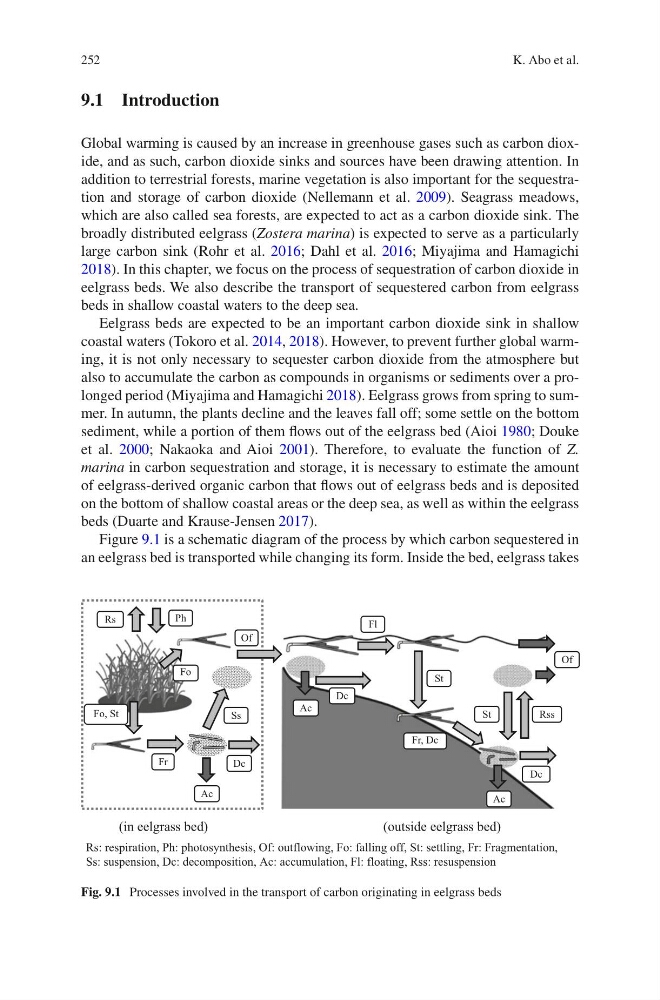
Figure 9.1 is a schematic diagram of the process by which carbon sequestered in
an eelgrass bed is transported while changing its form. Inside the bed, eelgrass takes
Fl
Ac
Dc
St
Fr, Dc
Ac
Rss
St
Of
(outside eelgrass bed)
Rs
Ph
Fo, St
Ss
Ac
(in eelgrass bed)
Fr
Fo
Dc
Of
Dc
Rs: respiration, Ph: photosynthesis, Of: outflowing, Fo: falling off, St: settling, Fr: Fragmentation,
Ss: suspension, Dc: decomposition, Ac: accumulation, Fl: floating, Rss: resuspension
Fig. 9.1 Processes involved in the transport of carbon originating in eelgrass beds
K. Abo et al.
9.1 Introduction
Global warming is caused by an increase in greenhouse gases such as carbon dioxide, and as such, carbon dioxide sinks and sources have been drawing attention. In
addition to terrestrial forests, marine vegetation is also important for the sequestration and storage of carbon dioxide (Nellemann et al. 2009). Seagrass meadows,
which are also called sea forests, are expected to act as a carbon dioxide sink. The
broadly distributed eelgrass (Zostera marina) is expected to serve as a particularly
large carbon sink (Rohr et al. 2016; Dahl et al. 2016; Miyajima and Hamagichi
2018). In this chapter, we focus on the process of sequestration of carbon dioxide in
eelgrass beds. We also describe the transport of sequestered carbon from eelgrass
beds in shallow coastal waters to the deep sea.
Eelgrass beds are expected to be an important carbon dioxide sink in shallow
coastal waters (Tokoro et al. 2014, 2018). However, to prevent further global warming, it is not only necessary to sequester carbon dioxide from the atmosphere but
also to accumulate the carbon as compounds in organisms or sediments over a prolonged period (Miyajima and Hamagichi 2018). Eelgrass grows from spring to summer. In autumn, the plants decline and the leaves fall off; some settle on the bottom
sediment, while a portion of them flows out of the eelgrass bed (Aioi 1980; Douke
et al. 2000; Nakaoka and Aioi 2001). Therefore, to evaluate the function of Z.
marina in carbon sequestration and storage, it is necessary to estimate the amount
of eelgrass-derived organic carbon that flows out of eelgrass beds and is deposited
on the bottom of shallow coastal areas or the deep sea, as well as within the eelgrass
beds (Duarte and Krause-Jensen 2017).
Figure 9.1 is a schematic diagram of the process by which carbon sequestered in
an eelgrass bed is transported while changing its form. Inside the bed, eelgrass takes
Fl
Ac
Dc
St
Fr, Dc
Ac
Rss
St
Of
(outside eelgrass bed)
Rs
Ph
Fo, St
Ss
Ac
(in eelgrass bed)
Fr
Fo
Dc
Of
Dc
Rs: respiration, Ph: photosynthesis, Of: outflowing, Fo: falling off, St: settling, Fr: Fragmentation,
Ss: suspension, Dc: decomposition, Ac: accumulation, Fl: floating, Rss: resuspension
Fig. 9.1 Processes involved in the transport of carbon originating in eelgrass beds
K. Abo et al.