

192
like ‘mangrove’, ‘CO 2 flux’, ‘net ecosystem exchange’, ‘atmosphere-biosphere CO 2
fluxes’, ‘soil CO 2 fluxes’, ‘soil respiration’, ‘air-water CO 2 exchange’, ‘mangrove
estuaries’ and so forth were used in search engines like ‘Google scholar’ and
‘Science direct’ to download the papers taken into account in this chapter. The CO 2
fluxes from the mangrove forests all around the world (except Sundarban) are discussed separately and at last a comparative assessment was carried out with fluxes
observed in the Sundarbans.
7.2 Atmosphere-Biosphere CO 2 Exchange – The Global
Scenario at Present
7.2.1 The Overview of Research Work in a Nutshell
It is evident from Table 7.1 that only a handful number of work has been done on
the mangroves from the perspective of characterizing the atmosphere-biosphere
CO 2 exchange (by means of micrometeorological methods) above the canopy of
mangrove forests. Moreover, most of these works are repeated in the same study
sites in either different time period or different locations within the same study site.
The sparsity and regional bias of studies on the CO 2 flux in the mangrove forests
have limited reliable estimation of the capacity of mangrove ecosystem as a global
CO 2 sink/source. Sundarbans mangrove forest has received the largest attention in
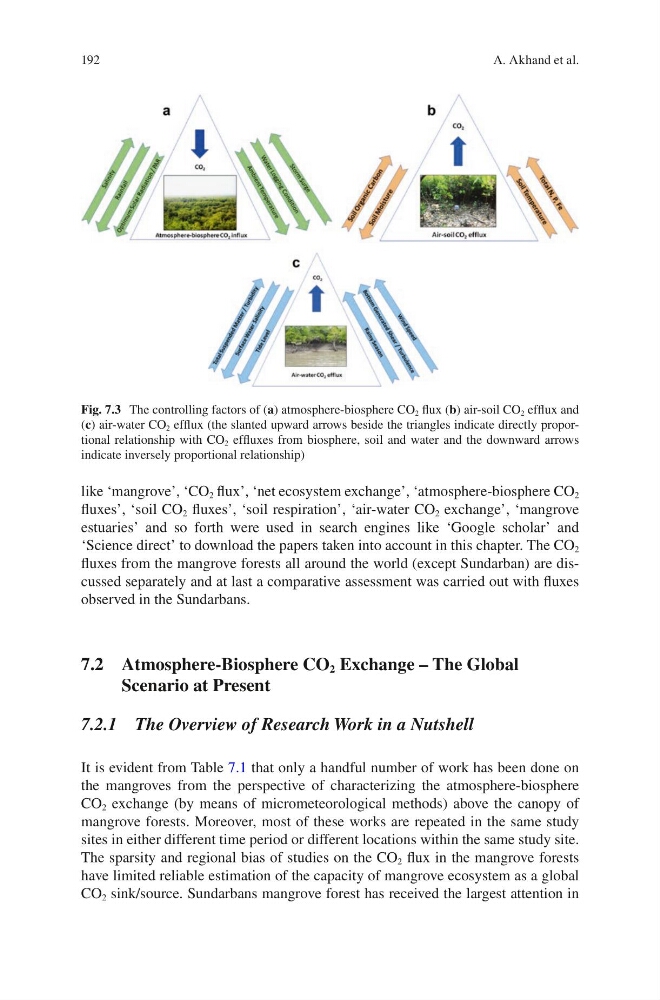
Fig. 7.3 The controlling factors of (a) atmosphere-biosphere CO 2 flux (b) air-soil CO 2 efflux and
(c) air-water CO 2 efflux (the slanted upward arrows beside the triangles indicate directly proportional relationship with CO 2 effluxes from biosphere, soil and water and the downward arrows
indicate inversely proportional relationship)
A. Akhand et al.
like ‘mangrove’, ‘CO 2 flux’, ‘net ecosystem exchange’, ‘atmosphere-biosphere CO 2
fluxes’, ‘soil CO 2 fluxes’, ‘soil respiration’, ‘air-water CO 2 exchange’, ‘mangrove
estuaries’ and so forth were used in search engines like ‘Google scholar’ and
‘Science direct’ to download the papers taken into account in this chapter. The CO 2
fluxes from the mangrove forests all around the world (except Sundarban) are discussed separately and at last a comparative assessment was carried out with fluxes
observed in the Sundarbans.
7.2 Atmosphere-Biosphere CO 2 Exchange – The Global
Scenario at Present
7.2.1 The Overview of Research Work in a Nutshell
It is evident from Table 7.1 that only a handful number of work has been done on
the mangroves from the perspective of characterizing the atmosphere-biosphere
CO 2 exchange (by means of micrometeorological methods) above the canopy of
mangrove forests. Moreover, most of these works are repeated in the same study
sites in either different time period or different locations within the same study site.
The sparsity and regional bias of studies on the CO 2 flux in the mangrove forests
have limited reliable estimation of the capacity of mangrove ecosystem as a global
CO 2 sink/source. Sundarbans mangrove forest has received the largest attention in
Fig. 7.3 The controlling factors of (a) atmosphere-biosphere CO 2 flux (b) air-soil CO 2 efflux and
(c) air-water CO 2 efflux (the slanted upward arrows beside the triangles indicate directly proportional relationship with CO 2 effluxes from biosphere, soil and water and the downward arrows
indicate inversely proportional relationship)
A. Akhand et al.