

165
based on the vertical direction of the wind velocity, and then the flux is calculated
from the difference of the average concentrations in the downdrafts and updrafts.
Although the calculation and sampling methodologies need to be refined for highly
precise estimates, this method has merit because it is relatively inexpensive
compared to the cost of most fast-response sensors. In addition, Lemaire et al.
(2017) have evaluated the possibility of its application to sediment–water fluxes.
The flux gradient method (e.g., Meyers et al. 1996) calculates the gas flux from
the vertical gradient of atmospheric CO 2 concentrations and a parameter that characterizes turbulence. The instrumentation required for this method is inexpensive
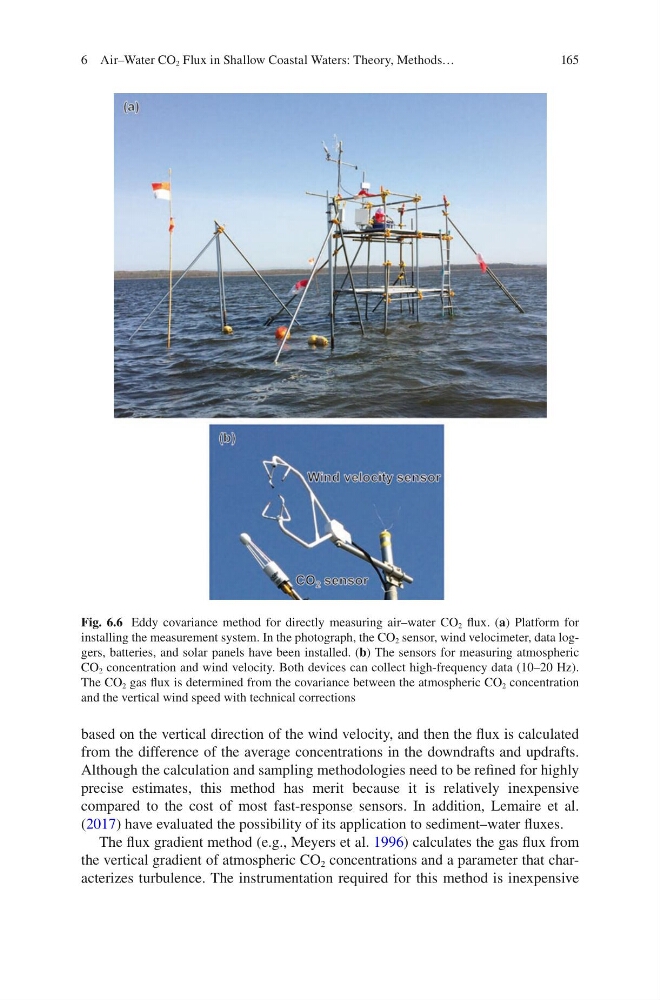
Fig. 6.6 Eddy covariance method for directly measuring air–water CO 2 flux. (a) Platform for
installing the measurement system. In the photograph, the CO 2 sensor, wind velocimeter, data loggers, batteries, and solar panels have been installed. (b) The sensors for measuring atmospheric
CO 2 concentration and wind velocity. Both devices can collect high-frequency data (10–20 Hz).
The CO 2 gas flux is determined from the covariance between the atmospheric CO 2 concentration
and the vertical wind speed with technical corrections
6 Air–Water CO 2 Flux in Shallow Coastal Waters: Theory, Methods…
based on the vertical direction of the wind velocity, and then the flux is calculated
from the difference of the average concentrations in the downdrafts and updrafts.
Although the calculation and sampling methodologies need to be refined for highly
precise estimates, this method has merit because it is relatively inexpensive
compared to the cost of most fast-response sensors. In addition, Lemaire et al.
(2017) have evaluated the possibility of its application to sediment–water fluxes.
The flux gradient method (e.g., Meyers et al. 1996) calculates the gas flux from
the vertical gradient of atmospheric CO 2 concentrations and a parameter that characterizes turbulence. The instrumentation required for this method is inexpensive
Fig. 6.6 Eddy covariance method for directly measuring air–water CO 2 flux. (a) Platform for
installing the measurement system. In the photograph, the CO 2 sensor, wind velocimeter, data loggers, batteries, and solar panels have been installed. (b) The sensors for measuring atmospheric
CO 2 concentration and wind velocity. Both devices can collect high-frequency data (10–20 Hz).
The CO 2 gas flux is determined from the covariance between the atmospheric CO 2 concentration
and the vertical wind speed with technical corrections
6 Air–Water CO 2 Flux in Shallow Coastal Waters: Theory, Methods…