

319
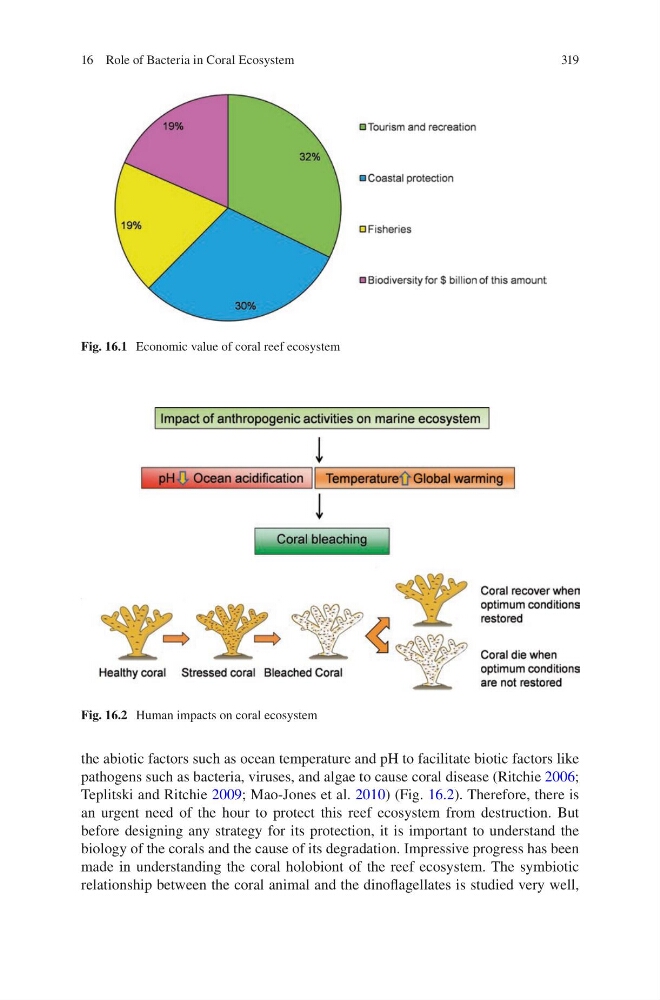
the abiotic factors such as ocean temperature and pH to facilitate biotic factors like
pathogens such as bacteria, viruses, and algae to cause coral disease (Ritchie 2006;
Teplitski and Ritchie 2009; Mao-Jones et al. 2010) (Fig. 16.2). Therefore, there is
an urgent need of the hour to protect this reef ecosystem from destruction. But
before designing any strategy for its protection, it is important to understand the
biology of the corals and the cause of its degradation. Impressive progress has been
made in understanding the coral holobiont of the reef ecosystem. The symbiotic
relationship between the coral animal and the dinoflagellates is studied very well,
Fig. 16.1 Economic value of coral reef ecosystem
Fig. 16.2 Human impacts on coral ecosystem
16 Role of Bacteria in Coral Ecosystem
the abiotic factors such as ocean temperature and pH to facilitate biotic factors like
pathogens such as bacteria, viruses, and algae to cause coral disease (Ritchie 2006;
Teplitski and Ritchie 2009; Mao-Jones et al. 2010) (Fig. 16.2). Therefore, there is
an urgent need of the hour to protect this reef ecosystem from destruction. But
before designing any strategy for its protection, it is important to understand the
biology of the corals and the cause of its degradation. Impressive progress has been
made in understanding the coral holobiont of the reef ecosystem. The symbiotic
relationship between the coral animal and the dinoflagellates is studied very well,
Fig. 16.1 Economic value of coral reef ecosystem
Fig. 16.2 Human impacts on coral ecosystem
16 Role of Bacteria in Coral Ecosystem