

240
Oceanic photosynthetic carbon fixation is limited by the availability of nutrients
and trace elements (such as Fe). In oligotrophic waters, biological nitrogen fixation
by cyanobacteria can provide biologically usable nitrogen, which promotes growth
of phytoplankton and increases photosynthetic carbon fixation. In this way, the
marine diazotrophs mitigates the global warming indirectly (Michaels et al. 2001;
Berthelot et al. 2015). OA can influence nitrogen fixation in cyanobacteria and
also affects their photosynthetic carbon fixation directly and/or indirectly. For
cyanobacteria with heterocysts, OA either promotes (Wannicke et al. 2012) or
inhibits (Czerny et al. 2009) nitrogen fixation. In cyanobacteria without heterocysts,
the extent of promotion varies among the species (Eichner et al. 2014). However,
some research cruise studies show that OA caused by increased CO 2 concentrations
08:00
10:00
12:00
14:00
16:00
18:00
0
300
600
900
1200
1500
0.0
0.5
1.0
1.5
2.0
PAR (µmol
m
-2
s
-1
)
HC
LC
NPQ
Time
c
LE04 PN07
A4
E606 SEATS C3
0
40
80
120
SEATS
C 3
60
80
100
120
Relative primary production (%)
a
LE04
A 4
E606 SEATS C3
0
40
80
120
SEATS
C 3
60
80
100
120
LC
HC
Relative primary production (%)
Stations
b
0.6
0.9
1.2
1.5
LC
a
HC
0
1 00 200 300 400 500 600 700
0.6
0.9
1.2
1.5
1.8
2.1
Daytime mean PAR ( mol photons m
-2 s
-1 )
c
0.6
0.9
1.2
1.5
1.8 b
(d
-1
)
0.6
0.9
1.2
1.5
LC
a
HC
0
1 00 200 300 400 500 600 700
0.6
0.9
1.2
1.5
1.8
2.1
Daytime mean PAR (µmol photons m
-2 s
-1 )
c
0.6
0.9
1.2
1.5
1.8 b
µ
(d
-1
)
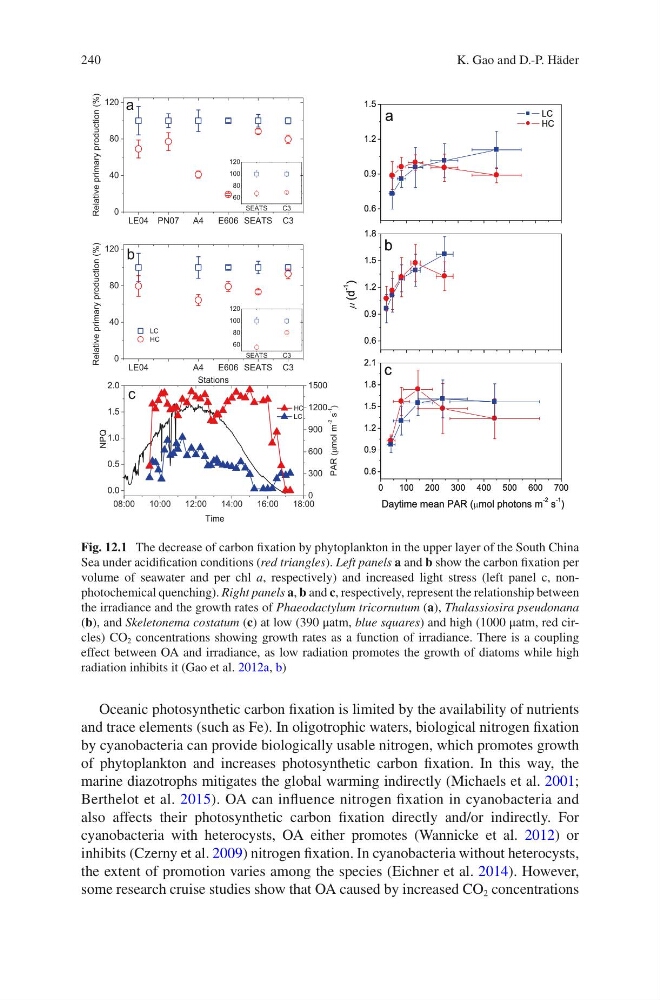
Fig. 12.1 The decrease of carbon fixation by phytoplankton in the upper layer of the South China
Sea under acidification conditions (red triangles). Left panels a and b show the carbon fixation per
volume of seawater and per chl a, respectively) and increased light stress (left panel c, nonphotochemical quenching). Right panels a, b and c, respectively, represent the relationship between
the irradiance and the growth rates of Phaeodactylum tricornutum (a), Thalassiosira pseudonana
(b), and Skeletonema costatum (c) at low (390 μatm, blue squares) and high (1000 μatm, red circles) CO 2 concentrations showing growth rates as a function of irradiance. There is a coupling
effect between OA and irradiance, as low radiation promotes the growth of diatoms while high
radiation inhibits it (Gao et al. 2012a, b)
K. Gao and D.-P. Häder
Oceanic photosynthetic carbon fixation is limited by the availability of nutrients
and trace elements (such as Fe). In oligotrophic waters, biological nitrogen fixation
by cyanobacteria can provide biologically usable nitrogen, which promotes growth
of phytoplankton and increases photosynthetic carbon fixation. In this way, the
marine diazotrophs mitigates the global warming indirectly (Michaels et al. 2001;
Berthelot et al. 2015). OA can influence nitrogen fixation in cyanobacteria and
also affects their photosynthetic carbon fixation directly and/or indirectly. For
cyanobacteria with heterocysts, OA either promotes (Wannicke et al. 2012) or
inhibits (Czerny et al. 2009) nitrogen fixation. In cyanobacteria without heterocysts,
the extent of promotion varies among the species (Eichner et al. 2014). However,
some research cruise studies show that OA caused by increased CO 2 concentrations
08:00
10:00
12:00
14:00
16:00
18:00
0
300
600
900
1200
1500
0.0
0.5
1.0
1.5
2.0
PAR (µmol
m
-2
s
-1
)
HC
LC
NPQ
Time
c
LE04 PN07
A4
E606 SEATS C3
0
40
80
120
SEATS
C 3
60
80
100
120
Relative primary production (%)
a
LE04
A 4
E606 SEATS C3
0
40
80
120
SEATS
C 3
60
80
100
120
LC
HC
Relative primary production (%)
Stations
b
0.6
0.9
1.2
1.5
LC
a
HC
0
1 00 200 300 400 500 600 700
0.6
0.9
1.2
1.5
1.8
2.1
Daytime mean PAR ( mol photons m
-2 s
-1 )
c
0.6
0.9
1.2
1.5
1.8 b
(d
-1
)
0.6
0.9
1.2
1.5
LC
a
HC
0
1 00 200 300 400 500 600 700
0.6
0.9
1.2
1.5
1.8
2.1
Daytime mean PAR (µmol photons m
-2 s
-1 )
c
0.6
0.9
1.2
1.5
1.8 b
µ
(d
-1
)
Fig. 12.1 The decrease of carbon fixation by phytoplankton in the upper layer of the South China
Sea under acidification conditions (red triangles). Left panels a and b show the carbon fixation per
volume of seawater and per chl a, respectively) and increased light stress (left panel c, nonphotochemical quenching). Right panels a, b and c, respectively, represent the relationship between
the irradiance and the growth rates of Phaeodactylum tricornutum (a), Thalassiosira pseudonana
(b), and Skeletonema costatum (c) at low (390 μatm, blue squares) and high (1000 μatm, red circles) CO 2 concentrations showing growth rates as a function of irradiance. There is a coupling
effect between OA and irradiance, as low radiation promotes the growth of diatoms while high
radiation inhibits it (Gao et al. 2012a, b)
K. Gao and D.-P. Häder