

178
Temperate seagrass meadows, in contrast, grow in siliciclastic sediments that
generally possess little carbonate for acid titration. However, they are often sufficiently rich in iron that a significant fraction of the microbially generated sulfide is
precipitated as pyrite (FeS 2 ). The net burial of these sulfide minerals, which is common in most estuarine and coastal sediments (Goldhaber 2003), will result in a net
flux of alkalinity from these sediments to the overlying water (Berner et al. 1970),
and this flux may play an important role in the capacity of the surface ocean to
absorb and neutralize atmospheric CO 2 (Hu and Cai 2011; Faber et al. 2012; Faber
et al. 2014). Sulfide precipitation also protects seagrasses from the toxic effects of
high dissolved sulfide concentrations (Pedersen et al. 2004; Borum et al. 2005).
Although the quantitative impact of climate change on these processes is uncertain, enhanced productivity and metabolic activity of seagrasses and carbon burial
associated with rising CO 2 and temperature should increase sulfide production and
burial in iron-rich sediments and alkalinity flux to the overlying waters. Ongoing
work will increase our quantitative understanding of these processes, leading to better estimates of carbon sequestration potential of seagrass systems in the context of
a changing climate.
Nutrients
Suspended
ParƟcles
Phyto
plankton
Sucrose
Sucr
O2
Leaf
Biomass
Root &
Rhizome
Biomass
LHC
Rbc
Chloroplast
Nucleus
PS STRESS
FLOWER
SucTr
TP
Mito
Resp
CO 2
ROS Redox ET
HXK
Inv
Sus
Inv Sus
STRESS SucTr
Nuc
HXK
Mito
Resp
Redox
Redox
Shoot
O2
Symbiot ic
Clams
DOC, POC
Blue
Carbon
SO4 -2
HCO 3
-
Alkalinity
CO 2
Light
CaCO3
CO 2
FeS &
Fe 2 S
Alkalinity
Fe
Sediment
Microbes
H2S
HCO 3
-
Light
Temp
Nutrients
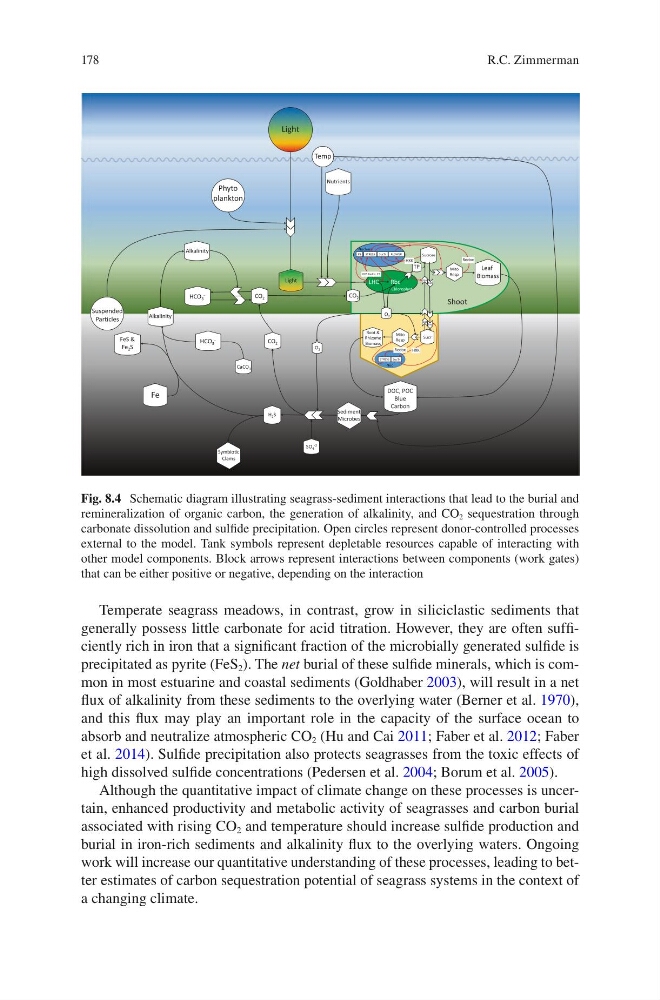
Fig. 8.4 Schematic diagram illustrating seagrass-sediment interactions that lead to the burial and
remineralization of organic carbon, the generation of alkalinity, and CO 2 sequestration through
carbonate dissolution and sulfide precipitation. Open circles represent donor-controlled processes
external to the model. Tank symbols represent depletable resources capable of interacting with
other model components. Block arrows represent interactions between components (work gates)
that can be either positive or negative, depending on the interaction
R.C. Zimmerman
Temperate seagrass meadows, in contrast, grow in siliciclastic sediments that
generally possess little carbonate for acid titration. However, they are often sufficiently rich in iron that a significant fraction of the microbially generated sulfide is
precipitated as pyrite (FeS 2 ). The net burial of these sulfide minerals, which is common in most estuarine and coastal sediments (Goldhaber 2003), will result in a net
flux of alkalinity from these sediments to the overlying water (Berner et al. 1970),
and this flux may play an important role in the capacity of the surface ocean to
absorb and neutralize atmospheric CO 2 (Hu and Cai 2011; Faber et al. 2012; Faber
et al. 2014). Sulfide precipitation also protects seagrasses from the toxic effects of
high dissolved sulfide concentrations (Pedersen et al. 2004; Borum et al. 2005).
Although the quantitative impact of climate change on these processes is uncertain, enhanced productivity and metabolic activity of seagrasses and carbon burial
associated with rising CO 2 and temperature should increase sulfide production and
burial in iron-rich sediments and alkalinity flux to the overlying waters. Ongoing
work will increase our quantitative understanding of these processes, leading to better estimates of carbon sequestration potential of seagrass systems in the context of
a changing climate.
Nutrients
Suspended
ParƟcles
Phyto
plankton
Sucrose
Sucr
O2
Leaf
Biomass
Root &
Rhizome
Biomass
LHC
Rbc
Chloroplast
Nucleus
PS STRESS
FLOWER
SucTr
TP
Mito
Resp
CO 2
ROS Redox ET
HXK
Inv
Sus
Inv Sus
STRESS SucTr
Nuc
HXK
Mito
Resp
Redox
Redox
Shoot
O2
Symbiot ic
Clams
DOC, POC
Blue
Carbon
SO4 -2
HCO 3
-
Alkalinity
CO 2
Light
CaCO3
CO 2
FeS &
Fe 2 S
Alkalinity
Fe
Sediment
Microbes
H2S
HCO 3
-
Light
Temp
Nutrients
Fig. 8.4 Schematic diagram illustrating seagrass-sediment interactions that lead to the burial and
remineralization of organic carbon, the generation of alkalinity, and CO 2 sequestration through
carbonate dissolution and sulfide precipitation. Open circles represent donor-controlled processes
external to the model. Tank symbols represent depletable resources capable of interacting with
other model components. Block arrows represent interactions between components (work gates)
that can be either positive or negative, depending on the interaction
R.C. Zimmerman