

266
W.-H. Li et al.
EXON 3
EXON 4
INTnON 4
EXON 5
1111111111111111111
55
666677
1111112222222222223333334567990000002244446778889
888899
35
5&9904
2233333333334491114590223444555580225596490782236992 3334 82082666
022235
85
256764
6B901234S67 690193894 63012214 9012796784 92906273157048 174 9213768237
136903
P562
TG
T'l'TGGG
TC-----------ACATCAGCTGGGGGT---GGACTGTTG-ACGC-TG-GGGCGAACAGCGGCGC
GAGMA
111111
I 11111111111 I 111111 I 111111111111111
11111 11111 111111
I
P535c
GA. TTTGGG
TA-----------CC-TCAGCTAGAGGT---GGACTGTTGAGA-C-TG-CGGCGATCAGCGGAAC AGAGTG
II
I
I I
III
I
I
1IIIII
P535
GA CACAAT
CAGGGAAAGGGGGTGA-TGATClIAAAACCCATAGTCACCAAGAGTACTCC-AT-GTTCTAAACGG AGAGTG
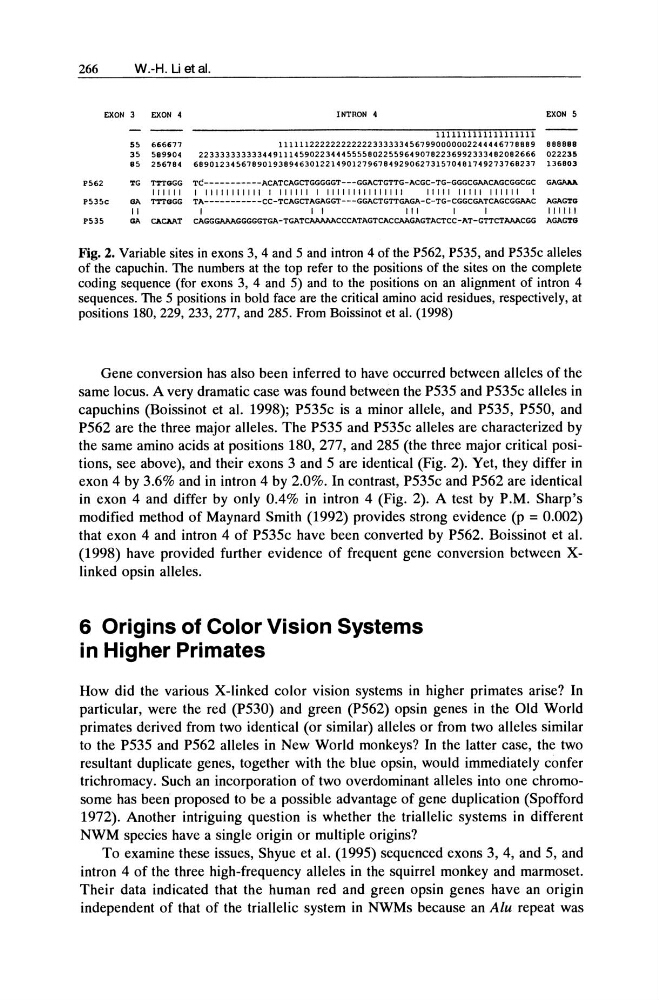
Fig. 2. Variable sites in exons 3, 4 and 5 and intron 4 of the P562, P535, and P535c alleles
of the capuchin. The numbers at the top refer to the positions of the sites on the complete
coding sequence (for exons 3, 4 and 5) and to the positions on an alignment of intron 4
sequences. The 5 positions in bold face are the critical amino acid residues, respectively, at
positions 180,229,233,277, and 285. From Boissinot et al. (1998)
Gene conversion has also been inferred to have occurred between alleles of the
same locus. A very dramatic case was found between the P535 and P535c alleles in
capuchins (Boissinot et al. 1998); P535c is a minor allele, and P535, P550, and
P562 are the three major alleles. The P535 and P535c alleles are characterized by
the same amino acids at positions 180, 277, and 285 (the three major critical positions, see above), and their exons 3 and 5 are identical (Fig. 2). Yet, they differ in
exon 4 by 3.6% and in intron 4 by 2.0%. In contrast, P535c and P562 are identical
in exon 4 and differ by only 0.4% in intron 4 (Fig. 2). A test by P.M. Sharp's
modified method of Maynard Smith (1992) provides strong evidence (p = 0.002)
that exon 4 and intron 4 of P535c have been converted by P562. Boissinot et al.
(1998) have provided further evidence of frequent gene conversion between Xlinked opsin alleles.
6 Origins of Color Vision Systems
in Higher Primates
How did the various X-linked color vision systems in higher primates arise? In
particular, were the red (P530) and green (P562) opsin genes in the Old World
primates derived from two identical (or similar) alleles or from two alleles similar
to the P535 and P562 alleles in New World monkeys? In the latter case, the two
resultant duplicate genes, together with the blue opsin, would immediately confer
trichromacy. Such an incorporation of two overdominant alleles into one chromosome has been proposed to be a possible advantage of gene duplication (Spofford
1972). Another intriguing question is whether the triallelic systems in different
NWM species have a single origin or multiple origins?
To examine these issues, Shyue et al. (1995) sequenced exons 3, 4, and 5, and
intron 4 of the three high-frequency alleles in the squirrel monkey and marmoset.
Their data indicated that the human red and green opsin genes have an origin
independent of that of the triallelic system in NWMs because an Alu repeat was
W.-H. Li et al.
EXON 3
EXON 4
INTnON 4
EXON 5
1111111111111111111
55
666677
1111112222222222223333334567990000002244446778889
888899
35
5&9904
2233333333334491114590223444555580225596490782236992 3334 82082666
022235
85
256764
6B901234S67 690193894 63012214 9012796784 92906273157048 174 9213768237
136903
P562
TG
T'l'TGGG
TC-----------ACATCAGCTGGGGGT---GGACTGTTG-ACGC-TG-GGGCGAACAGCGGCGC
GAGMA
111111
I 11111111111 I 111111 I 111111111111111
11111 11111 111111
I
P535c
GA. TTTGGG
TA-----------CC-TCAGCTAGAGGT---GGACTGTTGAGA-C-TG-CGGCGATCAGCGGAAC AGAGTG
II
I
I I
III
I
I
1IIIII
P535
GA CACAAT
CAGGGAAAGGGGGTGA-TGATClIAAAACCCATAGTCACCAAGAGTACTCC-AT-GTTCTAAACGG AGAGTG
Fig. 2. Variable sites in exons 3, 4 and 5 and intron 4 of the P562, P535, and P535c alleles
of the capuchin. The numbers at the top refer to the positions of the sites on the complete
coding sequence (for exons 3, 4 and 5) and to the positions on an alignment of intron 4
sequences. The 5 positions in bold face are the critical amino acid residues, respectively, at
positions 180,229,233,277, and 285. From Boissinot et al. (1998)
Gene conversion has also been inferred to have occurred between alleles of the
same locus. A very dramatic case was found between the P535 and P535c alleles in
capuchins (Boissinot et al. 1998); P535c is a minor allele, and P535, P550, and
P562 are the three major alleles. The P535 and P535c alleles are characterized by
the same amino acids at positions 180, 277, and 285 (the three major critical positions, see above), and their exons 3 and 5 are identical (Fig. 2). Yet, they differ in
exon 4 by 3.6% and in intron 4 by 2.0%. In contrast, P535c and P562 are identical
in exon 4 and differ by only 0.4% in intron 4 (Fig. 2). A test by P.M. Sharp's
modified method of Maynard Smith (1992) provides strong evidence (p = 0.002)
that exon 4 and intron 4 of P535c have been converted by P562. Boissinot et al.
(1998) have provided further evidence of frequent gene conversion between Xlinked opsin alleles.
6 Origins of Color Vision Systems
in Higher Primates
How did the various X-linked color vision systems in higher primates arise? In
particular, were the red (P530) and green (P562) opsin genes in the Old World
primates derived from two identical (or similar) alleles or from two alleles similar
to the P535 and P562 alleles in New World monkeys? In the latter case, the two
resultant duplicate genes, together with the blue opsin, would immediately confer
trichromacy. Such an incorporation of two overdominant alleles into one chromosome has been proposed to be a possible advantage of gene duplication (Spofford
1972). Another intriguing question is whether the triallelic systems in different
NWM species have a single origin or multiple origins?
To examine these issues, Shyue et al. (1995) sequenced exons 3, 4, and 5, and
intron 4 of the three high-frequency alleles in the squirrel monkey and marmoset.
Their data indicated that the human red and green opsin genes have an origin
independent of that of the triallelic system in NWMs because an Alu repeat was